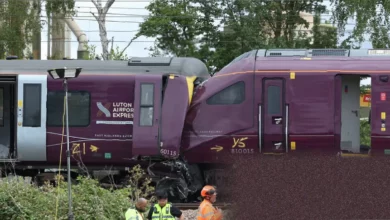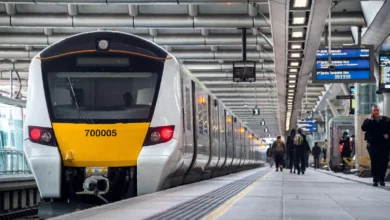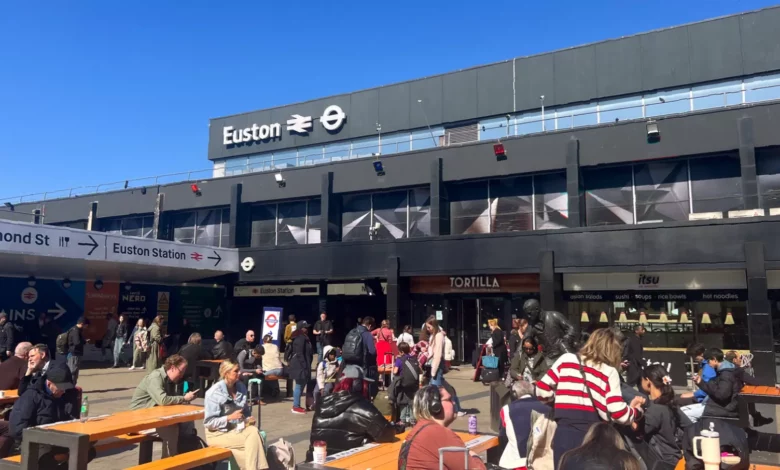
Overhead line equipment damaged between Watford Junction and Milton Keynes has left passengers facing a second day of severe disruption at London Euston, with Network Rail warning that repairs to the West Coast Main Line will continue throughout Friday.
The damage occurred on Thursday, 7th May, but the complexity of the failure has forced engineers to work well into Friday, 8th May. An amended timetable remains in place for Avanti West Coast and London Northwestern Railway services, and Network Rail has advised that reduced frequencies are likely to last for the rest of the day.
Under the emergency timetable, one train per hour will run between Euston and Liverpool, compared with the usual two. Services to and from Manchester will operate at two per hour instead of three, and the same reduction applies to Birmingham. All trains that normally terminate at Tring have been cancelled, though stopping services will continue to call at the station. The London Overground’s Lioness line is unaffected by the disruption.
What is overhead line equipment and why does it fail?
Overhead line equipment – referred to within the industry as OLE – is the network of wires and supporting structures visible above electrified railway lines. It carries 25,000 volts of electricity to power electric trains and is considered a critical component of the railway’s infrastructure, enabling faster and greener services.
However, OLE failures are a recurring problem on the West Coast Main Line, Europe’s busiest mixed-use railway. The causes are varied and often complex. Power supply interruptions, high winds that knock wires out of alignment or blow vegetation onto the equipment, and impacts from train components such as faulty pantographs – the arm that collects power from the overhead wire – can all bring down the system. Wildlife, particularly birds, can cause short circuits. Extreme heat forces wires to expand and sag, while ice formation in cold weather disrupts current collection, leading to arcing, wear and power surges. Mechanical issues such as displaced wires or gantries, worn-out components, incorrectly tensioned cables, and vandalism or objects thrown onto the line are also documented causes.
When a failure occurs, the repair process is methodical but time-consuming. Control centres receive fault alerts and begin an investigation. If necessary, the electricity supply is isolated. Specialised teams are mobilised, often using road-rail vehicles to reach the affected stretch and work at height. For serious incidents such as wires brought down, repairs are far more complex. Diesel rescue locomotives may be deployed to move stranded electric trains to the nearest station. Once repairs are completed, rigorous safety and compliance checks are carried out, followed by a root-cause investigation to try to prevent a repeat.
Network Rail has acknowledged the ongoing vulnerability of the West Coast Main Line’s overhead equipment. A 2021 review by the Office of Rail and Road (ORR) found that OLE incidents continue to have a significant impact on journey times and train performance, and assessed the operator’s capacity and processes for incident recovery. The review identified competency gaps and a lack of adequate training facilities as potential causes of inefficiency in response times. In response, Network Rail has committed £400 million until March 2029 to strengthen the West Coast Main Line, including OLE renewals, track work and bridge reconstructions. Recent upgrades around London Euston and Milton Keynes have focused on drainage improvements to reduce flood risk and enhance resilience during extreme weather.
Network Rail’s apology and advice for passengers
Gary Walsh, Network Rail’s West Coast South route director, apologised directly to passengers. “I am sorry to passengers impacted by the damage to overhead powerlines on the West Coast Main Line,” he said. “Our engineers continue to work tirelessly to fix the issue, and we have worked closely with our train operator colleagues to offer an amended timetable today. To carry out a full repair and restore our usual service, we need to reduce the number of trains travelling along the West Coast Main Line. Please, if you are planning to travel to or from London Euston, please check for the latest information before you travel and allow extra time.”
Passengers on Avanti West Coast and London Northwestern Railway services are advised to consult National Rail Enquiries and their operators’ websites for real-time updates before setting out. The amended timetable is expected to remain in place until the end of the day.