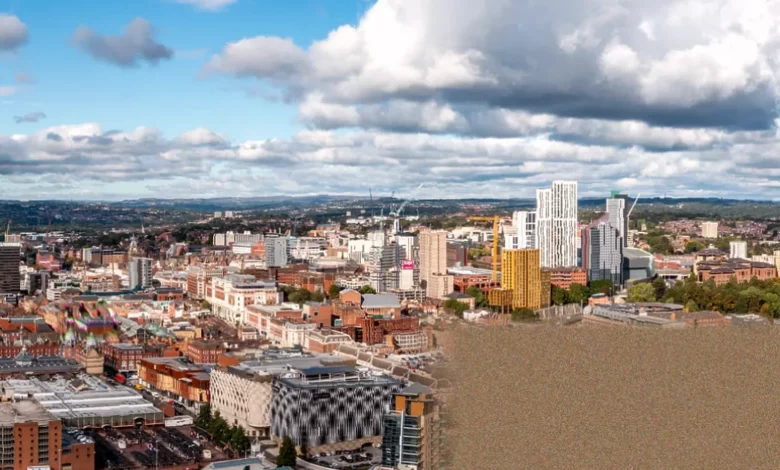
Leeds holds a distinctive and frustrating title: it is the largest city in Western Europe without a mass transit system. This is not for a lack of ambition, but rather a story of plans drawn up, shelved, and resurrected across decades, leaving a city of 800,000 people reliant on a network of buses and cars.
A history of paper plans and collapsed dreams
The city’s relationship with trams is long and ultimately severed. It once operated an extensive network, including double-decker trams, before the final service was scrapped in 1959. The desire to bring them back has been a constant thread in civic planning ever since. The 1980s saw the Metroline proposal, followed by the early 1990s concept of a Leeds Advanced Transit skytrain. The most significant effort was the Leeds Supertram, a three-line, 17-mile system which gained government support in the mid-1990s. Preparatory work even began in 2003, but the project was cancelled two years later by the Labour government on cost grounds, with over £39 million already spent. A cheaper alternative, a trolleybus network, met a similar fate after government approval in 2012, being dropped in 2016.
James Lewis, now leader of Leeds City Council, recalls the physical archive of these dashed hopes from his youth. “I remember these drawers and drawers, full of big paper plans,” he says, reflecting on work experience in the early 1990s. The city centre has been transformed since, but the absence of a modern tram network remains a persistent gap.
The latest proposal and the weight of Whitehall process
The current plan, West Yorkshire Mass Transit (WYMT), is the latest iteration. Championed by West Yorkshire Mayor Tracy Brabin, it envisages an integrated network with two core tram lines: one serving south Leeds, connecting St James’s Hospital, the city centre, Elland Road stadium and the White Rose shopping centre; and another linking Leeds with Bradford city centre. Development funding of £200m is in place, with the potential to access a further £2.1bn allocated to the city region.
However, the path forward is dictated by strict Whitehall processes, which have pushed the projected opening date into the late 2030s. A confidential review by the government’s National Infrastructure and Service Transformation Authority (NISTA) in September 2025 raised significant concerns. It warned that the project risked “nugatory spend” if it proceeded with unrealistic milestones and suggested it was being driven by a “political agenda rather than a recognised programmatic approach.” Consequently, the government has insisted on a sequential, evidence-led approach. West Yorkshire leaders must first submit a fresh, robust business case that proves the necessity of trams over a potentially cheaper Bus Rapid Transit system—a requirement some see as a directive to “prove it can’t be a bus.”
For Mayor Brabin, this has meant a delay she estimates at two years. “Some are now saying, that’s it, of course we’re not going to get anything, it’s cancelled,” she acknowledges. But she insists the project remains on track, with a pledge of “spades in the ground” by 2028 for preparatory works. She argues trams are fundamentally more transformative: “more attractive, they take more people, they deliver more jobs and growth.”
Council leader James Lewis interprets the delay as procedural realism rather than political dismissal, pointing to the Chancellor’s funding commitment. “It was someone taking a very clear-eyed view of how long it takes to get a scheme through a public inquiry,” he says. Others are less convinced. Professor Greg Marsden of Leeds University’s Institute for Transport Studies questions the timeline: “We’re taking 18 years to build a tram line. How can that possibly be the case?”
The debate touches on deeper issues of governance. Tom Forth of the Data City company argues the “root cause is that the Department for Transport is based in London, the Treasury is based in London.” He and others point to France, where tram systems are decided and funded locally, advocating for greater devolution and local tax-raising powers in the UK to break the cycle.
Economic transformation: the prize for perseverance
Proponents argue the tram is not merely about improving existing journeys but about unlocking major regeneration. The ambitious Leeds South Bank redevelopment project, which aims to double the size of the city centre and was recently shortlisted as a potential new town, is seen as critically dependent on new transport infrastructure. At the other end of the proposed Bradford line, Henri Murison, chief executive of the Northern Powerhouse Partnership, points to new buildings like a large clinic as evidence of “provable investment coming in right now on the back of promised transport development.”
A key site is around Elland Road. Leeds United director Pete Lowy is a vocal supporter, noting that a tram would be central to plans for a £1bn development around the expanding stadium, including 2,500 new homes and leisure spaces. “This is about much more than match days,” he says. “It is a real opportunity for Leeds to bring together infrastructure, housing, investment and regeneration.”
Yet, after so many false starts, public scepticism remains. A builder at the Sweet Street development in South Bank questioned if Leeds was “big enough,” while 24-year-old Gladys Crosby from Holbeck reflected a lifetime of unmet promises: “My whole life they’ve said it’s going to get better.”
Amid the delays, some experts emphasise more immediate improvements. Rob Johnson of the Centre for Cities argues that “the single most consequential thing Leeds could do is to increase frequencies on its existing bus services,” a change set to be facilitated when buses come under public control in 2027. He found better buses alone could connect more residents than new trams initially.
For now, the city’s leaders must navigate the Treasury’s meticulous process, hoping this latest blueprint will not join the piles of paper plans that came before it. As Professor Marsden notes, delivering such a transformative project may ultimately require an element of faith—a “build-it-and-they-will-come” conviction that it will change the city, even before every decimal point in the cost-benefit ratio is proven.