After 15 years of development and an estimated final cost of £1.3 billion, the South Wales Metro is transitioning from a major infrastructure project into a functioning network. While new trains are running and the electrification of the Core Valley Lines is complete, the scheme’s most profound test is only just beginning: whether it can transcend its transport function to become the engine for lasting economic and social renewal across the Cardiff Capital Region.
The scale of the ambition and its economic prize
Backed by the Welsh Government and the Cardiff Capital Region, the Metro represents a colossal investment. Its budget has nearly doubled from an initial projection of £734 million, a rise attributed by the research to Welsh Government budgetary pressures, the COVID-19 pandemic, and inflation linked to the war in Ukraine. Despite this, proponents argue it offers a lower cost per unit of delivery than other major UK rail projects.
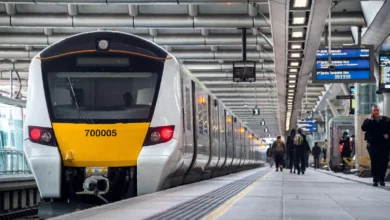
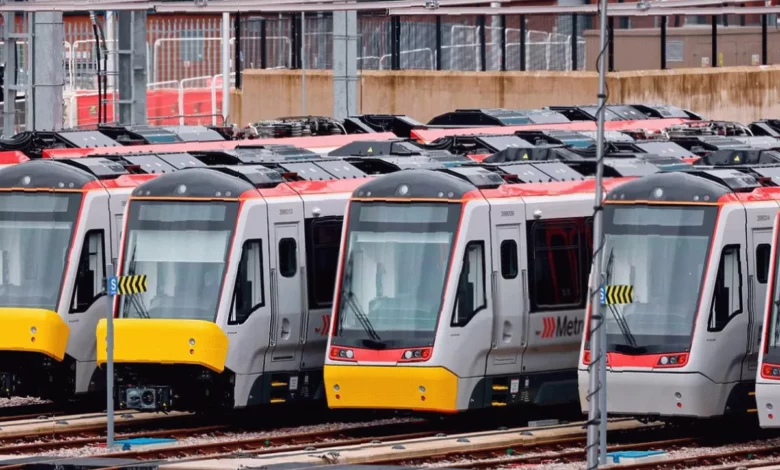
The tangible upgrades are now evident. Transport for Wales (TfW), the Welsh Government-established body delivering the project, has introduced new tri-mode trains. By the end of 2027, four electric ‘tram-trains’ per hour will link Aberdare, Merthyr Tydfil, and Treherbert directly with Cardiff, slashing journey times and doubling capacity. Over 200km of fibre optic cable has been laid to enable super-fast Wi-Fi, and a London-style ‘tap-in, tap-out’ smart ticketing system is being implemented.
But the vision has always been grander. A 2013 study projected that a £1 billion investment could add 420,000 people to the network, create 7,000 jobs, and inject £4 billion into the regional economy within three decades. The Metro is designed to give employers access to a wider labour pool, make education more accessible, and help tackle persistent skills shortages. In doing so, it promises to improve social mobility by connecting communities more effectively to centres of employment, education, and training.
Unlocking potential through integrated planning
Realising this scale of impact, however, will not happen automatically. A key challenge is ensuring improved connectivity translates into local vitality. For town centres that have faced years of decline, the Metro brings more people within easy reach. Yet, without complementary investment in placemaking and business support, passengers may simply pass through rather than stop and spend.
Housing presents a parallel dilemma. While enhanced connectivity makes new locations viable for development, potentially easing pressure on high-demand areas, building more homes is not a solution in itself. They must be the right homes in the right places, supported by appropriate infrastructure and services.
This is where the concept of transit-oriented development (TOD) is seen as crucial. Widely adopted in countries like Denmark and the Netherlands, TOD remains relatively under-utilised in south Wales. The approach concentrates mixed-use development—housing, offices, retail—around transport hubs, creating vibrant, walkable neighbourhoods that maximise the value of public investment in transport. Aligning future transport and planning policy to facilitate this kind of sustainable development, rather than piecemeal expansion, is considered essential for unlocking the Metro’s full potential.
Overcoming systemic challenges
The project’s journey also highlights broader systemic challenges in UK infrastructure delivery. The UK infrastructure sector faces issues of high costs and slow delivery, with the Institution of Civil Engineers identifying factors like complex planning processes and a lack of government delivery capability. The Metro itself has employed innovative techniques to manage costs, such as the ‘discontinuous electrification’ approach by contractor Amey, where trains switch to battery power on sections where installing overhead wires is problematic.
Funding the endeavour has required a complex patchwork. It has been part-funded by the European Union, the UK Government, and the Welsh Government, with significant investment from the £1.2 billion Cardiff Capital Region City Deal. The financial commitment continues, with the Welsh Government announcing a £115.9 million investment for sustainable transport in March 2026, and a £48.5 million funding agreement for the first year of Cardiff Capital Region’s new five-year Regional Transport Plan.
Charting the future path
With the physical infrastructure nearing completion, questions of leadership, accountability, and future investment direction come to the fore. Who ensures the Metro’s benefits are fully realised and shared across all communities?
These are the pressing issues set for discussion at the ‘Metro & Us’ conference and exhibition at The Depot Cardiff on June 4th, 2026. The event, the brainchild of Cardiff University’s Professor Mark Barry and organised by communications consultancy Freshwater, aims to move the debate from infrastructure delivery to long-term impact. Supported by a coalition including Arup, Cardiff and Vale College, Cardiff Capital Region, Capital Law, Mott MacDonald, and Transport for Wales, it will feature sessions spanning transport, regeneration, housing, education, and investment.