University society grieves Ayatollah’s death as profound loss and urges Muslims to stay prepared

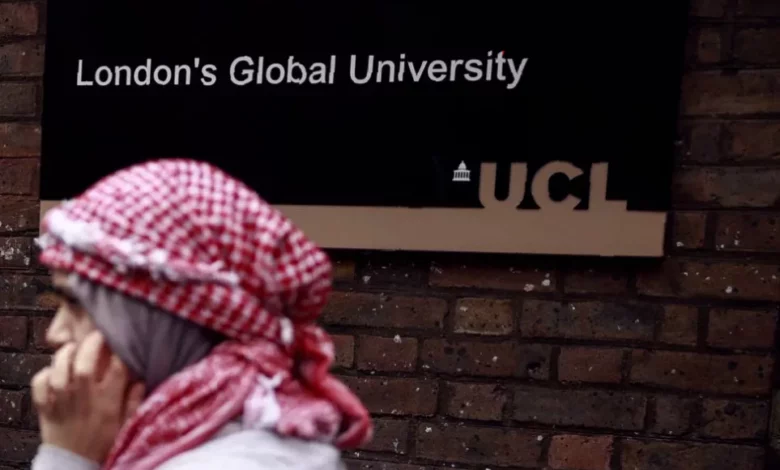
The Ahlul-Bayt Islamic Society at University College London has sparked a fierce free speech debate after publicly mourning the death of Iran’s Supreme Leader, Ayatollah Ali Khamenei, describing his passing as an “unimaginable loss” and an act of “martyrdom”.
In a statement posted online, the society, known as ABSoc, expressed its “sincere condolences” from “all at UCL ABSoc”, sharing a tribute and a prayer to be recited in Khamenei’s memory. The group’s mental health team framed the death as “an unimaginable loss for the entire Ummah”, referring to the global Muslim community.
‘Lawful expression’ or cause for outrage?
The society moved quickly to justify its post, asserting it did not constitute “incitement, endorsement of violence, or unlawful mobilisation”. It argued the tribute was a “lawful expression” protected under principles of academic freedom and freedom of expression. “Students are entitled both legally and morally to mourn, to speak, and to organise within the law,” the statement said. The group compared Khamenei’s “broadly religious” role for Shia Muslims to that of the Catholic Pope.
However, the message contained a more pointed call to action, adding: “This is not the end to resistance. The Shia in the West must remain aware and ready.”
Within hours, the post provoked condemnation. UCL alumnus and former government adviser James Price said it was “disgusting to see how far Britain has fallen” and stated, “I hope that UCL acts appropriately on this.”
Author and UCL history student Dov Forman described the statement as “extraordinary”. “A UCL student society publicly mourning Ayatollah Khamenei and urging Shia in the West to stay ‘aware and ready’,” he said. “On a UK campus. Universities cannot keep pretending this is just ‘student expression.'” Forman, who co-authored a bestseller with his great-grandmother, an Auschwitz survivor, has been a vocal critic of campus activities he perceives as creating a climate of intimidation, particularly regarding antisemitism.
The incident occurs within a broader context of heated campus discourse at UCL, which has seen previous controversies involving speakers and protests related to the Israeli-Palestinian conflict.
A leader’s death and a divided reaction
Ayatollah Ali Khamenei was killed on February 28, 2026, in what was described as a joint US-Israeli aerial assault—a “decapitation strike”—targeting military and government sites across Iran. His death, alongside his daughter, son-in-law, granddaughter, and daughter-in-law, was confirmed by Iranian state media on March 1.
International reaction was starkly divided. US President Donald Trump announced the killing on social media, calling Khamenei “one of the most evil people in history” and stating his death was “justice for the people of Iran”. Israeli Prime Minister Benjamin Netanyahu had earlier said there were “many signs” the Iranian leader was “no longer alive”.
Globally, the death triggered contrasting responses. Among the Iranian diaspora, largely opposed to the Tehran regime, there were celebrations and street parties in cities including Los Angeles and London. Within Iran itself, the scene was mixed. While thousands gathered in mourning at Tehran’s Enghelab Square, complying with a government-imposed period of mourning, other reports described isolated celebrations, fireworks, and music in some areas. Many citizens, however, expressed fear and uncertainty about the country’s future, mindful of the state’s history of brutal crackdowns on dissent.
Khamenei’s decades-long rule was characterised by state executions, the suppression of domestic protests, and a pivotal role in building Iran’s nuclear programme, which had been the subject of US-led negotiation attempts.
Power transition and UK commemorations
Following the Supreme Leader’s death, an interim leadership council was formed to steer Iran until a successor is chosen by the clerical Assembly of Experts. This council comprises President Masoud Pezeshkian, Judiciary Chief Gholam-Hossein Mohseni-Eje’i, and Guardian Council member Ayatollah Alireza Arafi.
Analysts suggest the powerful Islamic Revolutionary Guard Corps (IRGC), which has historically consolidated power during crises, is expected to play a significant behind-the-scenes role in the transition period.
Beyond the UCL campus, Khamenei’s death has been marked by other events in the UK. A candlelit vigil was scheduled at the Islamic Centre of Manchester, while the Islamic Centre of England has held prayers. Such commemorations have drawn political criticism; Conservative MP Bob Blackman condemned participants in these events, labelling Iran an enemy and calling them “the enemy within”.
As of now, UCL and its student union have not issued a public comment on the controversy surrounding its Ahlul-Bayt Islamic Society, leaving the debate over the boundaries of free expression, campus responsibility, and political mourning unresolved.