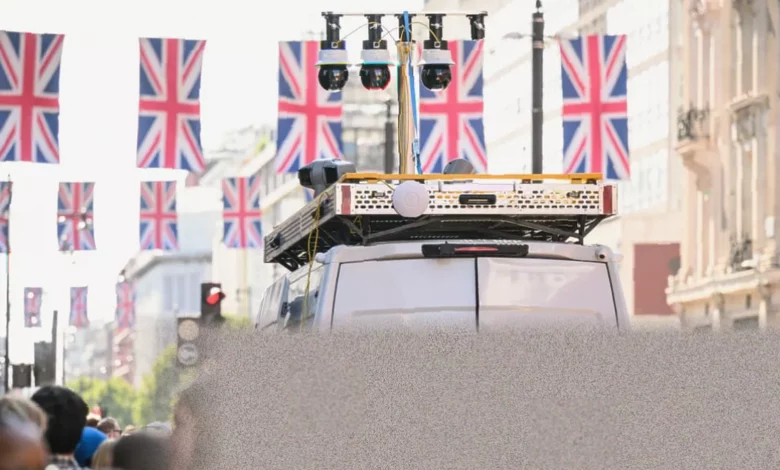
Facial recognition technology is pitched as a crime-fighting breakthrough, but oversight is lacking. As police forces and retailers across the UK increasingly deploy live facial recognition (LFR) systems, the statutory watchdog charged with protecting data rights is judged not fit for purpose by the country’s two biometrics commissioners, while a promised audit of the Metropolitan Police’s use of the technology has been shelved with no new date set.
Government’s bold claims for a digital crime-fighter
The Home Office minister, Sarah Jones, has been among the most vocal champions of LFR. Last month, after a High Court challenge against the technology on human rights and privacy grounds failed, she insisted that law-abiding citizens have “nothing to fear” from the police’s increased reliance on mounted cameras. The system, which uses artificial intelligence supplied by the Japanese company NEC, “only locates specifically wanted people”, she added. Last year Jones went further, describing LFR as “the biggest breakthrough for catching criminals since DNA”.
That enthusiasm is echoed by Sir Mark Rowley, the Metropolitan Police commissioner, and London’s mayor, Sir Sadiq Khan, who gave his blessing to a pilot scheme. The policing context explains some of the appeal: although homicides and knife crime have fallen sharply, shoplifting has risen across England and Wales alongside religious and racial hate crimes. For cash-strapped forces, the ability to match the faces of passers-by against a suspect database appears an efficient tool.
Regulatory gaps and a regulator deemed not up to the job
Yet the warnings carried in a recent Guardian exclusive about weak oversight and misuse of these systems underscore a serious imbalance between technological capability and democratic accountability. Professor William Webster, the biometrics watchdog for England and Wales, and Dr Brian Plastow, his Scottish counterpart, both believe the Information Commissioner’s Office (ICO) – the UK’s independent body set up to uphold information rights and data privacy – is not adequately equipped to monitor the kind of biometric data use involved in LFR. They have jointly called for a new, dedicated regulator and a fresh set of rules designed specifically for this technology.
The ICO’s limitations are not an abstract concern. An audit by the Metropolitan Police into its own deployment of facial recognition was postponed and has not been rescheduled, meaning a key internal check on the system’s accuracy and fairness is effectively in abeyance with no timeline for completion. The UK government is reviewing the legal framework and has acknowledged that some updating is expected, but critics argue that the pace of reform is far too slow for a technology already in widespread use by both police and private retailers.
Among the most troubling allegations is that of a whistleblower who claimed to know of up to 15 instances in which innocent individuals were allegedly added to watchlists maliciously by security employees seeking to settle personal scores. Such accusations, if verified, point to a system that can be gamed from within, yet no independent mechanism currently exists to investigate or prevent this kind of abuse. The Home Office has also admitted that tests showed higher numbers of false positive identifications of black and Asian faces, confirming concerns over racial bias in the NEC software. Again, the question of who polices the police remains largely unanswered.
An urgent need is an improved system of redress for people who have been misidentified – whether by police officers or by private security guards working for retailers. Ministers have been urged to address directly the failures that allow innocent members of the public to be wrongly flagged, and to ensure that any racial bias in the software has been eliminated before deployment continues. Yet the pattern so far has been one of catching up after the fact, with politicians “playing catch-up, looking for ways to right wrongs that have already happened”.
Civil liberties, privacy and the choices behind surveillance
Beyond immediate practical failures, the rollout of live facial recognition raises deeper political questions about civil liberties, privacy and the proper limits of state and corporate power. Surveillance tools are not an inevitability; they are a choice, and alternatives exist. The policing minister may honestly believe that most people should not fear databases holding their biometric data, but that belief does not make it true. The recurring pattern – tech outpaces attempts to keep track of its impact, defying democratic checks and balances – needs to be broken if the public is to retain meaningful control over how their faces are scanned, stored and matched against watchlists. The technology may be sold as a breakthrough, but without adequate oversight it risks becoming a tool of suspicion rather than of justice.