Southern England’s rail network faced major disruption on Thursday after a critical fault in the radio system used for communication between train drivers and signallers brought services to a standstill across large parts of the region. The failure, which struck shortly before 9am, triggered cascading delays and cancellations that continued to ripple through the timetable well into the evening.
Cascading delays and cancellations
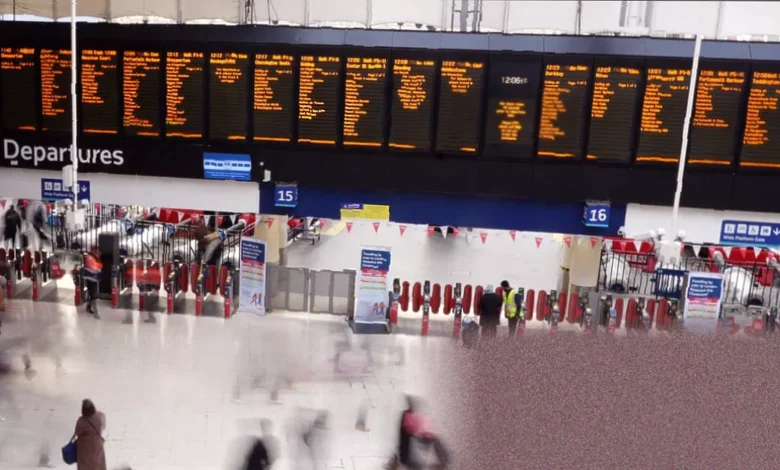
London Waterloo, one of Britain’s busiest railway stations, saw the worst of the initial impact, with scores of services delayed or pulled from the schedule. London Victoria was also hit hard as the disruption spread across multiple operators. By mid-morning, National Rail had declared a major incident, warning passengers that “major disruption” was expected until the end of the day. Delays of up to 90 minutes were reported, and many trains were simply cancelled because rolling stock, drivers and guards had been left out of position by the breakdown. One service—the 9:23am train from Windsor—arrived nearly two hours behind schedule.
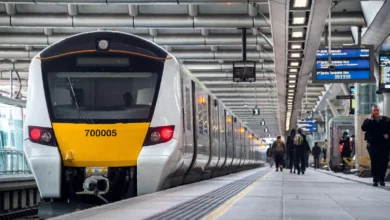
South Western Railway (SWR) was the most severely affected operator. It warned that services across its entire network “may be cancelled, delayed by up to 90 minutes or revised”, with major disruption reported on routes stretching as far west as Exeter. The company’s recovery was further hampered by an unrelated signalling problem near Wandsworth Town. Other operators also suffered: Southern reported delays on its whole network, particularly services to and from London Victoria and along the West Coastway route, while trains on its Haywards Heath line were running late or terminating at Gatwick until at least 1pm. Gatwick Express services were likely to run to and from Brighton instead of Haywards Heath. Disruption also hit CrossCountry, Great Western Railway, London Overground and Thameslink, though London Overground later returned to a good service and Thameslink announced that its disruption had ended.
Communication breakdown: the technical failure
At the heart of the chaos was a fault in the GSM-R network—the Global System for Mobile Communications – Railway that forms the digital backbone of train-to-ground communication. This system is essential for coordinating train movements and maintaining safety, allowing drivers and signallers to exchange real-time information about track conditions, speed restrictions and signals. When it failed, the usual two-way contact was severed, forcing signallers to fall back on older, slower methods of communication. The Wessex route, linking London with the south and south-west, was particularly affected because its operations rely heavily on the GSM-R system.
The failure was reported towards the end of the morning rush hour—shortly before 9am—and technical teams worked through the morning to restore it. The National Rail website confirmed that the problem had been resolved by 11am, but warned that “some services may still be delayed by up to 90 minutes or cancelled while service recovers”. The need to reposition trains, drivers and guards, combined with the knock-on effect on timetables, meant that many routes continued to experience severe disruption into the evening peak.
Recovery and passenger advice
Train companies urged passengers to expect disruption, allow extra time for journeys and check before travelling. In a bid to help people reach their destinations, tickets were accepted on alternative services at no additional cost. SWR, for example, allowed its passengers to travel on Great Western Railway, Southern, CrossCountry and certain London Underground lines. Southern also honoured tickets on other operators. Passengers were advised to consider bus services where available.
For those who suffered delays of 15 minutes or more, train operators pointed to the national Delay Repay compensation scheme. Under the scheme, a delay of 15 to 29 minutes entitles passengers to 25 per cent of the single fare, while a delay of 60 minutes or more entitles them to a full refund of the single fare—regardless of the cause. The potential compensation bill for South Western Railway alone was estimated to run into hundreds of thousands of pounds.
A Network Rail spokesperson said: “Due to issues with radio communications, train services in the south-west and south have been subject to some delays this morning. Staff have worked to resolve the fault and train services are now returning to normal. We apologise to passengers for the disruption caused to their journeys this morning.” Passengers delayed by 15 minutes or more were encouraged to apply for Delay Repay compensation, with operators accepting claims online.