Archived footage shows Nigel Farage backing rioter, neo-Nazi gathering and extremist slogans

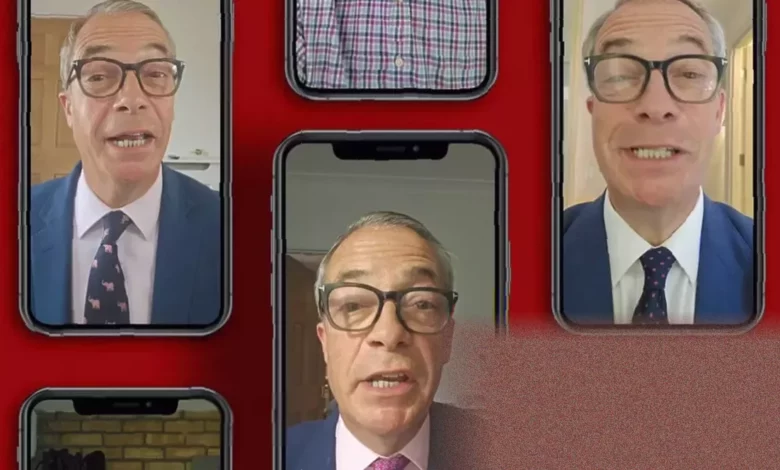
As leader of Reform UK and a sitting MP, Nigel Farage presents a carefully polished public image. Yet an investigation into his prolific use of the personalised video platform Cameo reveals a shadow side to his political operation, exposing a willingness to endorse extremist causes, sympathise with convicted rioters, and trade in far-right slogans for a fee.
A Lucrative Sideline and its Extreme Edges
Since joining Cameo in 2021, Nigel Farage has recorded at least 4,366 videos for paying customers, earning a minimum of £374,893. While many are innocuous birthday greetings, an analysis of the platform’s source code, which reveals the prompts sent to him, shows dozens where he fulfilled requests from individuals expressing far-right or offensive views. His profile describes him as “Mr Brexit” who “couldn’t care less” if some find him controversial.
Among the most damaging findings is a video Farage recorded just ten days after being elected as an MP in July 2024. For a £141 expedited fee, he endorsed the “Road Rage Terror Tour,” a Canadian show hosted by leaders of the group Diagolon. The prompt asked him to start with the subtitle of the show: “They have to go back.” Farage obliged, opening his message with the phrase and calling the event “the most talked-about show in Canada.” He suggested a viewer might walk out saying it was “the best thing that ever happened.”
A simple internet search would have revealed the nature of the group. Diagolon is identified as a “far-right extremist group” by the US State Department and was described as a “violent extremist organisation” in a Canadian House of Commons report, linked to neo-Nazism and the aim of creating a white ethnonationalist state. Within hours, the group had edited Farage’s clip into propaganda featuring fascist salutes, antisemitic imagery, and racist commentary. A Diagolon representative later said they used Farage “for a laugh and to cause him this trouble as a consequence for being lazy and stupid.”
Farage’s spokesperson stated he used the platform “in good faith and without knowledge of the individuals involved beyond what is written for him,” adding that misuse of recordings was outside his control.
Sympathy for a Convicted Rioter
This claim of ignorance is harder to sustain in other instances. In 2025, Farage was paid £155 to send a message to Ben Tavener, a man he was told had received a 16-month prison sentence for violent disorder. Tavener was convicted for his involvement in the Bristol riots of August 2024, sparked by false information following the Southport murders, which saw far-right protests targeting hotels housing asylum seekers.
The prompt described Tavener as a “longtime Reform member” who was “filmed in the 2024 summer riots breaking up fights.” Despite knowing the man had been imprisoned for his role in the disorder, Farage recorded a sympathetic video, calling the sentence “absolutely outrageous.” He told Tavener: “keep your head up, keep believing in the right things, keep acting in the right way… I’m with you as well.” Tavener told the Guardian the video gave him a “good bit of morale.”
This message appears directly at odds with Farage’s own condemnation of the 2024 riots, when he stated, “We do not support – I do not support – street protest, violence or thuggery in any way. We must deal with violence wherever it comes from and deal with it ruthlessly.”
Speaking the Language of the Far-Right
Beyond specific videos, Farage repeatedly used slogans and references that resonate within extremist circles. He has used or alluded to the hardline phrase “If in doubt, kick them out” more than twenty times. The slogan, adopted by the far-right and used at Tommy Robinson rallies, is a shorthand for aggressive immigration policy. Initially, in May 2021, Farage expressed reluctance, saying it “could be misconstrued.” Weeks later, however, he told a user: “If in doubt, keep them out is a motto you believe in.”
Dr Ashton Kingdon, a criminology lecturer at the University of Southampton, stated the phrase is a “well-established far-right slogan,” adding: “He is choosing to cultivate this audience and to speak its language back to it.”
In other clips, Farage deployed recognised far-right tropes. In one, asked about “secret societies controlling everything,” he volunteered: “Is it the Bilderbergers… It could be the Masons. Some think it’s the Rothschilds. Maybe it’s George Soros… I don’t think any of it is a conspiracy theory.” Dr Kingdon noted these references together form a “recognised canon of far-right, antisemitic and white nationalist thought.”
In another, he ended a £78 video by saying “up the Rhodesia.” Academics point out that Rhodesia, the former white minority-rule state, is a key reference point for white nationalists. Dr Robert Topinka of Birkbeck, University of London, said it signifies “a beleaguered white minority fighting heroically in a doomed battle to preserve an ethnostate.”
Offensive Remarks and Questionable Focus
The investigation also uncovered videos containing misogynistic, transphobic, and crude content. Farage made a remark about US congresswoman Alexandria Ocasio-Cortez’s breasts and, in an expedited video for which he charged £160, told a user “We all know what you did” in response to a prompt about a friend who “slept with a tranny.” In another, he derided “the idea that a bloke puts on a dress and calls himself a woman” as part of the “war on woke.”
His relentless use of the platform—averaging almost three videos a day—raises questions about his focus as an MP and party leader. On the day of his election on 4 July 2024, he recorded eight Cameo videos. Analysis suggests he has uploaded clips on 212 occasions during parliamentary business, including during a bill reading and a vote he missed. His spokesperson countered that Farage has voted in the Commons “more times than Kemi Badenoch and Keir Starmer combined since July 2024.”
Behind the amiable persona he sells, outtake clips discovered by altering URL text show a different side, with Farage appearing quick to anger when his recordings are interrupted.
In response to the findings, a spokesperson for Farage said the videos “should not be treated as political statements,” that mistakes can occur at such scale, and that it would be “entirely misleading” to portray them as evidence of political alignment with those who request them. They reiterated that Farage has “long been clear in his opposition to extremism and political violence.” The evidence from his Cameo account, however, paints a more complicated picture of who he is prepared to endorse, and what language he is willing to use, for a price.