Claire Coutinho claims Labour’s insane policies would leave UK dependent on foreign autocrats

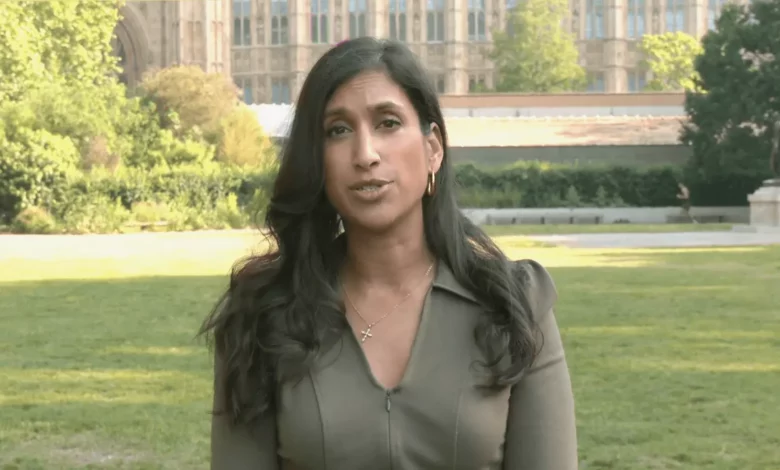
Claire Coutinho has warned that Labour’s energy policies risk making Britain “reliant on foreign dictators,” as she accused the Government of pursuing a course that would leave the country dependent on imports from Russia, China and India for its most essential fuels.
Speaking to GB News, the Shadow Energy Secretary said Labour’s approach to domestic energy production was compounding existing vulnerabilities. “If you look at Labour’s policies, they want to ban North Sea oil and gas licences,” she said. “They’re continuing to have carbon taxes on refineries, which are driving them out of existence. All of those things are making our struggles worse.” She argued the effect would be to increase reliance on foreign regimes: “We’re going to be relying on Putin for his oil. We’re going to rely on China for coal-powered manufacturing and on India for jet fuel and diesel.”
Labour’s energy strategy under fire
Coutinho’s criticisms centre on Labour’s central energy ambition: a fully decarbonised power system by 2030, which the party has framed as a mission to make Britain a “clean energy superpower.” The plan includes doubling onshore wind, tripling solar capacity and quadrupling offshore wind within four years. A publicly owned company, Great British Energy, has been launched with an £8.3 billion capitalisation over the next parliament to invest in clean energy projects and co-invest with the private sector. Labour has also pledged £6.6 billion for a Warm Homes Plan to upgrade five million homes, alongside investment in carbon capture and storage, hydrogen and marine energy, and an Energy Independence Act to set the legislative framework.
Coutinho has labelled Labour’s 2030 clean electricity target as “unfeasible,” “mad, bad and dangerous.” She argues the accelerated timeline is “too fast, too soon” and would lead to higher taxes and bills, as well as insecurity in energy supply. A particular concern, she said, is the reliance on imported materials: the transition would be “made in China” rather than “made in Britain,” because of dependence on Chinese supply chains for critical minerals, batteries and coal-powered manufacturing. She also pointed to the carbon tax on electricity generation, which she stated accounts for more than 10 per cent of household electricity bills, as a policy that unnecessarily drives up costs and contributes to deindustrialisation.
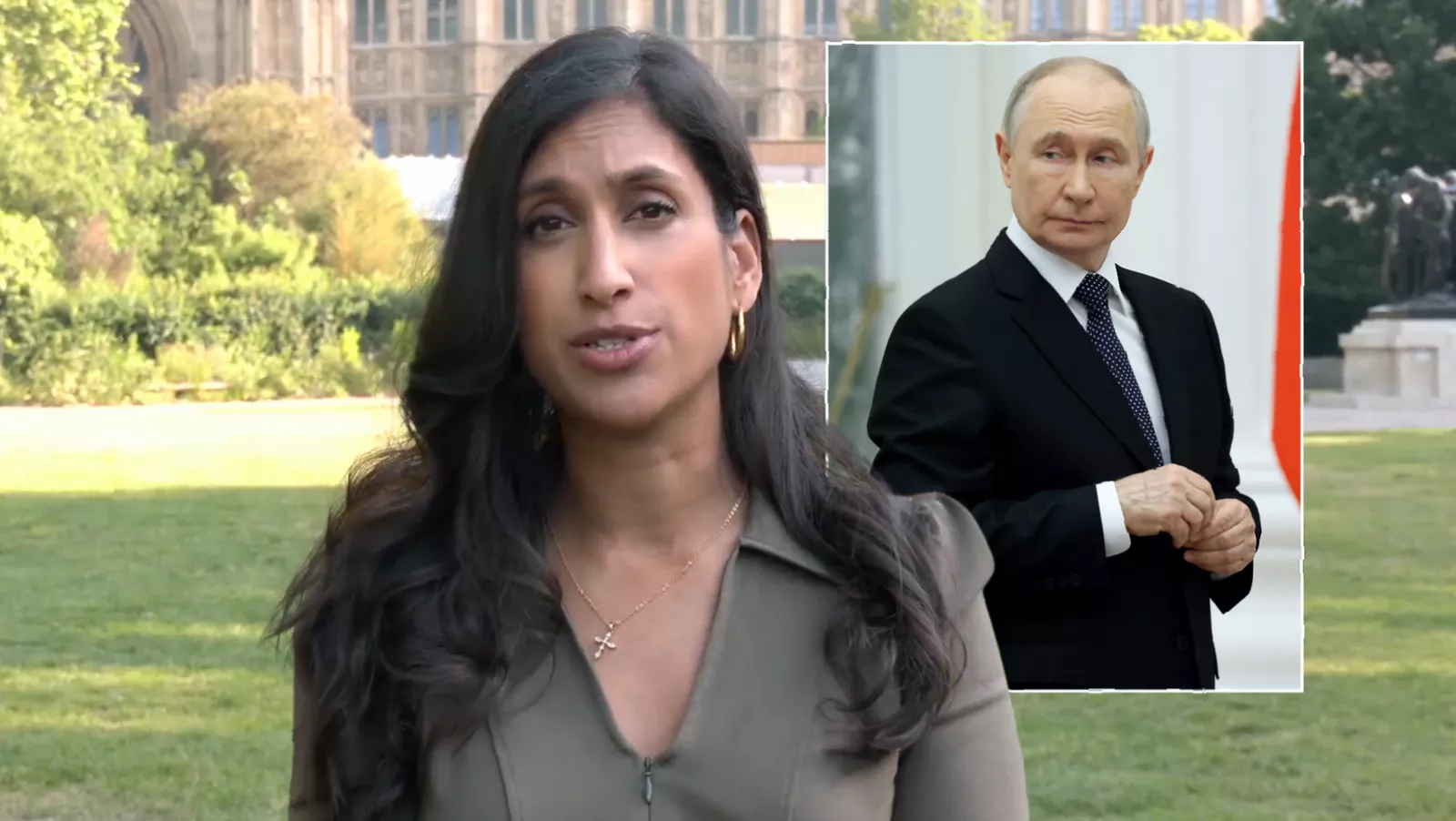
On North Sea oil and gas, Coutinho argued that blocking new British drilling while continuing to import foreign hydrocarbons makes no strategic sense. She noted that if the UK does not use its own North Sea gas, it will become three times more reliant on foreign imports of liquefied natural gas by 2035, which she described as “much dirtier foreign gas.” Producing domestically, she insisted, has no link to consumption levels — banning the industry is simply an argument to shut down business.
Government sanctions shift on Russian fuel
The Shadow Energy Secretary’s warnings come against a backdrop of a significant change in the Government’s own sanctions policy. Last week — on Wednesday, 20 May 2026 — the UK introduced a new general trade licence that permits the import of Russian diesel and jet fuel, provided the crude oil was refined in a third country. The move effectively relaxes earlier efforts to block all fuels derived from Russian crude, even when processed outside Russia, as part of the Western campaign to cut off Kremlin revenue streams following the invasion of Ukraine.
The policy shift was prompted by fears of fuel shortages amid the ongoing Strait of Hormuz crisis, elevated tanker freight rates and tightening middle distillate supplies. British authorities are particularly concerned about potential jet fuel shortages during the busy summer travel season. The UK is the largest net importer of jet fuel in Europe and holds no strategic reserves, leaving commercial inventories as the primary buffer. Goldman Sachs has identified the UK as the most exposed nation to jet fuel shortages.
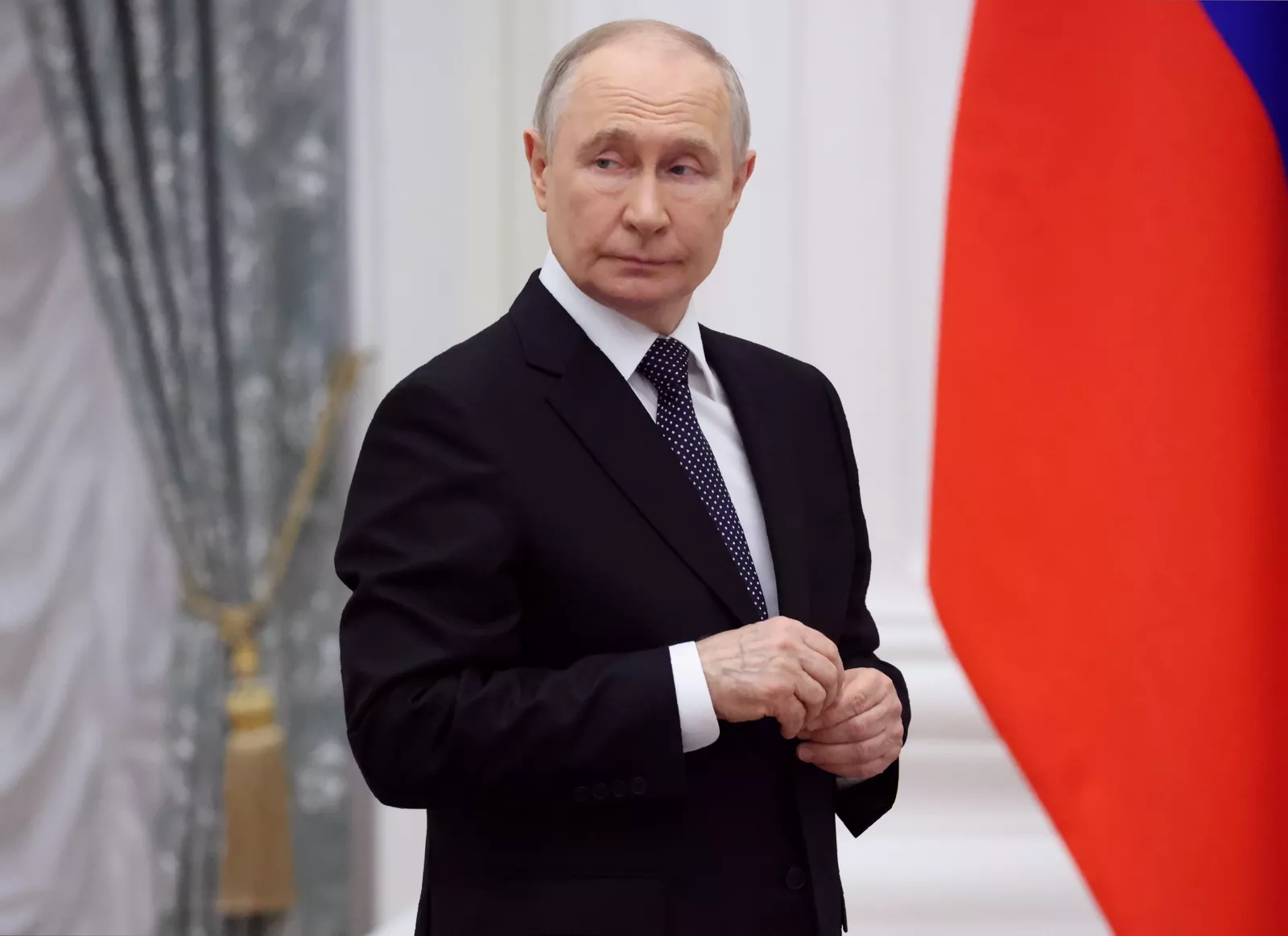
The decision has drawn criticism from those who question the UK’s commitment to supporting Ukraine, and it highlights the complex global trade route — sometimes called “laundromat refineries” — by which Russian crude is processed in countries such as India and Turkey and then re-exported as refined fuel. Coutinho described the combination of policies as incoherent: “None of those things adds up to a successful country… Whether it’s petrol, jet fuel, or diesel, we are starting to feel the effects of not being able to produce things in our own country.” She described measures such as increasing taxes on petrol as “clearly mad.”
During the interview, GB News Breakfast host Ellie Costello challenged Coutinho on her own party’s record, pointing to the 2021 ban on air conditioning in new homes brought in by then-Conservative Housing Secretary Robert Jenrick. Coutinho acknowledged the policy was a mistake, saying she was now focused on “where the Conservatives got things wrong.” She criticised what she called a “miserabilist approach to energy,” arguing that the ban on air conditioning reflected a mindset that “using energy is somehow a bad thing.” She noted that only 3 per cent of British homes have air conditioning, compared with roughly 90 per cent in Japan, South Korea and the United States. “You don’t have high-growth countries which have low energy usage,” she said. “We have to completely fix our mindset when it comes to energy. We need to make sure that energy is cheap, abundant and reliable, and we have to allow people to use it.” Labour’s position, as of September 2025, was that air conditioning is “not a desirable or financially efficient solution due to the energy it consumes” and could strain the national grid.