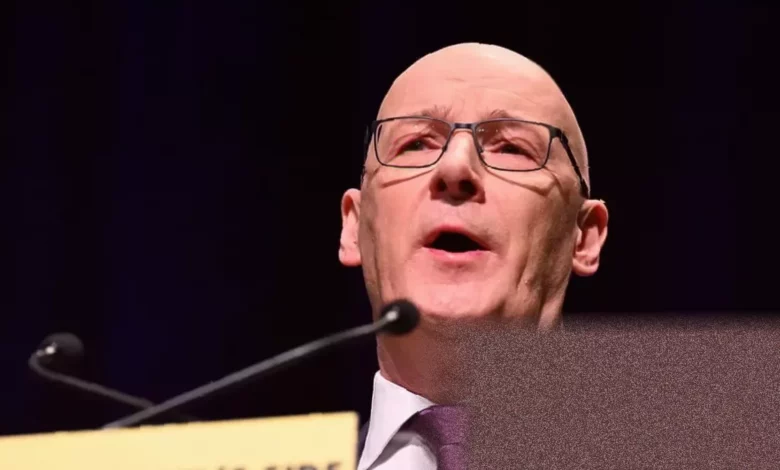
First Minister John Swinney has positioned the upcoming May elections across the UK as a decisive crossroads for the union, framing a potential clean sweep for nationalist parties as a historic rejection of Westminster. Speaking at the SNP’s campaign conference in Glasgow, he declared that Scotland could lead a “great wave of change” should pro-independence figures emerge as leaders in Edinburgh, Cardiff, and Belfast simultaneously.
The Electoral Battleground
The immediate fight is for Holyrood, with elections scheduled for 7 May 2026. Recent polling presents a complex picture for the SNP. An Ipsos survey from late February showed the party leading with 36% of the constituency vote, though this is a decrease from its 2021 performance. Scottish Labour is in second place on 20%, an improvement from earlier polls, while Reform UK is registering significant support at 16%. The regional list vote is tighter, with the same poll putting the SNP on 26% and Scottish Labour on 19%. A Diffley Partnership poll in early March placed the SNP at 37% on the constituency ballot, with Reform UK at 17%.
Mr Swinney pointed to consistent support for Scottish independence, which has hovered around 50% for some time. A Redfield & Wilton Strategies poll in April 2024 showed a narrow 2% lead for ‘Yes’, while more recent December 2024 polling suggested support could rise to 66% if framed around a specific “Wellbeing Economic Approach”. The First Minister told delegates that support for the cause was at “sustained high levels” and that Scotland was “closer to becoming independent than we have ever been.”
This optimistic rhetoric follows a significant setback. The strategy of putting independence “front and centre” is being revived despite having, in Mr Swinney’s own post-election assessment, “failed to convince people of the urgency of independence” during the 2024 UK general election. In that contest, the SNP was reduced from 48 to just 9 MPs.
Governing in the Here and Now
Seeking to balance constitutional ambition with domestic competence, Swinney used his speech to announce direct support for Glasgow following the devastating fire on Union Street the previous Sunday. The blaze gutted a 19th-century Victorian building, impacted over 71 businesses, and forced the closure of Glasgow Central station, with demolition of the unsafe facade now underway.
The First Minister announced a £10 million recovery fund to support the council, businesses, and agencies, and pledged that the Scottish Government would underwrite the £1 million cost of clearing the site. “This money should not come from the public services that Glaswegians rely upon,” he said.
He also framed a series of new policy pledges as “building blocks of an independent country.” These included a major expansion of subsidised childcare, available 52 weeks a year for every child from nine months old to the end of primary school, with costs based on family income. This would build on the existing provision of 1,140 funded hours for all 3 and 4-year-olds and eligible 2-year-olds, a scheme fully implemented in 2021 after a pandemic delay.
To address housing, Swinney promised a new £100 million First Homes Fund to provide up to £10,000 for first-time buyer deposits, aiming to break the “rent trap” for young people. This proposal exists alongside an existing Scottish Government shared equity scheme of the same name, launched in 2019, which offers up to £25,000.
A Distinct Voice on the World Stage
In a sharp divergence from UK government foreign policy, the First Minister delivered a forceful condemnation of US and Israeli military action in Iran. “The unjustifiable actions of the United States and Israel have no basis under international law. They must stop,” he said, arguing that civilians were “dying at the hands of American and Israeli bombs.”
He went further, suggesting that an independent Scotland would constitutionally ban militaries involved in illegal conflicts from its territory and prohibit nuclear weaponry from its shores. He also criticised the UK government’s decision to allow US bases to be used in the operations as “dangerous.” The Scottish Government has established a cross-government group to consider the impact of the violence on Scotland and support Scottish citizens in the region.
The Wider Constitutional Ripple
Swinney’s vision of a “seismic moment” extends beyond Scotland’s borders. He told the conference that the prospect of nationalist first ministers in Wales and Northern Ireland as well as Scotland in May would signal that “Westminster’s time is up.” While specific dates for the next Welsh Senedd election are not confirmed in the available briefing, the last Northern Ireland Assembly election was in May 2022, with the next due no later than 6 May 2027. The formation of its power-sharing Executive has been fraught, revived by a deal in January 2024.
With polling showing a volatile Scottish electorate—40% of voters told Ipsos they may yet change their minds before the 2026 Holyrood election—Mr Swinney’s challenge is to convert his proclaimed “wave of change” into a concrete result, having learned from a recent electoral defeat that saw his party’s Westminster presence dramatically reduced.