A Labour backbencher has threatened to trigger a leadership contest against Sir Keir Starmer if the cabinet does not produce a challenger by Monday, dramatically escalating the pressure on the prime minister after his party suffered heavy losses in last week’s local elections.
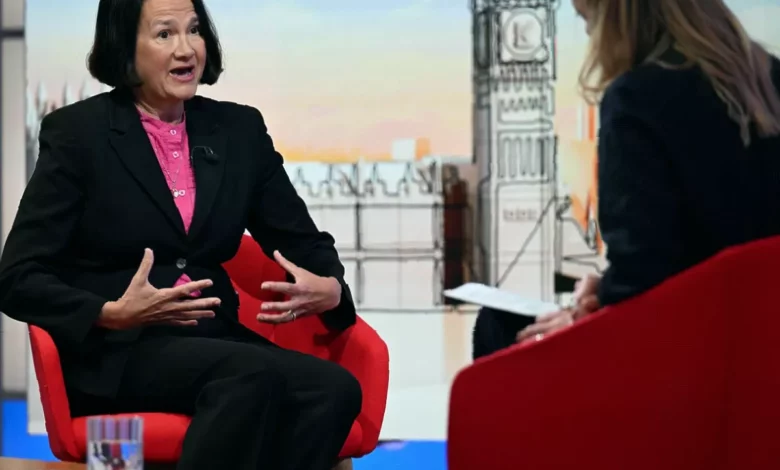
Ultimatum to the Cabinet
Catherine West, the MP for Hornsey and Friern Barnet who was sacked as a junior Foreign Office minister in last year’s reshuffle, has told cabinet members that they must put forward a candidate to oust Sir Keir. If no one emerges by Monday, she has pledged to seek the 81 nominations required to force a contest herself. West has indicated she believes the prime minister could take on an international role if a new leader is chosen internally, and she has said she already has the backing of ten MPs, though she expects more to come forward. Despite her warning, Bridget Phillipson, a cabinet minister, insisted on Sunday that West was wrong and continued to back the prime minister. Sir Keir himself has stated he will not resign, arguing that doing so would “plunge the country into chaos.”
How a Labour Leadership Challenge Works
Unlike the Conservative Party, Labour operates no formal confidence vote procedure to remove a sitting leader. Instead, any challenger must secure written nominations from 20 per cent of the parliamentary Labour Party. With 404 Labour MPs currently in the Commons, that threshold stands at 81 MPs. West has so far gathered only ten, but her ultimatum is understood to be an attempt to pressure a senior figure from the cabinet into stepping forward rather than an imminent bid of her own.
Written nominations must be submitted to the Labour general secretary, Hollie Ridley, who then confirms that the threshold has been met. If a challenge is formally triggered, Sir Keir would automatically appear on the ballot as the incumbent and would not need to seek nominations. Should he choose to resign instead, a contest for a new leader would begin immediately. In either scenario, the party’s National Executive Committee (NEC) sets the timeline and specific rules for the election. Candidates must not only be nominated by MPs but also by five per cent of constituency Labour parties or at least three affiliated organisations — two of which must be trade unions — representing at least five per cent of affiliated membership. Voting then takes place among party members and affiliates using a preferential system.
The process is historically fraught. No Labour leader has been formally ejected in the postwar period, though several — including Hugh Gaitskell, Neil Kinnock and Jeremy Corbyn — have faced challenges. Tony Blair and Gordon Brown both resigned under pressure from MPs before a formal bid could be launched. The current threshold was raised from ten per cent to 20 per cent of MPs in 2021, making it harder to trigger a contest but ensuring that any challenger has significant parliamentary support.
The Would-Be Successors
Speculation over who might replace Sir Keir has centred on three figures: Angela Rayner, Andy Burnham and Wes Streeting. Rayner, the former deputy leader and a onetime Starmer loyalist, resigned from all government posts and her deputy role in September 2025 after a report by the prime minister’s independent adviser on ministerial standards concerning her tax affairs. She is still awaiting the outcome of a separate review into those affairs, which has clouded her leadership ambitions.
Andy Burnham, the Mayor of Greater Manchester, is one of the most popular figures among Labour voters according to recent polling, and he previously stood for the party leadership in 2010 and 2015. However, a leadership candidate must be a sitting MP. Burnham is not currently in the Commons, and the NEC is reported to have blocked him from standing in a by-election that could have facilitated his return to Parliament, effectively ruling him out of any immediate contest.
Wes Streeting, the Secretary of State for Health and Social Care, is seen as a rising figure on the centre-right of the party. Allies have suggested he has the backing of more than 81 MPs and is considering a challenge. But some reports indicate his positioning on the party’s right flank and his perceived ambition could prove a barrier with members and affiliated unions, drawing comparisons with the difficulties faced by figures such as Peter Mandelson.
The absence of a clear, unencumbered successor has drawn comparisons with the end of Sir Tony Blair’s premiership, when Gordon Brown was the near-certain heir. No equivalent exists today. Meanwhile, West has doubled down on her warning, insisting she still intends to push ahead with collecting the necessary nominations if the cabinet does not act by Monday — leaving the prime minister’s fate in the hands of colleagues who have so far declined to move against him.