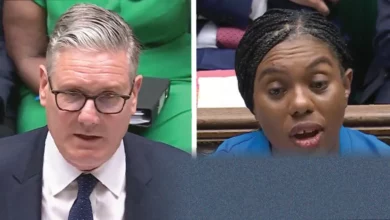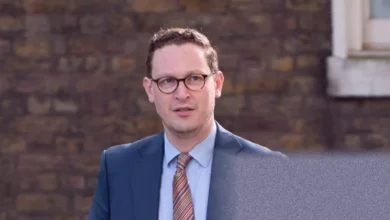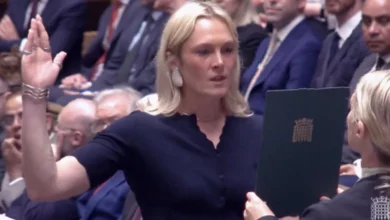
Labour faces leadership challenges after poor election results, with the party reeling from a catastrophic local election defeat that has triggered a wave of internal turmoil and resignations. Prime Minister Sir Keir Starmer, whose popularity has plummeted since Labour’s landslide general election victory in July 2024, is now fighting to retain control of a party he led to power less than two years ago.
Devastating losses that reshaped the political landscape
The local elections held on May 7, 2026, delivered what analysts have described as Labour’s worst local election result on record. The party lost more than 1,400 council seats across England, with significant ground ceded to Reform UK on the right and the Green Party on the left. The scale of the defeat was historic: Labour also lost power in the Senedd for the first time since its creation in 1999, and failed to make any meaningful gains in Scotland despite continuing discontent with the SNP.
The results have been widely interpreted as an unofficial referendum on Starmer’s leadership. Many analysts now doubt he will lead the party into the next general election, which must be held by 2029. The losses have exposed deep fractures within Labour, triggered by a failure to connect with voters on both flanks and compounded by a weak economy, the lingering cost of living crisis, and the ongoing impact of Brexit on trade. Critics argue the government lacks a clear vision and direction, creating a “vacuum” where policy should be and “drift” where decisive action is needed.
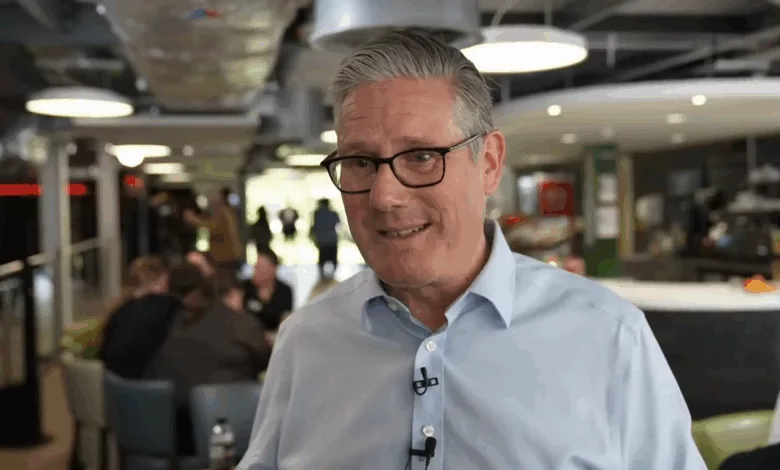
The immediate political fallout has been severe. Internal dissent, which had been simmering since the results came in, erupted into open challenge within days. The Prime Minister himself acknowledged the turbulence, and in a public statement allowed himself a wry smile as he referenced the drama surrounding his government — a moment that was widely shared in news clips. Yet the underlying crisis is no laughing matter for a party that now faces the real prospect of handing power to Reform UK, as one senior figure has warned.
Starmer’s response: defiance and calls for stability
Despite the mounting pressure, Sir Keir Starmer has stated he has no intention of stepping down. In his first public remarks after the results, he took responsibility for the election losses but insisted the country needed stability and that he would fight on. He has pointed out that the formal process for a leadership challenge has not been triggered: it requires 81 Labour MPs to formally back a challenger. Starmer has vowed to “deliver the change we promised” and to “get on with governing,” emphasising the need for the party to remain united.
Allies of the Prime Minister have indicated that his focus is on uniting the party, though internal manoeuvring suggests that unity may be hard to come by. Starmer’s government has been praised for its handling of international affairs, specifically for keeping the UK out of the “US-Israel war against Iran,” but the broader global landscape remains dangerous and volatile, with the rise of superpowers like China and a “failed superpower” in Russia. Domestically, however, the perception is one of drift, and the economic headwinds continue to batter ordinary households.
Cabinet resignations and leadership ambitions
The most significant blow to Starmer came on May 14, 2026, when Health Secretary Wes Streeting resigned from the cabinet, citing a loss of confidence in the Prime Minister’s leadership. In his resignation letter, Streeting acknowledged Starmer’s “courage and statesmanship on the world stage” but sharply criticised a “vacuum” where vision should be and “drift” where there should be direction. He urged Starmer to allow a broad leadership contest with the “best possible field of candidates.” While Streeting stopped short of launching his own immediate bid, his resignation is widely seen as a precursor to a potential leadership challenge. Speaking in Parliament on May 20, Streeting called on Labour to be bolder and deliver real change, warning that failure to do so risked handing power to Reform UK.
On the same day as Streeting’s resignation, the Mayor of Greater Manchester, Andy Burnham, announced his intention to stand as a candidate in the Makerfield by-election — a move designed to pave his way back to Parliament, where he could then potentially challenge for the Labour leadership. The current Labour MP for Makerfield, Josh Simons, has agreed to step down to allow Burnham to run. Burnham has stated he wants to “bring the change we have brought to Greater Manchester to the whole of the UK.” However, Burnham still needs the permission of Labour’s National Executive Committee (NEC) to stand — an approval that was previously withheld for a by-election in Gorton and Denton.
Adding to the uncertainty, former Deputy Prime Minister Angela Rayner has indicated she is considering a leadership challenge, having resolved a tax issue that previously forced her resignation from the cabinet. Other names mentioned as possible contenders include Ed Miliband and Al Carns, though no formal bids have yet been lodged. The political manoeuvring continues, with the party watching closely to see whether the threshold of 81 MPs will be met to trigger a formal contest. For now, Starmer remains in post, but the loss of over 1,400 council seats, the collapse in Wales, and the resignations of key figures have left his leadership hanging by a thread.