Sir Keir Starmer’s government has seen the passage of its first major legislation and the launch of flagship policies, alongside significant internal departures and a series of political controversies, as reported by The Standard.
Legislative and Policy Steps
The first bill passed by the Commons under the Labour Government was the rail nationalisation bill. The rail networks will come into public ownership under the new operating body Great British Rail once their private sector contracts end, a process which has started with trains operated by South Western Railway (SWR) being taken into public control.
Energy Secretary Ed Miliband introduced a bill to set up Great British Energy, a nationally-owned energy company backed by £8.3 billion over the course of this parliament. The bill focuses on developing, owning, and investing in clean energy projects to accelerate net-zero targets and improve energy security. While its creation has been largely welcomed by the energy industry, some have expressed concern over its impact on economic growth and its ability to deliver value for money.
The government also launched the Warm Homes Plan to deliver lower energy bills and lift over one million households out of fuel poverty.
Economic Record
Upon entering government, Labour promised to make economic growth a priority, with Chancellor Rachel Reeves claiming the previous Conservative government had left a £22bn gap in the nation’s accounts. The UK delivered the fastest economic growth among G7 nations in the first three months of 2025. House prices have bounced back to new all-time highs, and interest rates continue to fall. The Bank of England expects inflation to return to its 2% target this spring.
However, while GDP has grown, it has done so at historically low rates, with low productivity growth leading to stagnating economic growth. Unemployment has risen towards 5%, which is partly attributed to higher labour costs following last April’s rise in the national living wage and employers’ national insurance contributions. With the country’s tax burden at a record 38% of GDP, the government has had limited room to stimulate growth.
Public Services: NHS and Policing
Under NHS reforms, waiting lists have fallen considerably and the government met its pledge to deliver two million extra appointments last year. It has also secured £400m investment to boost clinical trials and announced the recruitment of over 1,000 more GPs.
Despite this, figures from late 2025 showed many targets were not met, with 192,000 people still waiting over a year for care. Between September and November 2025, over seven million patients waited four weeks or more to see a GP, a 4.2% increase from the same period in 2024. While 61.8% of patients had been waiting less than 18 weeks—the best performance for more than two years—this was well below the government’s target of 92%.
On crime, a key pledge was to put 13,000 additional officers, PCSOs and special constables in neighbourhood policing roles in England and Wales by the end of the Parliament. According to the Home Office, there were 17,175 police officers and PCSOs in such roles as of 31 March 2025, an increase of just 1.3% from the previous year. Public confidence in policing remains weak, with reports of thefts and anti-social behaviour high.
Borders, Housing and Education
Despite vowing to “smash the gangs”, small boat arrivals have continued at near-record levels. The government has struggled with prison overcrowding, leading to the early release of some inmates, a move which has been heavily criticised. However, there has been praise for one of Starmer’s first acts as prime minister: the cancellation of the controversial Rwanda asylum plan.
On housing, the government has a target to build 1.5 million homes over this Parliament. To deliver this by the end of the Parliament, an average of 300,000 homes a year would need to be built, but so far they have added just over 200,000 a year. Ministers have said they were always going to ramp up to the target in the later years.
In education, the government has pledged to have “75% of five-year-olds in England ready to learn when they start school”, defined as having a “good level of development”. Official data from the Department for Education suggests that in the 2024-25 school year, 68.3% of children in England had a good level of development, slightly up from 67.7% the previous year. There has also been criticism of the policy to end tax breaks for private schools, with concerns raised about the impact on families and the potential for displacing pupils into the state system.
Internal Departures and Controversies
The prime minister’s director of communications Tim Allan resigned from his role on Monday, following chief of staff Morgan McSweeney who resigned over the weekend.
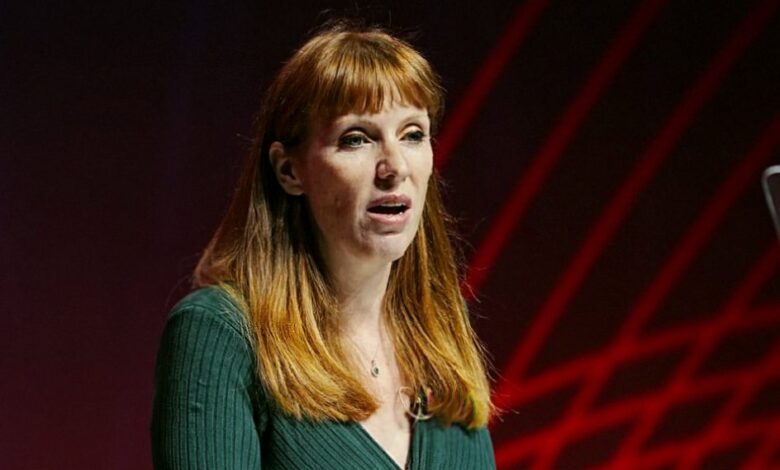
The government has faced several scandals. In September 2024, Sir Keir faced controversy after it was reported he had failed to declare a gift of thousands of pounds worth of clothes to his wife Victoria by Labour Party donor Baron Alli. A deeper crisis emerged in September last year when Deputy Prime Minister Angela Rayner resigned after it was revealed she had underpaid stamp duty by £40,000 on an £800,000 flat she purchased in May 2025. While an investigation concluded she acted with integrity, it deemed that Rayner had breached the ministerial code.
A more recent scandal has grown around Sir Keir’s appointment of Peter Mandelson as the UK’s US ambassador in 2024, following further revelations about Mandelson’s relationship with disgraced financier Jeffrey Epstein in documents released by the US Department of Justice. Mandelson’s relationship with the convicted sex offender was a matter of public record at the time of the appointment. Starmer has said that Mandelson lied to him about the extent of his relationship with Epstein during the vetting process, but many have questioned the prime minister’s judgement. Starmer appears to have survived for now, having seemingly secured the backing of his cabinet.