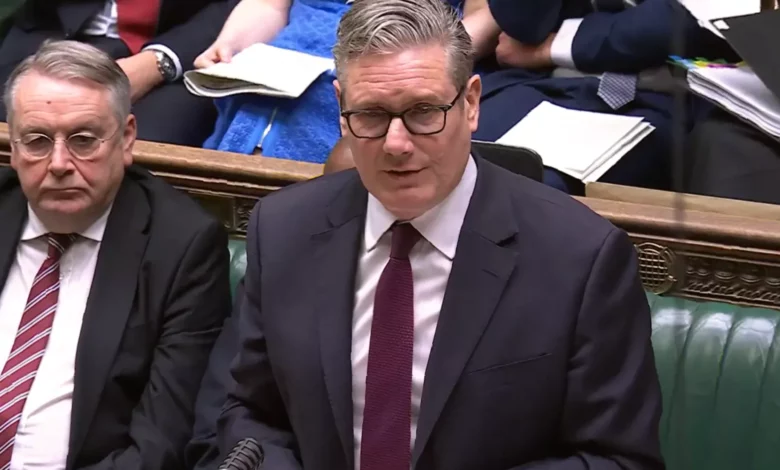
Sir Keir Starmer’s government is bracing for a significant revolt from its own backbenchers this week, as confirmation of deep, multi-year cuts to Britain’s international aid budget threatens to ignite a civil war over the party’s core values.
The Foreign, Commonwealth & Development Office is expected to make a formal statement to parliament on Thursday, setting out reduced allocations for overseas development aid (ODA). This will crystallise plans, first announced over a year ago, to reduce spending from 0.5 per cent of gross national income to just 0.3 per cent by the 2027/28 financial year.
According to the expected trajectory, the ODA budget will be trimmed to 0.48 per cent in the current 2025/26 year, before falling sharply to 0.37 per cent in 2026/27 and reaching the new target of 0.3 per cent the following year. The government has indicated that guaranteed funding will be maintained only for specific crises and commitments: Ukraine, Gaza, the UK’s Overseas Territories, and Sudan, with protections for women and girls programmes also expected to be upheld.
A Betrayal of ‘Internationalism’ and a Gift to Rivals
The move has provoked dismay and anger among Labour MPs, who see it as a retreat from the party’s traditional internationalist stance. Gareth Thomas, the Labour MP for Harrow West and a former international development minister, issued a stark warning that the cuts would cede global influence to adversarial states.
“In an already unsafe world, cutting aid risks alienating key allies and will make improving children’s health and education in Commonwealth countries more difficult,” he stated. “We risk creating more opportunities for regimes who don’t share our values.” Mr Thomas argued that national security relied on “soft power” as much as military strength, a view echoed by Dr Beccy Cooper, Chair of the All Party Parliamentary Group on Global Health Security.
“Labour is, and always has been, a party of internationalism. When we step back from our shared commitments, we lose both our strength and our standing in the world,” Dr Cooper said. She warned that weakening health systems in poor countries would accelerate the spread of disease, directly endangering public health at home.
From Moral Beacon to Retreat: The Unravelling of a Consensus
The cuts represent a further unravelling of a longstanding cross-party consensus. The UN target of spending 0.7 per cent of GNI on aid was established in 1970. The Labour government under Tony Blair later committed to reaching it, increasing aid from 0.22 per cent to 0.38 per cent by 2007. The UK first met the 0.7 per cent target in 2013 and enshrined it into law in 2015 under David Cameron’s Conservative-led government.
That consensus fractured in November 2020 when Rishi Sunak’s government, citing the economic shock of the Covid-19 pandemic, reduced the legal target to 0.5 per cent. The current Labour administration has stated an intention to return to 0.7 per cent when fiscal conditions allow, but its latest plans move the country decisively in the opposite direction.
This has drawn condemnation from across the political spectrum. Former Conservative development minister Andrew Mitchell has been a vocal critic, describing such cuts as a “strategic mistake.” Former prime ministers David Cameron and Tony Blair have also warned against the move, with Mr Cameron calling it a “moral, strategic and political mistake” and Mr Blair labelling it a “profound strategic mistake” that undermines efforts to tackle climate change, pandemics, and extremism.
Within Westminster, key Labour chairs Sarah Champion of the International Development Committee and Liam Byrne of the Business Committee have signed letters expressing “deep concern” and calling for a funded roadmap back to 0.7 per cent.
Fuel for a Broader Labour Mutiny
The aid row is not an isolated incident but fuel for a broader mutiny simmering on the Labour backbenches. The discontent follows a speech by former deputy prime minister Angela Rayner, who publicly denounced government plans to dramatically increase the qualifying period for migrants and refugees to gain settlement as “un-British” and a “breach of trust.”
This internal strife has been amplified by a disastrous by-election result in Gorton and Denton, where Labour was pushed into third place behind Reform UK, losing what was once its seventh-safest seat to the Green Party. The twin blows have led to active discussions among MPs about replacing Sir Keir Starmer in a bid to shift the party leftwards.
“The issue on overseas aid is just another example of the way this government has moved away from Labour values,” one senior backbencher said. The government’s defence, that it is forced to make cuts due to the state of public finances inherited from the Conservatives, is doing little to assuage critics who see the decision as both ethically and strategically flawed.
Specific concerns beyond the headline percentages include reports of a potential 20 per cent cut to the UK’s contribution to the Global Fund to Fight Aids, Tuberculosis and Malaria, which aid groups warn could lead to hundreds of thousands of avoidable deaths. There is also ongoing unease about the extent to which the diminished budget will continue to be consumed by the costs of supporting refugees within the UK.
As the FCDO prepares its statement, the prime minister faces a battle on two fronts: to defend a major policy shift that has alienated historical allies abroad, and to contain a rebellion at home that questions the very soul of his party.