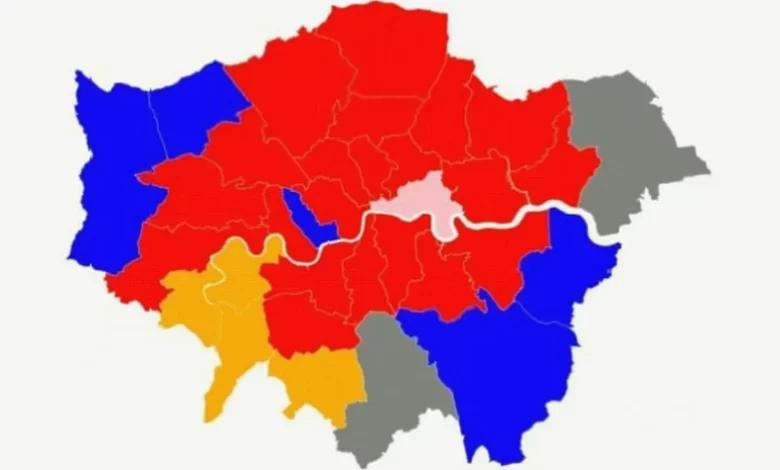
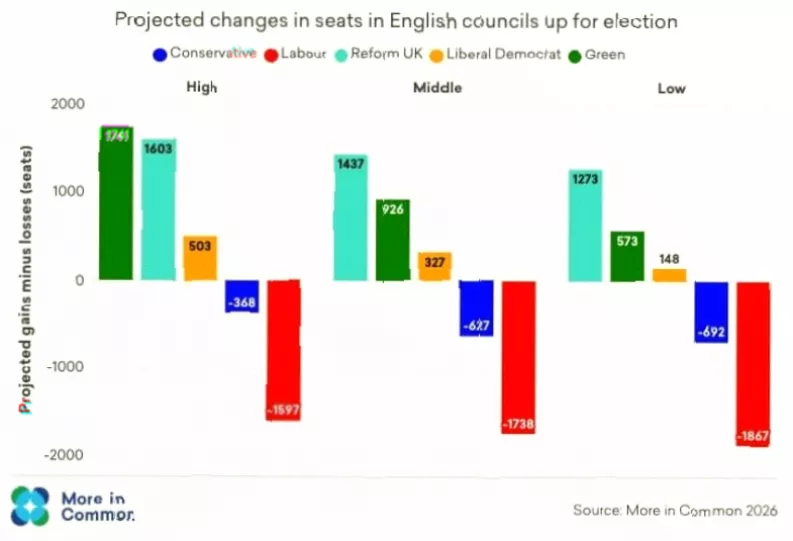
Labour could lose control of 15 London boroughs in the upcoming local elections, according to a YouGov MRP poll that projects the Green Party and Reform UK making substantial gains across the capital. The survey suggests Labour, which currently holds 21 of London’s 32 town halls, will have the largest vote share in only 15 of them come 7 May. The Greens are predicted to have the highest number of councillors in four boroughs, Reform UK in three, the Conservatives in five and the Liberal Democrats in four.
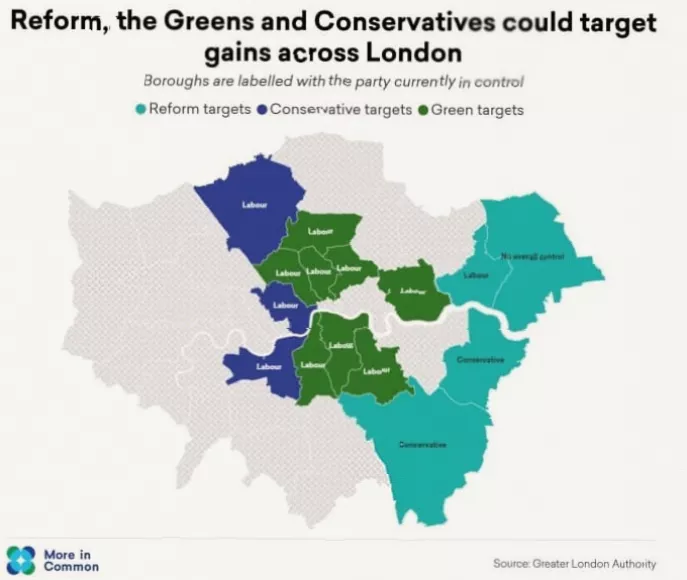
Analysis from pollsters More in Common backs this picture, claiming the Greens are heavily favoured to win inner London areas such as Hackney and Lewisham, while Reform could leapfrog the Conservatives in outer London boroughs including Bexley, Bromley and Havering. Luke Tryl from More in Common said the Greens could do “very well, taking advantage of the disaffected progressive vote” and that Labour could be reduced to single digits on Hackney council. Reform, he added, could also perform strongly in the Labour stronghold of Barking and Dagenham. Both the Conservatives and Liberal Democrats could cause Labour trouble in one or two boroughs, the polling suggests.
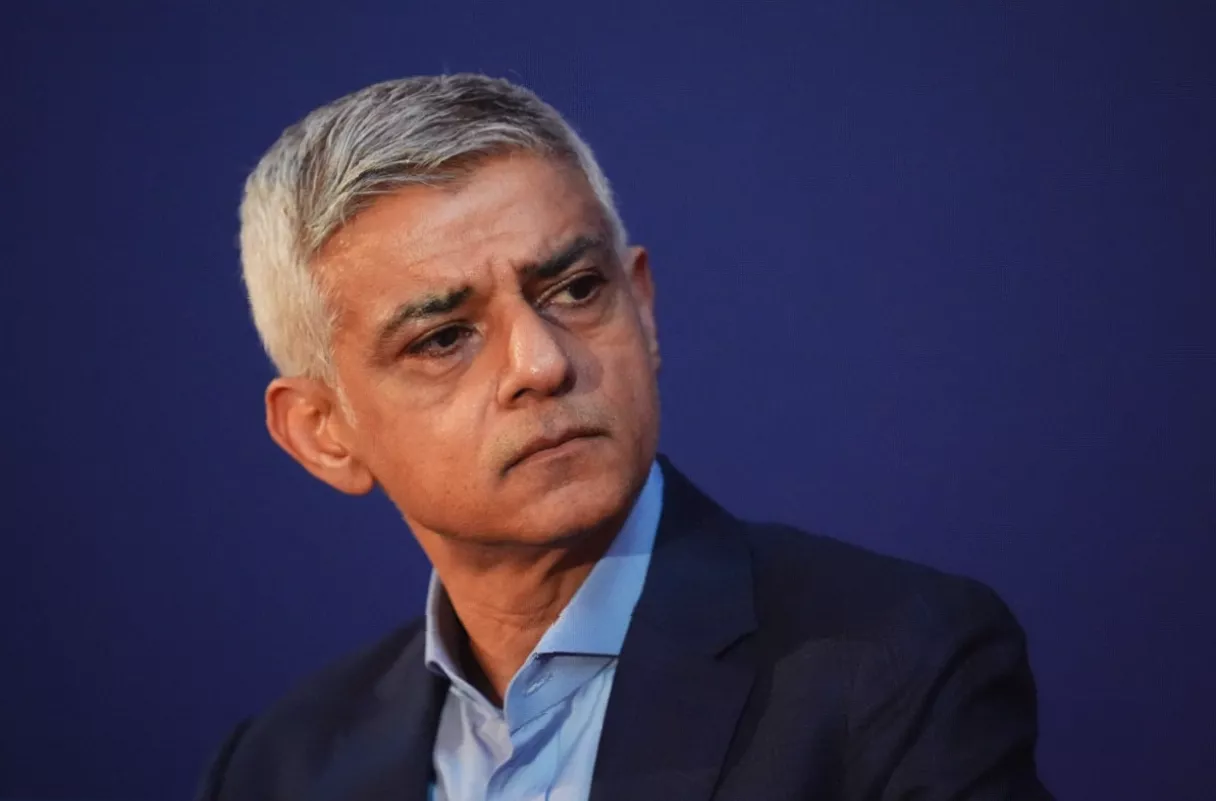
Sir Sadiq Khan has admitted the projections “scare me” and made a heartfelt plea to voters not to use the local elections as “a referenda on how perfect or imperfect the Labour government is”. But the consequences of the expected losses extend far beyond the council chambers.
Why council control matters to the Mayor
While Londoners will not vote for the next Mayor and London Assembly until 2028, the local election results will directly affect Sir Sadiq’s ability to deliver his agenda. The Greater London Authority (GLA) sets the regional strategy on major issues such as housing, transport and policing, but it is the borough councils that implement many of those policies. A shift in control of multiple town halls means the next two years could see a political battle of attrition between City Hall and boroughs over contentious matters including major developments and Low Traffic Neighbourhoods (LTNs).
LTNs have been a particularly divisive issue in London, with critics arguing they displace traffic and pollution to boundary roads, disproportionately affecting lower-income areas. Some LTN schemes have faced legal challenges and been ruled unlawful. The controversy over the expanded Ultra Low Emission Zone (ULEZ), which Khan navigated during his re-election campaign, is also noted as a factor that may have cost Labour votes in outer boroughs. The ongoing housing crisis, soaring costs of rent and the wider cost-of-living pressures have further fuelled voter dissatisfaction, with the Greens and Reform capitalising on disaffection.
The composition of London Councils, the cross-party organisation that represents the capital’s 32 borough councils and the City of London, is also set to change. Currently chaired and dominated by Labour officials, London Councils works closely with City Hall on the implementation of housing, transport and environmental policies. On 16 June, however, a new chair and executive committee will be elected “on a politically proportional basis”, meaning Khan could face a very differently aligned organisation. The Mayor has accepted he would work with the new batch of local leaders regardless of party.
Opposition parties vow to hold Khan to account
Bullish opposition parties have pledged to “hold the Mayor’s feet to the fire” after 7 May if London ends up a lighter shade of red. The Liberal Democrats’ London spokesperson, Luke Taylor MP, told the Local Democracy Reporting Service: “From the housing crisis and transport cuts, to the rise in neighbourhood crime, Londoners have been let down by Labour for far too long. We were promised that a Labour Mayor and Government working together would get a better deal for residents, instead we have seen broken promises and we are at risk of managed decline.” He added that the Liberal Democrats would continue to demand “more bobbies on the beat”, fight cuts to bus services and call out the failure to fix “pothole riddled roads”.
A City Hall Conservatives spokesperson said: “Sadiq Khan continues to let down Londoners by neglecting the responsibilities of his job and refusing to take being Mayor of London seriously.”
Sir Sadiq argued that a Labour council “working with a Labour mayor and a Labour government” can do more than a party that uses a town hall “to protest”, an allusion to some Green and independent candidates who have based their campaigns on the war in Gaza and the government’s response to it. “I’m there for all Londoners, which means representing all of London, whether you voted Labour, Conservative, Green, Lib Dem, Reform, or any party, big or small,” he told the Local Democracy Reporting Service last week. “Similarly, I try to work with all council leaders, whether you’re a council leader who’s from my party, or Conservative, or Lib Dem. Or a Green, or a Reform, going forward after May 7. It’s really important we come together as Team London to work for the common good – and as long as I’m here, I’ll carry on working with politicians from all parties for the common good, which is our constituents.”