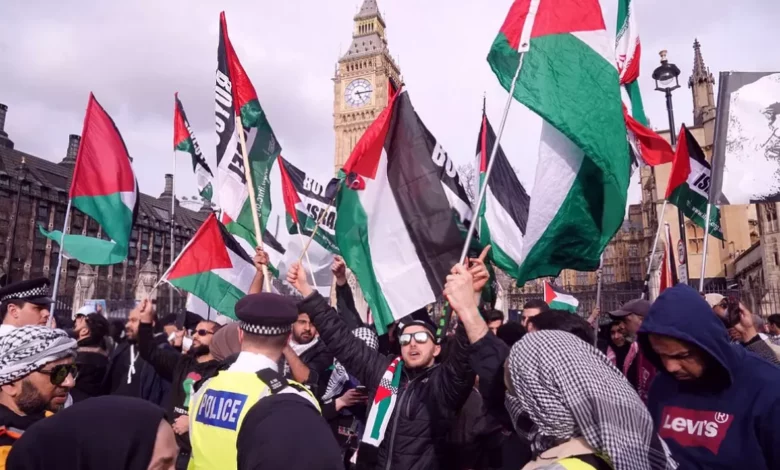
For the first time in over a decade, the power to ban a protest march in the capital has been invoked, with the Home Secretary, Shabana Mahmood, approving a Metropolitan Police request to prohibit this Sunday’s Al Quds Day procession through central London.
A decision taken over fears of “serious public disorder”
The Met stated that the threshold for such a ban is exceptionally high and the decision was not taken lightly. The force concluded that the “uniquely complex” context and “severe” risks meant that simply imposing conditions on the march would be insufficient. Their assessment pointed to the anticipated large scale of the main protest and planned counter-protests, alongside heightened tensions linked to the ongoing Middle East conflict and specific concerns about Iran.
This context includes the recent arrest of four individuals suspected of spying on Jewish communities for the Iranian regime, and a separate incident where a man was reportedly stabbed at the weekend over opposing views on the Iranian regime.
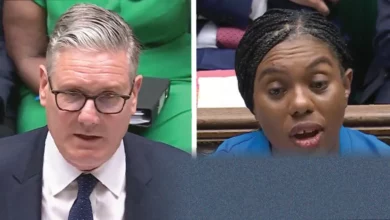
In her statement, Home Secretary Shabana Mahmood stressed her first duty was to keep the public safe. She described the move as “limited and specific,” adding: “What I have announced today is narrowly focused on specific circumstances in a unique moment, but it does not alter an enduring fact: in this country, we rightly pride ourselves on our freedoms, including the right to peaceful protest.”
The march, its organisers, and a long history of controversy
The Al Quds Day march, which has taken place in the UK for over 40 years, is an annual event established by Iran’s Ayatollah Khomeini after the 1979 revolution. Observed on the last Friday of Ramadan, it aims to express support for Palestinians and oppose Israel and Zionism. In London, it is organised by the UK Al-Quds Committee, with the Islamic Human Rights Commission (IHRC) playing a central role.
The IHRC has been described as an organisation “supportive of the Iranian regime” and “ideologically aligned” with it. It recently condemned the killing of Iran’s supreme leader, Ayatollah Ali Khamenei, describing him as a leader who “resisted oppression and stood on the right side of history.” This alignment has long fuelled criticism of the march.
Past marches have seen arrests for supporting proscribed terrorist organisations and antisemitic hate crimes, with participants seen waving the flag of Hezbollah—a banned terrorist group in the UK—and chanting calls for the death of America and Israel. In 2022, protesters carried posters of the late Iranian general Qasem Soleimani and placards demanding “resistance by any means necessary.”
Legal loopholes and the right to protest
While the march is banned, the decision also covers any planned counter-protests. However, a significant legal distinction remains: police do not have the power to ban a static demonstration. The Home Secretary has stated that strict conditions will be applied to any stationary protest, but this has been described by Lord Walney, the former independent adviser on political violence, as a “loophole” in public order legislation.
The IHRC has already stated it will hold a stationary rally instead and is seeking legal advice to challenge the ban, which it condemned as a “politically charged” and “blatant violation of claimed freedom of expression.”
The decision comes against a backdrop of recent legislative changes. The Police, Crime, Sentencing and Courts Act 2022 and the subsequent Public Order Act introduced new restrictions, including measures to consider the “cumulative impact” of protests. However, the High Court recently ruled that the government’s ban on the activist group Palestine Action was “disproportionate and unlawful,” a ruling the government intends to appeal.
Reactions: from welcome to condemnation
The ban has drawn starkly divided reactions. The Board of Deputies of British Jews welcomed it, stating that “Britain’s streets should not be used as a platform for antisemitism, extremism or support for terrorism,” and called for it to be made permanent.
Courts Minister Sarah Sackman said those expressing support for the “malign regime in Iran” should not be “on the streets of London calling for hate and hostility against this country,” calling such sentiment “thoroughly anti-British.” The Conservative shadow home secretary, Chris Philp, also welcomed the decision.
Conversely, independent MP Jeremy Corbyn raised objections, citing the European Convention on Human Rights and the fundamental right to protest.
A shadow of past violence
The security assessment is also informed by a tragic past incident. In 2017, a convicted terrorist, Darren Osborne, who had initially planned to ram attendees of the Al Quds Day march, instead attacked worshippers outside Finsbury Park Mosque, killing one person. This history underscores the potential for extremist violence around such highly charged events.
With the march itself prohibited, the focus now shifts to how police will manage any static gathering under what the Home Secretary promises will be “strict conditions,” testing the boundaries of protest rights in a period of intense international tension.