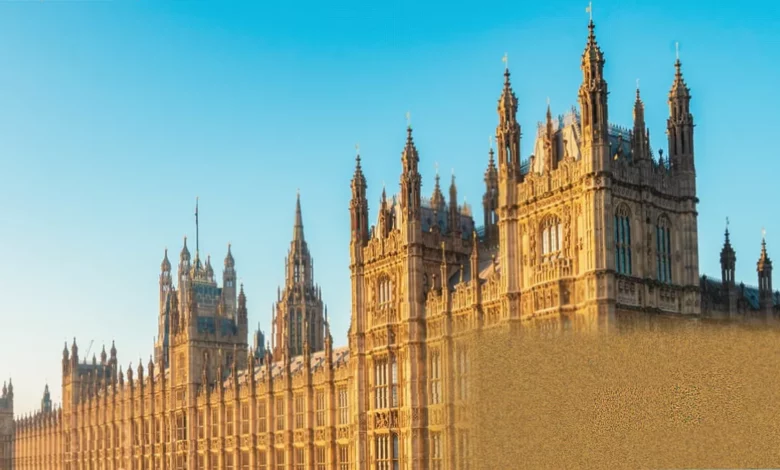
Victims of rape and sexual violence were left sobbing and struggling to breathe after witnessing what they described as “pugnacious” and “adversarial” questioning by MPs during a parliamentary evidence session, a formal complaint has revealed. The distressing incident occurred as survivors were present to give testimony on the government’s controversial plans to limit jury trials, a reform they fear will further erode trust in a justice system already straining under backlogs.
The complaint, sent by the office of the Victims’ Commissioner for England and Wales, details how survivors felt “threatened and attacked” by the tone of the session held by the public bill committee for the Courts and Tribunals Bill. One victim, Morwenna Loughman, wrote that the questioning “crossed the line into disrespect and pugnaciousness,” thrusting her into a fight-or-flight response that culminated in an emotional breakdown. Another, Charlotte Meijer, said the aggressive style made her feel “like I was back in court,” while Jade Blue McCrossen-Nethercott said the line between scrutiny and cross-examination had been crossed.
‘Unnecessarily adversarial’ questioning sparks complaint
In a letter to the committee chair, Sir John Hayes, the chief executive of the Victims’ Commissioner’s office, Susannah Hancock, stated that Claire Waxman, the Commissioner herself, could not “in good conscience, encourage victim-survivors to participate in evidence sessions conducted in a manner that may expose them to retraumatisation or emotional harm.” The letter asserted that Sir John had failed to “prevent the tone from escalating,” allowing exchanges to become “unnecessarily adversarial.”
The session’s tension was crystallised in an exchange between Waxman and the shadow justice minister, Kieran Mullan. He questioned her about a letter from 30 organisations representing victims of violence against women and girls, which urged the Justice Secretary, David Lammy, to drop the jury trial plans. When Mullan pressed Waxman on whether the letter referenced impacts on victims, she replied that it focused on victims who were also defendants and suggested he read it fully. Mullan retorted, “I have read it, and I have just read you a quote. If you do not want to take a common quote at its face value, that is fine.” Waxman responded by reminding him, “Can I just remind you that we have victims in the room, and I think that is really important?”
This “pugnacious” style, as described by victims, is at the heart of the complaint. Advocacy groups argue that such an approach risks replicating the very dynamics survivors find traumatic within the justice system itself. Farah Nazeer, chief executive of Women’s Aid, said that while robust questioning was essential, this “felt closer to cross-examination” and lacked care. Rape Crisis, in its own letter to the committee, warned that the “adversarial” tone, repeated interruptions, and pressure for narrow answers mirrored distressing courtroom experiences.
Contentious reforms provide the backdrop
The highly charged atmosphere is set against the contentious proposals within the Courts and Tribunals Bill, introduced in February 2026. The Bill aims to reform criminal courts in England and Wales, with a central plank being the limitation of jury trials for certain offences—particularly those likely to draw a sentence of three years or less, and complex fraud cases. The government’s stated rationale is to speed up justice and tackle a Crown Court backlog of nearly 80,000 cases, with Lord Chancellor Lammy asserting the reforms will “deliver swift and fair justice victims deserve.”
However, the plans have faced fierce opposition. The legal charity JUSTICE strongly opposes restricting jury trials, arguing there is no evidence it will significantly reduce backlogs and that it risks undermining justice. The London School of Economics has submitted evidence to the committee highlighting a lack of sufficient modelling to justify the reforms and warning that a three-year punishment threshold is a poor metric. Concerns have also been raised that judge-only trials could lead to more biased outcomes and disproportionately affect women and girls from minority ethnic backgrounds, given the demographic profile of the judiciary.
It was within this febrile context that victims and their commissioner were giving evidence. Claire Waxman, who began her role as national Victims’ Commissioner in January 2026 after previously serving as London’s first Independent Victims’ Commissioner, has been a prominent advocate for victims’ rights. Her complaint was escalated by committee chairs to the deputy speaker, Nusrat Ghani, who oversees bill committees.
In her response, Ghani, the first Muslim woman to serve as a Deputy Speaker, underscored the balance parliament must strike. She stated it was important that MPs had “freedom to question robustly during parliamentary proceedings, particularly when holding public officials to account,” but also said the committee had “adopted an appropriate tone for questioning those witnesses and recognised their courage.”
Kieran Mullan defended his approach, stating he had “no regrets for ensuring the House was not misled by a witness,” and that it was an MP’s job to “get to the truth of a matter – without fear or favour.” He added he was “of course very sad that our exchanges upset victims who happened to be in the room.”
Waxman, however, maintained that parliament must be “a safe and supportive place” for victims, and has requested a meeting with the deputy speaker. “Having followed parliament’s own processes and seen the concerns raised dismissed,” she said, “I believe more needs to be done to ensure victims are properly supported, heard and valued.”