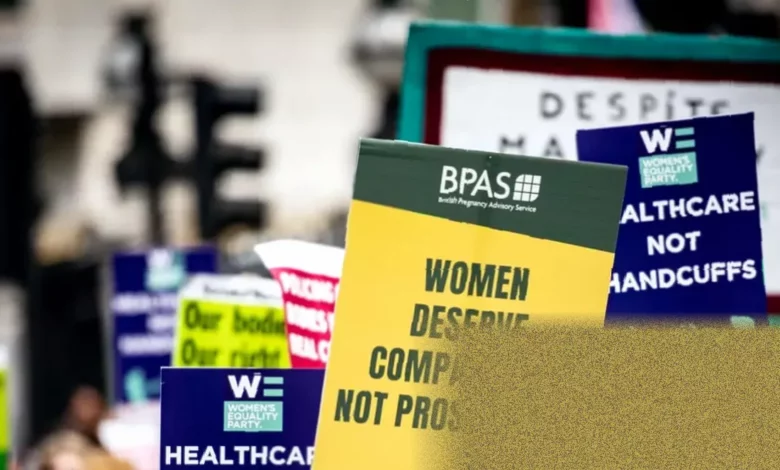
Abortion law in England and Wales, a complex tapestry woven from Victorian criminal statute and 1960s healthcare provision, is poised for its most significant shift in generations as the House of Lords prepares to debate pivotal amendments on Wednesday evening.
A Legal Legacy: From 1861 to 1967
The current framework rests on two pillars. The first is the Offences Against the Person Act 1861, a law which makes abortion a criminal offence carrying a potential life sentence. The second is the Abortion Act 1967, which created a legal defence, allowing termination under specific conditions: with the approval of two doctors and primarily within the first 23 weeks and six days of pregnancy.
This means that, technically, abortion has never been fully legalised; the 1967 Act provides an exception to a criminal rule. Any procedure falling outside its strict criteria remains a crime under the 1861 Act. This historical anomaly has long been a target for reform campaigners.
The Commons Vote: Removing Women from Criminal Law
In June 2025, the House of Commons voted to fundamentally alter this approach by supporting an amendment to end the criminalisation of women who end their own pregnancies. Championed by Labour MP Tonia Antoniazzi, the change aims to remove women themselves from the scope of the 1861 Act and the related Infant Life (Preservation) Act 1929.
This was hailed as the biggest advance for reproductive rights in England and Wales in sixty years. Proponents argue it is a necessary step to stop treating women as criminals for decisions about their own bodies, pointing to research indicating over 100 women have been investigated under these laws in recent years, in some cases following suspected miscarriages.
Decriminalisation vs. Legalisation: What Changes and What Doesn’t
It is crucial to distinguish this move from full legalisation. The proposed decriminalisation focuses solely on the pregnant person. The existing medical framework of the Abortion Act 1967 would remain intact, including the 24-week time limit for most procedures and the requirement for two doctors’ authorisation. Assisting in an unlawful abortion would also remain a criminal offence.
Furthermore, provisions for telemedicine for early medical abortions, made permanent in August 2022, are not directly altered by this amendment, though they have been a point of contention in the wider debate.
The Lords Debate: Safeguards and “Back-Street” Fears
The legislation now faces scrutiny in the House of Lords, where a vocal minority of peers are seeking to block or amend it. The debate centres on conflicting interpretations of risk and safety.
Opponents argue the change is being rushed and could remove vital safeguards, potentially leading to an increase in so-called “back-street abortions” performed beyond legal limits. Some have raised concerns about “abortion up to birth,” a claim strongly rejected by supporters who note the unchanged 24-week limit and the fact that assisting an unlawful late-term procedure would still be a crime.
Proponents in the Lords counter that decriminalisation brings the law into line with international human rights standards and modern medical practice, emphasising that evidence from other jurisdictions does not show it leads to more late-term or unsafe procedures.
Broader Context and Political Winds
The debate occurs against a complex backdrop. In Northern Ireland, abortion law was liberalised in 2020 following Parliament intervention, now allowing terminations unconditionally up to 12 weeks. Globally, a trend towards liberalisation exists, though approaches vary.
Advocacy groups like MSI Reproductive Choices, BPAS, and Abortion Rights have long campaigned for such reform. However, observers note the rise of parties like Reform UK and the importation of US-style anti-abortion rhetoric as potential concerns for the future political landscape, with some figures associated with these movements having previously voted to restrict access.
As peers prepare to debate, the core question remains whether the state should continue to treat a woman who ends her own pregnancy as a potential criminal, or whether, as the Commons has decided, that Victorian legacy has finally reached its end.