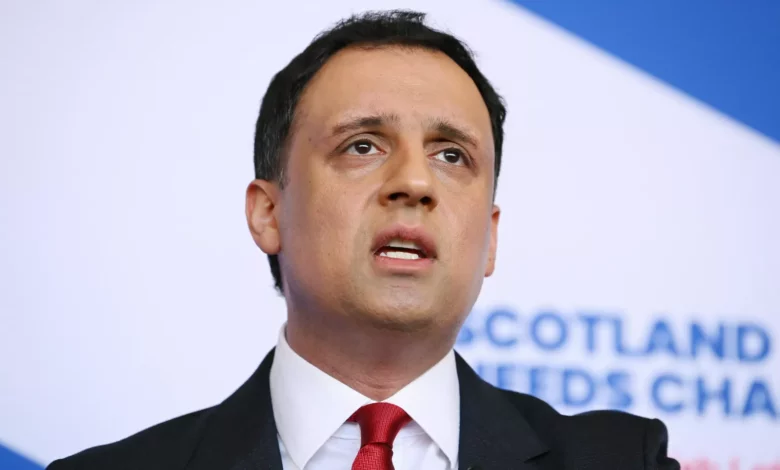
Scottish Labour leader Anas Sarwar has dismissed SNP suggestions that a UK Government decision to block a major Chinese wind turbine factory was politically motivated as “crankery” and “conspiracy theory”, vowing he would always put national security advice first.
The row erupted after ministers announced they would not support the use of turbines from Chinese firm Ming Yang Smart Energy in UK offshore wind projects, effectively derailing its plans for a £1.5 billion manufacturing facility at Ardersier Port in the Scottish Highlands. The official reason, communicated on Wednesday 25 March 2026, was “national security concerns”.
Sarwar Dismisses SNP ‘Conspiracy’
Mr Sarwar, speaking to BBC Radio Scotland, offered a robust defence of the UK Government’s position. He said a national security briefing had identified a risk and it would be irresponsible for any leader to ignore it. “I can give you a cast-iron guarantee, I will not do crankery or conspiracy theory as first minister,” he stated.
He rejected the idea that the UK’s security services would take a “deliberate do Scotland down approach” as the “height of conspiracy theory”. Mr Sarwar emphasised that all major projects receive security scrutiny, and his duty would be to protect the national interest. “If a national security briefing comes to me, I will not ignore it,” he said.
SNP Accuses UK of ‘Anti-Scottish’ Sabotage
First Minister John Swinney has led fierce criticism from the SNP, branding the move “anti-Scottish” and accusing the Labour UK Government of “sabotaging Scotland’s industrial future”. He said he was “bewildered” and “blindsided” by the decision, which came just hours after MSPs completed their final day at Holyrood ahead of the 7 May election.
Mr Swinney questioned the lack of a detailed explanation and accused the government of bad faith. “There’s been no transparent explanation to me,” he told BBC Radio 4’s Today programme. He highlighted an apparent inconsistency, noting UK approval for Chinese investment in the Hinkley Point C nuclear power station while blocking the Scottish wind project.
SNP campaign manager Angus Robertson echoed this, suggesting the project would not have been blocked had it been located in the rest of the UK. The proposed facility was to be Britain’s largest and first fully integrated wind turbine plant, promising up to 1,500 initial jobs and another 1,500 in later phases at the strategically important Ardersier Port, which is being developed as a key offshore wind hub.

The Core of the Security Concerns
While the UK Government has not provided granular detail, the decision sits within a significant and widening geopolitical context of Western nations scrutinising Chinese involvement in critical national infrastructure.
Ming Yang Smart Energy is a Chinese corporate giant, founded in 1993 and ranked as the world’s fourth-largest wind turbine manufacturer. It is a leader in offshore and floating wind technology. However, its origins and operations in China have placed it under the microscope of security officials in London and allied capitals. Reports suggest direct pressure from Washington influenced the UK’s decision, with the Trump administration and US lawmakers having previously voiced national security objections to the project.
The UK’s own legislative framework provided the mechanism for the block. The National Security and Investment Act (NSIA), introduced in 2021, grants the government sweeping powers to investigate and intervene in commercial deals that could threaten national security. The Act has contributed to a more cautious climate for Chinese investment in the UK, following earlier actions such as the phased removal of Huawei from the UK’s 5G networks.
Analysts point to a broader tension in UK-China relations, caught between a desire for economic cooperation and deepening security apprehensions over espionage and state influence. There is a prevailing view in government that China’s dominance of the global wind power supply chain—accounting for two-thirds of global turbine construction in 2023—coupled with the potential for state interference in private companies, presents a long-term strategic risk. Some observers argue the UK is “overstretching the concept of security” from traditional high-tech sectors into basic energy infrastructure, a move that could impact the country’s reputation for commercial openness.
The decision has practical ramifications beyond geopolitics. Ming Yang had a 2025 deal with UK energy firm Octopus Energy to supply turbines for onshore wind projects, and was reportedly a preferred supplier for the Green Volt floating offshore wind project in Scotland—arrangements now in doubt. The company expressed disappointment, calling it a missed opportunity for market competition that could lead to higher energy prices, but indicated a willingness to re-engage if policy changed.
For the Scottish Government, the focus remains on the lost economic potential and the timing of the announcement, which it views as a deliberate slight. For the UK Government and its supporters like Mr Sarwar, the calculus is defined by security warnings that transcend immediate political or regional economic gains.