Burnham sets out plan to renationalise water and energy over 10 years
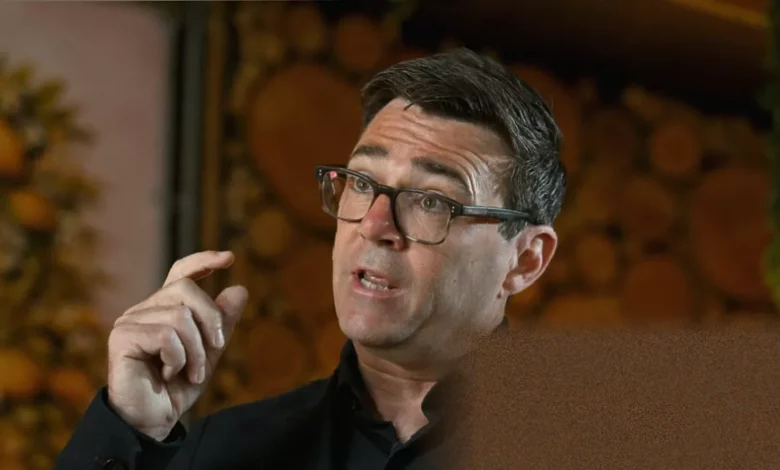
Andy Burnham would launch a decade-long project to bring water and energy back under public control if he becomes prime minister, according to sources close to the Greater Manchester mayor. The move, described by allies as one of the biggest transfers of ownership since the privatisations of the 1980s, is intended to improve performance and potentially lower household bills. “When Andy says he wants the public to have control over ‘the essentials of life’, we should believe him,” one Burnham ally said. “He is completely serious.”
Burnham himself has said he wants to see “the essentials of life being run primarily for the public interest, not for the private interests”, though he has not spelled out exactly what that would mean on a national scale. A spokesperson declined to comment further on his policy plans. The mayor is currently campaigning in the Makerfield by-election on 18 June, a contest Labour figures are increasingly confident of winning. A small group of people close to him has been collating ideas for government, including Josh Simons, the outgoing Makerfield MP, and Miatta Fahnbulleh, the former energy minister. Neither would comment, though friends of Fahnbulleh said she is doing her own policy thinking that Burnham could draw on. Other contributors include John Wrathmell, Labour’s former head of economic policy who now works at the mayoral authority; JP Spencer, a devolution expert at the ThinkLabour thinktank; and Tom Whitney, an adviser to Transport Secretary Heidi Alexander.
Water sector: Thames Water first, then a phased takeover
At the heart of the agenda is a proposal to bring utilities back under public control, starting with the stricken Thames Water. Burnham told the Guardian last week: “Public ownership is absolutely an option. I would say for Thames Water, that is what should be done.” His allies want the government to place the company into special administration rather than accept a deal offered by creditors that would write off up to £1bn in environmental fines. They argue the government could then take over the company, though at a cost to taxpayers because administrators are likely to insist creditors receive some compensation.
A significant majority of Thames Water customers – 54% according to a Survation poll – favour special administration over the creditors’ deal. Polling also shows 82% of Britons believe water companies should be run in the public sector. The current Labour government has already banned bonuses for underperforming water company executives through the Water (Special Measures) Act passed in June 2025 and is reviewing the regulatory system. After Thames Water, a Burnham government would likely take over other water companies as they either fail or their franchises come up for renewal, a model that mirrors the approach used for the railways. Louise Haigh, Burnham’s campaign manager, launched the Passenger Railway Services (Public Ownership) Bill when she was transport secretary, which aims to bring most passenger services under public ownership as contracts expire.
Over the course of about ten years, allies claim the entire water sector could be placed in public control. The structure they envisage is modelled on utility companies in Berlin or Paris, where municipal governments hold a majority of the shares while the organisations themselves are run independently and give workers and residents board representation. Such a structure could give political leaders the power to push for bill reductions, though doing so could compromise the repair and rebuilding programmes that many experts say are desperately needed.
Energy: grid and distribution, not generation or retail
Parts of the energy sector would also be transferred into public ownership under plans being drawn up by those close to Burnham. These would cover grid operations currently carried out by National Grid and distribution, which is done by smaller regional companies. However, the plans are unlikely to include taking over power generation or selling electricity to consumers, which would remain in private hands. The national energy system operator was already nationalised in 2024, and the publicly owned Great British Energy company has been launched. Polling indicates 70% of Britons believe energy companies should be run in the public sector.
Financial risks and the taxpayer burden
The most contentious element of Burnham’s plan is the cost. Critics argue that renationalising utilities would place a heavy financial burden on taxpayers at a time when Burnham has promised to stick to the government’s existing borrowing rules and not raise income tax, VAT or national insurance. He has also said he would consider cutting some employers’ national insurance contributions and proposed a cut to business rates for pubs and small businesses, further constraining his fiscal headroom.
The government’s own estimate, from the Department for Environment, Food and Rural Affairs, puts the cost of nationalising the entire water industry at about £100bn. That figure is based on the Regulatory Capital Value (RCV) of the sector, assuming the government would absorb both equity and debt without discounts or premiums. But the estimate has been heavily criticised as misleading and inflated by experts including Professor Dieter Helm and legal scholar Ewan McGaughey. McGaughey argues that public ownership could cost “close to zero” by using special administration and accounting for actual market values, which may be significantly lower than RCV – especially given the financial and environmental failures of companies like Thames Water. Some reports note that the private equity firm KKR offered a £4bn equity injection for Thames Water at a time when its RCV was nearer £20bn, illustrating the gap between book value and market reality.
A report by Teneo, commissioned by Thames Water, suggested a 9.5% interest rate for government loans during special administration – a figure critics have deemed misleading when compared with the treatment of Bulb Energy, the collapsed supplier that was taken into public ownership at no net cost to the taxpayer. Some legal experts have said the whole process could be done much more cheaply if administrators agreed that creditors should take little or no compensation.
Burnham’s allies acknowledge that taking over companies under special administration would still leave taxpayers on the hook for billions of pounds’ worth of infrastructure upgrades and running costs. The Manchester mayor has already had to backtrack over one policy in recent days, having pledged to support the Waspi women, who say they have been unfairly hit by changes to the state pension age, before clarifying he would not back paying them compensation – a move estimated to cost over £10bn. Should he become prime minister, he would also face immediate calls to raise the defence budget after a row over the Defence Investment Plan led to John Healey’s resignation as defence secretary on 11 June. Healey argued the planned increase to 2.68% of GDP by 2030 was inadequate and that the Treasury was unwilling to commit the necessary resources.
Some close to Burnham also want him to announce a package of measures to reduce the cost of living should he become prime minister. One plan would combine a one-year freeze on private rents, a cap on bus fares, and the removal of green levies from electricity bills – with the lost revenue replaced by taxation. According to its backers, all three proposals together would reduce inflation by 0.6 percentage points and could be funded in part by increasing capital gains tax, as advocated by Wes Streeting, the former health secretary and one of Burnham’s most likely leadership challengers. Streeting has proposed equalising capital gains tax rates with income tax rates of 20%, 40% and 45%, a move he says would create a “wealth tax that works” and could raise an estimated £12bn to £14bn annually. Critics warn the change could be disruptive to growth, discourage investment and lead to capital flight, with some tax analysts calling the proposals “nonsense”.
Investors have already expressed concern that a Burnham-led government might loosen spending constraints, potentially increasing the budget deficit and weakening confidence. Some commentators have noted that his proposals for “public control” lack specific detail, making it difficult to assess their practical implementation and impact. Burnham’s philosophy, which he has dubbed “Manchesterism”, emphasises a shift from centralised Westminster control to place-based delivery, pointing to the success of Greater Manchester’s Bee Network in bringing bus services back under public control as a proof of concept. Whether that model can be scaled to the entire national water and energy grid – and at what cost – remains the central unanswered question of his agenda.