
Sir Keir Starmer is poised to recalibrate a major immigration proposal, hinting at a softening of its terms as he seeks to secure Labour’s appeal to centrist voters ahead of a crucial electoral test.
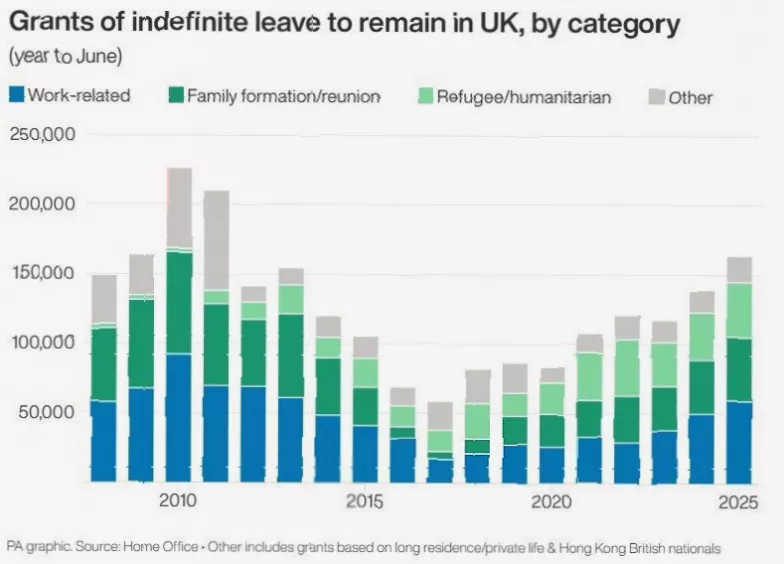
The potential shift concerns a plan, still under consultation by the Home Office, to double the minimum time required for migrants on visas to qualify for indefinite leave to remain from five years to ten. A particular point of contention has been whether this change would apply retrospectively to those already living and working in the UK under the existing rules.
The pivotal case of the care sector
The most forceful arguments against the retrospective application have come from within the social care sector, a case Sir Keir has publicly acknowledged as “powerful”. Adult social care already faces a staffing crisis with approximately 110,000 vacancies and is heavily reliant on international recruitment. Critics argue that extending the settlement timetable for care workers already in the UK—which could see some waiting up to 15 years for permanent status—would breach trust and exacerbate the sector’s shortages.

Labour MP Neil Duncan-Jordan, a former trade unionist who has organised parliamentary opposition to the plans, stated that pulling the rug out from workers who came in good faith is “simply wrong”. He warned that the proposals risk “pushing the sector closer to breaking point” and devalue challenging, essential work that is not “low-skilled”. This concern is amplified by existing recruitment challenges following recent visa changes, such as the ban on care workers bringing dependants.
Union leaders have warned the plans would “move the goalposts” for migrants already in the country, a sentiment echoed at the highest levels of the party. Former Deputy Prime Minister Angela Rayner labelled the proposals “un-British”, arguing that altering settlement rules for those who planned their lives under a different system constitutes a profound breach of trust and undermines fair play.
Internal pressure and a clash of values
This internal dissent is significant, with over 100 Labour MPs signing a private letter to the Home Secretary urging a rethink. The opposition frames the policy as a betrayal of core Labour values in pursuit of a harder line on immigration. Neil Duncan-Jordan has been a vocal critic, stating that “a Labour Government has lost its way when it is making policy designed to chase Nigel Farage’s tail instead of doing what’s best for the country.”

In response, Home Secretary Shabana Mahmood has defended the proposed reforms as a necessary balance of “compassion and control”, arguing they are essential to restore order at the border. She has warned Labour MPs against retreating to “fairytales”, cautioning that failure to address border security could lead to the “nightmare” of Reform UK winning power.
Sir Keir Starmer’s recent intervention seeks to navigate this rift. He stated that while people want “firm” and “clear rules”, they also want them to be “compassionate and fair”, and emphasised that no final decisions have been reached while the consultation is ongoing.
The centrist pitch and electoral calculus
The leader’s comments underscore a deliberate political strategy. He declared his intention to compete for the political centre, stating his belief that “politics is always won from” the middle. This positioning comes at a sensitive time, with Labour facing electoral uncertainty in the looming local council elections in May, and follows recent setbacks like a defeat in the Gorton and Denton by-election.
The rise of the anti-immigration Reform UK party is a clear factor in Labour’s calculations. Reform’s Zia Yusuf has accused Sir Keir of “pathetically caving” to internal critics like Angela Rayner and suggested Labour is failing to deal with what he terms the “disaster” of the “Boriswave”—a reference to high immigration during Boris Johnson’s premiership, which Reform frames as a “Tory betrayal”.
This political context illuminates the potential U-turn as part of a broader, pragmatic reset of Labour’s governing DNA under Starmer, moving from a more open-armed approach to a control-oriented stance, while now adjusting to avoid alienating its own base and essential public services. The outcome will signal where the party’s balance between control and compassion ultimately lies.