Three government aides have resigned, demanding that the Prime Minister set out a timetable for his departure following a disastrous set of local election results for Labour. The coordinated exits mark a significant escalation in the internal pressure on Sir Keir Starmer, with scores of Labour MPs now openly calling for him to stand down.
Tom Rutland, parliamentary private secretary (PPS) to Environment Secretary Emma Reynolds, was the first to publicly confirm his resignation. He was joined by Joe Morris, a PPS to Health Secretary Wes Streeting, and Naushabah Khan, a PPS to the Cabinet Office. All three have urged the Prime Minister to make way for a new leader.
Rutland’s resignation: “Animosity towards the Prime Minister was clear”
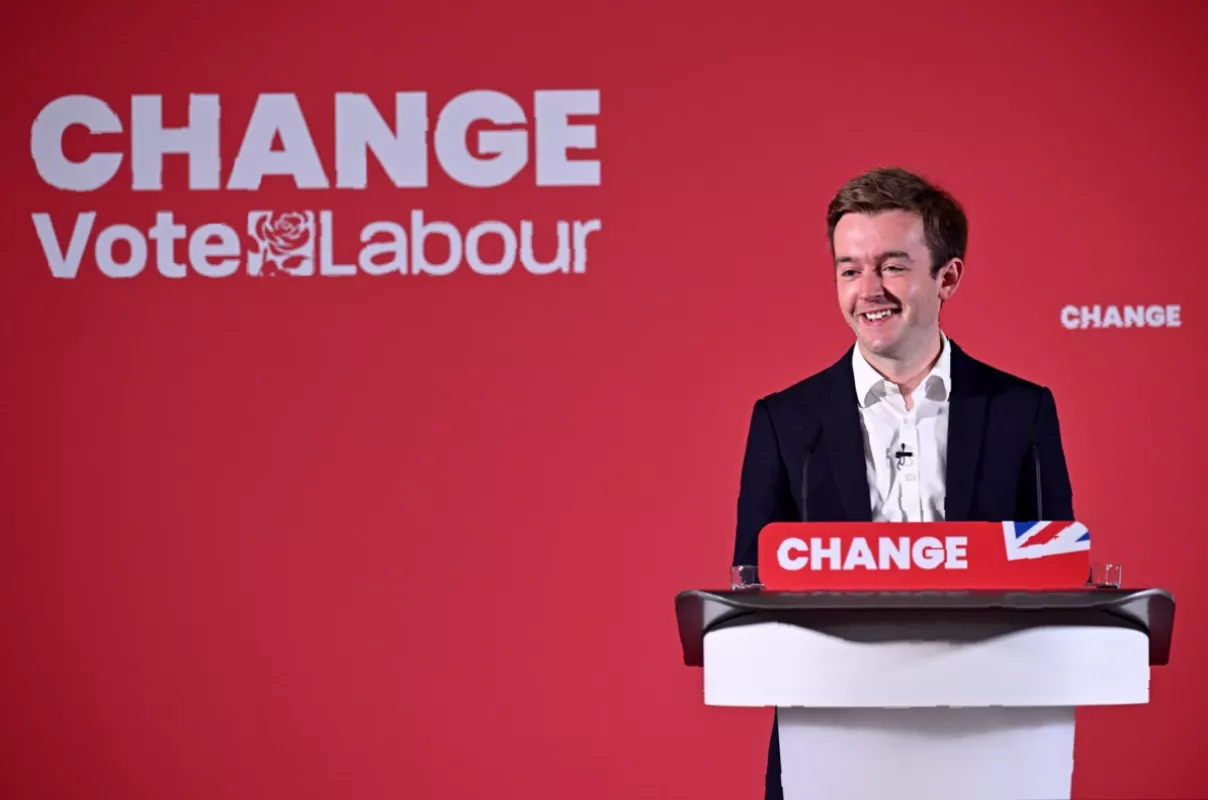
In a lengthy statement, Tom Rutland, the UK’s youngest MP who represents East Worthing and Shoreham, set out his reasons for leaving the frontbench. He said he had watched “brilliant councillors lose their seats last week through no fault of their own” and described a consistent pattern when speaking with voters on the doorstep. “Time and time again… I heard little dislike for local councillors nor for the Labour Party, but the animosity towards the Prime Minister was clear from every voter who was choosing to vote for another party or considering doing so,” he wrote.
Rutland compared the reaction to the hostility he encountered under a “former leader” — a reference widely interpreted as Jeremy Corbyn’s tenure. He said it was “clear to me that the Prime Minister has lost authority not just within the Parliamentary Labour Party but across the country and that he will not be able to regain it.” This, he argued, “significantly impedes the ability of the Government to deliver the change that people voted for at the general election — change that we must deliver.”
He also raised the threat posed by Reform UK, describing it as a “generational responsibility to stop Reform’s hatred and division from taking over our great country.” Rutland added: “I do not have faith that the Prime Minister can meet this challenge.” Concluding that it was “not compatible to hold this view and continue to serve on the frontbench,” he resigned as PPS and said he would continue to represent his constituents from the backbenches.
Rutland was elected in July 2024 and previously served as a Labour councillor for Streatham Common and Vale ward on Lambeth London Borough Council from 2022 to 2024.
Other resignations and growing calls for change
Joe Morris, who served as PPS to Health Secretary Wes Streeting, also resigned and called on the Prime Minister to set out a “swift” timetable to stand down. Naushabah Khan, PPS to the Cabinet Office, resigned with a statement calling for “new leadership” and insisting “we need a clear change of direction now and no game playing.” Khan was elected as MP for Gillingham and Rainham in 2024 and previously stood as a Labour candidate in Rochester and Strood. She was appointed to her PPS role in September 2025.
Separately, Sally Jameson, a PPS to Home Secretary Shabana Mahmood, has also called for Sir Keir to resign, though she has not resigned her own position. The three resignations come as reports indicate as many as 56 Labour MPs have now publicly called for Starmer’s departure.
Broader context: disastrous local elections and internal dissent
The resignations follow a severe defeat for Labour in last week’s local elections. The party lost over 1,100 seats, while Reform UK, led by Nigel Farage, gained more than 1,400. The insurgent party has performed particularly strongly in older, less educated, and more deprived areas, posing a challenge to both Labour and the Conservatives. The results have fragmented the political landscape, with Labour’s traditional voter base showing signs of shifting allegiance.
Sir Keir Starmer has acknowledged public frustration but has vowed to fight any leadership challenge and prove his doubters wrong. However, the scale of internal dissent suggests the party is “riven with internal dissent,” with some MPs arguing that Labour is failing to connect with voters on issues such as the cost of living, public services, and immigration.
The turmoil echoes past episodes of internal Labour conflict. The briefing notes that “brutality and hostility” during Jeremy Corbyn’s leadership contributed to Tom Watson’s decision to step down. Tony Blair has also urged the party to abandon what he described as “crazy revolutionary socialism.” Rutland’s direct comparison between current voter hostility and the reaction he saw under a former leader underscores a sense of historical recurrence for many within the party.