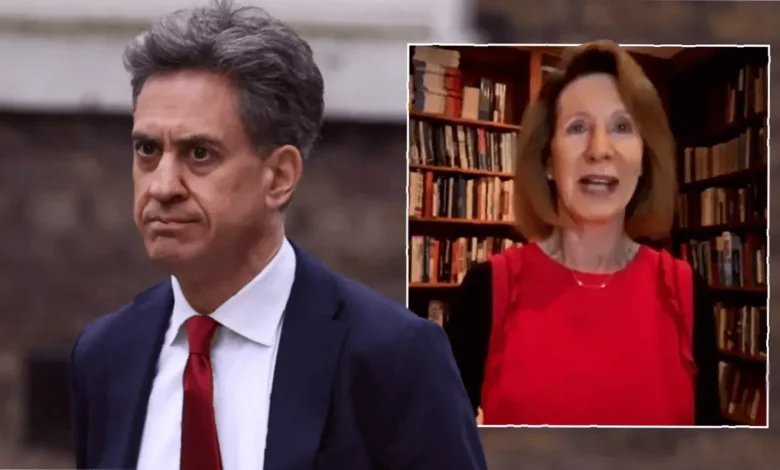
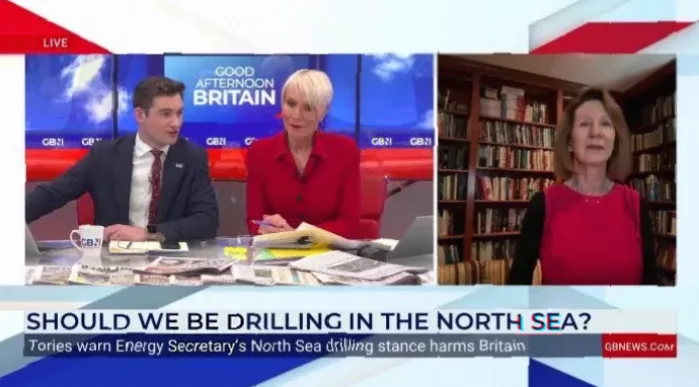
Ed Miliband’s energy strategy has come under direct fire from a senior US economist, who used an appearance on GB News to accuse the Shadow Energy Secretary of acting against the interests of British voters and in favour of “the Chinese”.
Economist’s stinging critique
The criticism was delivered by Diana Furchtgott-Roth, a Distinguished Fellow at the Energy Policy Research Foundation with decades of experience in US government roles under Presidents Reagan, Bush, and Trump. Born in London and an Oxford graduate, she stated: “If I were in the room with him, I’d say think about all these people that want lower prices and also want jobs getting the oil out of the sea, getting the natural gas out of the ground. Think about the people who elected you. Think about what would be good for them and act in their interests, not in the interests of the Chinese.” She has previously warned that “Britain faces an energy catastrophe and Ed Miliband doesn’t care.”
Her intervention comes as the UK grapples with a severe energy price surge triggered by the conflict involving Iran. The effective closure of the Strait of Hormuz, a chokepoint for nearly 20% of global oil and gas exports, has caused major disruption. Wholesale gas prices have risen sharply, with natural gas costs doubling in Europe, while crude oil prices have been highly volatile, spiking to nearly $120 a barrel. The chief executive of Centrica has stated global oil supplies are down 20% due to the conflict.
Labour’s policy and fiscal stance
In response to the crisis, Chancellor Rachel Reeves has outlined the government’s approach, ruling out universal support for energy bills. She criticised the previous government’s £78bn package for being unaffordable and disproportionately benefiting higher earners. Instead, any future support would be “targeted” within “iron-clad fiscal rules,” with a focus on longer-term measures to bring down bills and fast-tracking nuclear and renewables projects. The government is also developing an “anti-profiteering framework” and considering enhancing the Competition and Markets Authority‘s powers to tackle price gouging.
At the heart of the political debate is North Sea drilling. Ed Miliband has consistently argued that increasing domestic fossil fuel extraction would not significantly impact consumer prices, calling such claims “flat out wrong” and a “totally false” solution driven by “crazy net zero” ideology. He maintains that as long as the UK is tied to global fossil fuel markets, it remains a “price taker, not a price maker,” and that true “energy sovereignty” will only come from a faster transition to clean power.
Tory and industry pressure for drilling
The Conservative Party, led by Shadow Energy Secretary Claire Coutinho, has launched a fierce counter-attack, branding Labour’s ban on new licences “sheer lunacy.” The Tories plan to force a Commons vote to approve new drilling in fields like Rosebank and Jackdaw, arguing it could generate £25bn in tax revenues and bolster energy security. They warn that without action, the UK could import 82% of its gas by 2035, leaving billpayers exposed.
This position is supported by industry lobby group Offshore Energies UK, which says the UK “urgently” needs more domestic production for security and affordability, and warns current policy is driving away investment. The manufacturers’ organisation Make UK has also urged approval of the Rosebank and Jackdaw fields to mitigate high industrial energy costs.
However, academic analysis challenges the assertion that drilling would save households significant money. Dr. Anupama Sen of the Oxford Smith School has described such claims as “sheer fantasy,” suggesting maximising North Sea extraction might save households only £16-£82 annually, whereas a fully renewable-powered system could save £105-£441. Ministers argue that new licences cannot guarantee lower bills or security, as resources are sold internationally, and that expanding drilling simply increases exposure to volatile markets.
The political battle lines are now firmly drawn, with the Conservatives labelling Labour’s policy a “triple whammy” of lost jobs, higher taxes, and destroyed investment, and preparing to take the issue to a parliamentary vote.