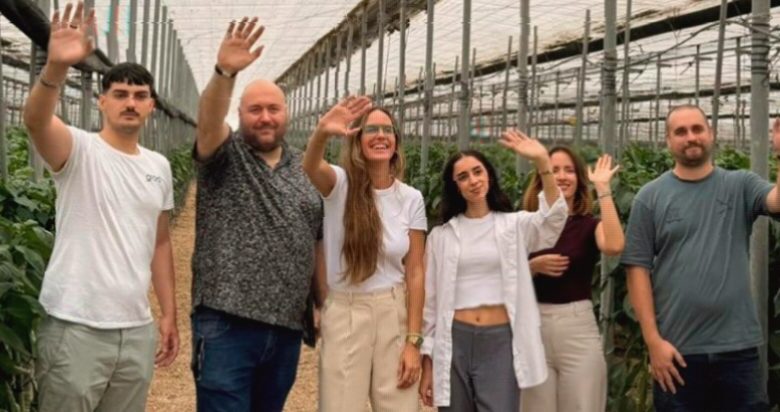
In a significant move for Europe’s high-tech farming sector, a Spanish startup based in the intensive agricultural region of Almería has closed a €2.5 million investment round to advance its autonomous greenhouse robotics. Grodi, founded in 2022, will use the capital to industrialise its flagship VEGA 11 robot and expand its commercial footprint, tapping into growing demand for technologies that boost productivity and sustainability in intensive agriculture.
Robotics for the Greenhouse
Grodi’s core offering is the VEGA 11, an autonomous robot designed to navigate the vast Mediterranean greenhouses independently. Using a sophisticated computer vision system, it captures detailed information on each plant, according to the company. By merging proprietary hardware with machine-learning algorithms and large-scale data analytics, the system provides growers with precise insights into plant health, enables early detection of issues, and offers accurate yield forecasting. All this data is centralised on the Grodi digital platform, aimed at allowing for faster, safer, and more sustainable decision-making.
The company was established by Samuel Ruíz, Natalia Gálvez, and CEO Ana Molina, bringing together expertise in engineering, robotics, agronomy, and computer vision. Its mission is to provide growers, cooperatives, and seed companies with standardised, continuous, and objective information to reduce uncertainty in one of Europe’s key agricultural zones.
The Almería Context: Europe’s Vegetable Garden
Grodi is headquartered in Almería, a region renowned for its intensive greenhouse agriculture often called the “Sea of Plastic.” This area acts as Europe’s vegetable garden, specialising in crops like tomatoes, peppers, cucumbers, and melons, and is a vital supplier of off-season produce to the European Union. The intensive farming model has transformed Almería from a historically impoverished area into an agricultural powerhouse, but it also faces environmental challenges including aquifer overexploitation, plastic waste, and pesticide runoff. This context creates a pressing need for the new sustainability models that technologies like Grodi’s propose to support.
Computer vision in agriculture, which involves using advanced imaging and AI to interpret visual data from farms, is key to this. It allows machines to “see” and analyse crops for tasks like early issue detection, optimised resource use, and yield prediction. Robotic farming in greenhouses is emerging as a solution to increase productivity, reduce labour costs, and minimise environmental impact.
Investment Backing and Strategic Support
The funding round was led by Swanlaab Innvierte Agri Food Tech, a fund specialising in Agri-Food Tech startups with strong technological foundations. Participation came from Axon Desarrollo Andalucía—a €40 million impact fund co-driven by the Junta de Andalucía and the European Investment Bank under the FEDER Andalucía ERDF 2021-2027 programme—along with support from Innvierte, the investment arm of Spain’s CDTI.
“Grodi has managed to combine robotics, computer vision, and advanced analytics into a robust solution that becomes a key tool for farmers. We believe its technology will have a real impact on productivity, sustainability, and competitiveness in the agricultural sector,” said Xana Belastegui, a General Partner at Swanlaab.
Macarena González, Investment Director of Axon Partners Group in Andalusia, stated, “From Axon Desarrollo Andalucía, we invest in projects with a differentiated technological foundation and a real capacity to transform strategic sectors. Grodi has successfully integrated an innovative technological proposal with a solution adapted to farmers’ needs. With this financing, we will support the development of its business plan and R&D&i proposal at a key stage to scale its market impact.”
The European Investment Bank, which co-funds the Axon fund, has a broader role in financing the green transition in EU agriculture. It has announced a €3 billion financing package for agriculture, forestry, and fisheries across Europe, aiming to boost sustainability, support young farmers, and promote green investments.
Broader Trends and Sector Ambitions
This investment aligns with significant pushes to modernise Spanish and European agriculture, focusing on improving resource efficiency, adopting digital tools, and exploring practices like agroecology and nature-inclusive farming to address climate challenges. The adoption of AI, robotics, and computer vision is seen as key to transforming farming practices for increased efficiency and reduced costs.
Grodi is now focused on consolidating the rollout of VEGA 11 and broadening its technology portfolio with new tools for growers’ everyday challenges. CEO Ana Molina emphasised the sector’s urgency, stating, “The sector needs solutions that reduce costs, improve resource-use efficiency, and standardise processes. VEGA is demonstrating that automation and computer vision can radically transform daily crop management.” With this funding, the company aims to accelerate the adoption of advanced greenhouse technologies both within Spain’s leading horticultural regions and internationally.