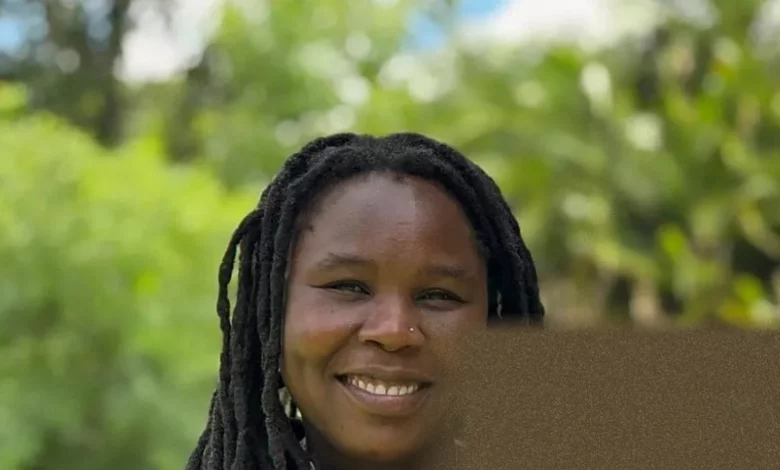
The turning point for Moreangels Mbizah came in 2014, when a lion she was tracking for her PhD research killed a seven-year-old boy in a village near Hwange National Park, Zimbabwe. The conservation biologist had been monitoring the lion’s GPS signal when it strayed beyond the park boundary. By the time she and her team reached the scene, around 30 villagers were standing helplessly in a bush, crying, as the lion guarded the child’s body between its paws. The wildlife authority was called and shot the animal so the body could be recovered. “That was a punch in the gut,” Mbizah recalls. “I realised that the work I’d been doing was just half of the problem.”
The tragedy forced Mbizah to rethink her approach. Until then, she had focused solely on protecting Zimbabwe’s dwindling lion population — a species that has lost up to 90% of its historic range across Africa, with fewer than 20,000 remaining in the wild. But the 2014 attack showed her that any lasting solution had to include the people living alongside the predators. That conviction led her to found Wildlife Conservation Action (WCA), an organisation that places human-wildlife coexistence at the centre of its work.
Redefining conservation after a village tragedy
In the rural communities of Zimbabwe’s mid-Zambezi valley — a vast, biodiverse corridor linking Zimbabwe, Zambia and Mozambique — wealth is measured in livestock. A cow can be worth as much as $300 (£222) and a goat $30, sums that are central to survival when the average household income is $108 a month, Mbizah says. When predators kill livestock or elephants trample crops, the wild animal is often killed in retaliation. “In that case, we have losses on both sides,” she says. “People lose, wildlife loses – and that’s what human-wildlife conflict looks like.”
WCA’s response is built on community-led strategies that empower local people to protect their livelihoods without resorting to lethal action. A key pillar is the “community guardians” initiative — local people trained and employed to monitor wildlife movements and raise the alarm when GPS signals indicate predators are approaching. Known as “Batabilili”, meaning “protectors” in the Tonga language, these guardians serve a dual role: safeguarding livestock and, by preventing retaliatory killings, protecting the wildlife that communities live alongside.
Innovations that save lives and livestock
Among WCA’s most striking innovations is the “mobile boma” — a portable livestock enclosure wrapped in opaque plastic. The principle is simple but effective: lions can smell and hear the cattle inside, but because they cannot see them, they do not attack. “We have seen that these mobile bomas have been 100% effective in protecting livestock,” says Mbizah. The results across the Mbire district, a focus area for WCA, have been dramatic. According to WCA, incidents of human-wildlife conflict have fallen by as much as 98% in the region. The organisation’s work now spans 2.6 million hectares (6.4 million acres) of the Zambezi valley, protecting nearly 18,000 livestock worth an estimated $2.3 million.
Mbire district is a wildlife-rich area and a pioneer of the Communal Areas Management Programme for Indigenous Resources (CAMPFIRE), but it continues to face challenges including poaching and human-wildlife conflict that result in fatalities and injuries. The area sits within the KAZA Transfrontier Conservation Area, a critical wildlife migration corridor. Other mitigation efforts in the district include junior rangers involved in conservation education, supported by the Community CAMPFIRE Association of Zimbabwe (CCAZ) and the Utariri programme, which also tackles human-elephant conflict using chili buffer zones and beekeeping. WCA’s model aims to complement these initiatives, with an ambition to increase the lion population in the Mid Zambezi Valley by approximately 10% to 660 individuals.
From Cecil to community: a conservationist’s path
Mbizah, 42, grew up in Chiredzi, a small town in south-eastern Zimbabwe, miles from any wildlife area. Her first encounter with wild animals did not come until she was 25. “Seeing the little impala jumping around the zebras, feeling like this was a place that I wanted to be and just feeling that strong connection to nature. That was the moment my career began,” she says. For many Zimbabweans, such encounters are rare — and for black women, careers in conservation are rarer still. “It was very lonely,” she says of her breakthrough. “There was no black African woman who had founded a conservation organisation in Zimbabwe. It was something that I saw as a gap that needed to be filled.” Part of WCA’s work is dedicated to outreach programmes that offer young female African conservationists work experience and mentoring. “This has been my story, but it doesn’t have to be the story of everyone coming after me,” she says.
Mbizah holds a PhD in Zoology from the University of Oxford, where her doctoral research involved tracking African lions — including Zimbabwe’s most famous big cat, Cecil. Cecil’s death at the hands of an American trophy hunter in 2015 sparked global outrage. Mbizah still remembers the phone call that told her Cecil had died. “When you spend so much time with lions, you end up developing a bond with them. It was heartbreaking for me,” she says. That loss, combined with the trauma of the 2014 attack, has driven her to find ways for people and lions to coexist. “We are not going to be able to protect lions without protecting the people,” she says.
Mbizah’s work has earned her international recognition. In 2026, she won a Whitley Award — often called the “Green Oscars” — worth £50,000, awarded by the UK-based Whitley Fund for Nature to support grassroots conservationists from the Global South. She is also the recipient of the 2025 National Geographic Wayfinder Award. Past Whitley winners whose work touches on similar themes include Paula Kahumbu (Kenya, 2021 Gold Award for justice for people and wildlife), Shivani Bhalla (Kenya, 2023 Gold Award for community-led lion conservation), and Serge Alexis Kamgang (Cameroon, 2023 Award for lion protection through community engagement). Mbizah is also a TED Fellow and Speaker — her 2019 talk was titled “How Community-Led Conservation Can Save Wildlife” — as well as a Mandela Washington Fellow and a Kinship Conservation Fellow.
For Mbizah, the work has come full circle. The 2014 village tragedy that claimed a child’s life and Cecil’s death in 2015 are not distant memories; they are the reason she now spends her time training Batabilili guardians, deploying mobile bomas, and mentoring the next generation of African women in conservation. “Our model is looking at how we can involve the communities, how we can inspire the communities, how we can motivate and incentivise them to protect the wildlife that they are living alongside,” she says.