Discrimination lawsuit targets 35-year-old US programme aiding Native Hawaiian medical students

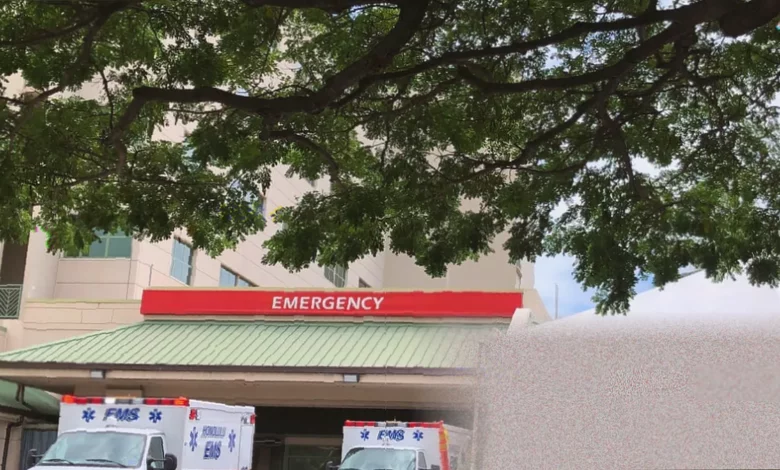
A conservative advocacy group has launched a legal challenge against a three-decade-old federal programme that supports Native Hawaiian medical students, threatening a pipeline of healthcare professionals who serve some of Hawaii’s most underserved communities.
The lawsuit, filed by the Utah-based organisation Do No Harm in March 2026, argues that the Native Hawaiian Health Scholarship Program (NHHSP) is unconstitutional because it restricts eligibility to people of Native Hawaiian ancestry. The group says three of its members – including a white nursing student – were told they could not apply because they are not Native Hawaiian. The suit, which targets the US Department of Health and Human Services (HHS), seeks to have the programme opened to applicants of all races.
“Our complaint … is aimed at ensuring well-deserving applicants can qualify to compete for the financial relief the scholarship provides,” said Dr Stanley Goldfarb, the chair of Do No Harm and a retired kidney specialist.
The challenge has put the future of the NHHSP in doubt. Sheri-Ann Daniels, chief executive of Papa Ola Lōkahi, the non-profit that administers the programme in Hawaii, said the lawsuit disregards the historical context and ongoing need for equitable healthcare for Native Hawaiians. “These scholars represent the next generation of healers for our communities, a presence that uplifts the health of all,” she said.
A programme born from disparity: history and benefits
Congress established the NHHSP in 1988 under the Native Hawaiian Health Care Act, in direct response to a landmark 1985 report (the E Ola Mau Native Hawaiian Health Needs Study) that documented severe disparities in healthcare access and outcomes for Native Hawaiians. The report found that Native Hawaiians suffered from disproportionately high rates of morbidity, mortality and chronic disease – conditions that persist today.
Modelled on the National Health Service Corps, the programme provides financial aid covering tuition, living expenses and other costs. In return, recipients commit to serving in medically underserved areas of Hawaii for a set period after graduation. Over the past 35 years, the NHHSP has supported 324 individuals – including 108 nurses, 71 doctors, 49 social workers, and others in psychology, dentistry, pharmacy and therapy. Since 1991, nearly 360 scholarships have been awarded across 20 disciplines. Papa Ola Lōkahi said each scholar has been placed “to a medically underserved area in Hawaii to serve the communities where care is most needed”, and most remain in those areas beyond their required service, often rising to leadership roles in community health centres and Hawaiian healthcare systems.
The health disparities the programme aims to address remain stark. Hawaii has the longest life expectancy at birth of any US state, but a recent study from the University of Hawaii found that Native Hawaiians and other Pacific Islanders have a much lower life expectancy than other groups. In 2024, nearly 12% of Native Hawaiians had no health insurance, compared with 8% of the total US population, according to figures from HHS. Broader data show that Native Hawaiians and other Pacific Islanders face higher rates of HIV diagnoses, syphilis, chlamydia, tuberculosis, diabetes, heart disease, hypertension, obesity and stroke, along with persistent barriers to accessing quality care.
Dr Daniel Garcia, an internist and medical director at the Maui Medical Group, received the NHHSP scholarship in 1991. At the time he was living in a garage, cleaning yards to get by, and trying to figure out how to pay for medical school. “The scholarship was extremely beneficial because it allowed me to focus on my studies,” he said. As part of the repayment, he was placed in Maui, where his family is from, and has stayed with the same medical group since 2000. “Coming from a demographic that wasn’t really supposed to go into medicine, I was just struggling, and having that resource allowed me to focus and eventually get into medicine and thrive.”
Garcia emphasised the importance of cultural trust. “They didn’t really trust western medicine, they didn’t trust the other physicians that didn’t look like them,” he said of his Native Hawaiian patients. “Native Hawaiians are a very prideful people, and if there’s a tone of condescension or arrogance, they just won’t go.” Dr Dee-Ann Carpenter, an associate professor at the University of Hawaii’s John A Burns School of Medicine, who benefited from a precursor to the NHHSP in the early 1990s, echoed that view. “It is truly awesome for our patients to see faces who look like them in their medical care, almost an automatic connection and trust,” she said. “We need our graduates to be in the community to care for our lāhui [our people]. This scholarship is so needed.”
The case against and wider fight
Do No Harm disputes the premise that patients benefit from having doctors of the same race, calling it a “debunked” medical theory. The lawsuit takes particular issue with the programme’s definition of “Native Hawaiian”, which requires only one Native ancestor. “Because this definition … requires only one Native ancestor, it equally includes a student whose mom is Native Hawaiian (50% Native Hawaiian) and a student whose great-great-great-great-great-great-great grandmother is Native Hawaiian (0.2% native Hawaiian),” the suit reads. “There is no valid reason to make federal scholarships turn on race or ethnicity.”
Kristina Rasmussen, Do No Harm’s executive director, said: “Patients of all races and ethnicities want one thing, and that is a great doctor who can help them feel better. Great doctors are not defined by their skin color or background. Native Hawaiians, along with every other American, should have equal access to federal programs that should be squarely centered on merit.”
The lawsuit is part of a broader wave of conservative legal challenges against race-conscious programmes that intensified after the US Supreme Court ended affirmative action in higher education in 2023. Do No Harm, founded in 2022 by Goldfarb, describes its mission as exposing “political bias and discrimination in healthcare and medical education” and keeping “identity politics separate from medical education, research, and clinical practice”. It has also produced model legislation opposing gender-affirming care for minors, and the Southern Poverty Law Center has designated the group an anti-LGBT hate group.
The Trump administration has aggressively targeted diversity, equity and inclusion initiatives, attempting to cut billions of dollars of Harvard’s federal funding and joining a lawsuit alleging discrimination against white students in Los Angeles. The Department of Education declared on Facebook that “DEI is DEAD!” under Trump.
Last October, a separate conservative group, Students for Fair Admissions (SFFA) – whose founder, Edward Blum, also sits on Do No Harm’s board – filed a similar lawsuit against the Kamehameha Schools, a private school system that prioritises Native Hawaiian students. That suit argues the policy is “so strong that it is essentially impossible for a non-Native Hawaiian student to be admitted”.
Daniels told the local outlet Honolulu Civil Beat that she does not expect HHS to defend the programme. “I don’t have any expectation that they’re going to come riding in on a white horse to save us,” she said. “So I think we have to save ourselves and really be honest about what that means.” Papa Ola Lōkahi is considering whether to intervene in the case. Garcia, reflecting on the effort to roll back the programme, said: “In a word, it sounds evil, to tell you the truth. Some people, some folks just have a darkness in their hearts and they’re called into action whenever they see people being lifted up.”