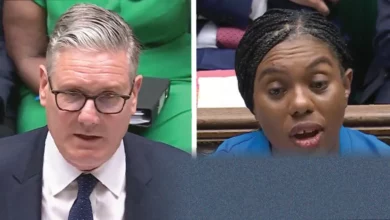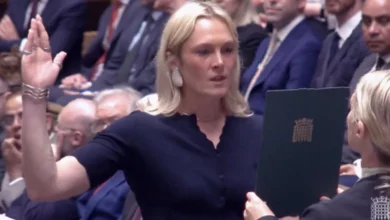
Labour’s own parliamentary playbook is being used against it. The tools Sir Keir Starmer deployed to hound Boris Johnson over Partygate – the humble address, the emergency opposition day debate, the privilege motion – are now being wielded by Kemi Badenoch to force a reckoning over the appointment of Peter Mandelson as ambassador to Washington. The irony is not lost on Conservatives, who say they have learned the lessons of how Labour brought down a prime minister.
The parliamentary playbook returns
The humble address is a device as arcane as it is potent. Technically a petition to the monarch, it compels the government to hand over documents locked inside the Whitehall machine. Labour used it four times in opposition, prising out papers on Brexit and securing the security advice given before Boris Johnson elevated the newspaper magnate Evgeny Lebedev to the House of Lords. Now it is Badenoch who has secured a humble address, forcing publication of the documents relating to Mandelson’s appointment.
That motion triggered the release of files that revealed something even the prime minister says he did not expect: written advice from UK Security Vetting (UKSV) that Mandelson should be denied security clearance. The revelation, first reported by the Guardian, sent the government into disarray. Badenoch then brought an emergency opposition day debate to the floor of the House of Commons, urging MPs to hold the government to account for the decision. And now she is pushing for a privilege motion – a vote on whether parliament’s privileges committee should investigate whether Starmer misled the Commons when he repeatedly told MPs that “full due process” had been followed.
These are the same mechanisms Labour once championed. During Partygate, the party forced a privileges committee investigation into whether Johnson had lied about lockdown parties in Downing Street. That inquiry contributed to his resignation as an MP. “We absolutely have learned the lessons from what happened during Partygate,” one Conservative veteran told reporters. “Our long-term strategy is to trap the prime minister progressively until he can no longer deny that he misled parliament.”
The Mandelson appointment and its fallout
Starmer’s problems began in late 2024, when he decided to appoint Peter Mandelson as UK ambassador to Washington. The appointment was controversial from the start. Politicians are rarely posted to diplomatic roles, and Mandelson, a Labour peer and veteran of successive governments, had twice been forced to resign from cabinet over separate scandals. He was also known to have been a friend of Jeffrey Epstein, remaining in contact with the financier after his 2008 conviction for sexual offences against children. The release of US court documents and emails in September 2025 revealed that the friendship was closer than previously understood, with allegations that Mandelson passed confidential government information to Epstein while serving as Business Secretary. Mandelson was arrested in February 2026 on suspicion of misconduct in public office; he denies criminal wrongdoing and has expressed regret, saying he was “taken in” by Epstein.
The security vetting process compounded the controversy. In January 2025, UKSV recommended that Mandelson be denied clearance. Despite that recommendation, the Foreign Office granted him clearance. Starmer has stated he was “furious” and “not aware” of the vetting failure, and that he would not have proceeded with the appointment had he known. He blamed Foreign Office officials for not sharing the information. Sir Olly Robbins, then permanent secretary at the Foreign Office, was sacked by Starmer over the issue. Robbins later stated that confidentiality rules prevented him from sharing sensitive vetting information with the prime minister, and that he was following procedures. He also indicated there had been significant political pressure from Downing Street to expedite Mandelson’s appointment. Starmer has since changed the process so that appointments are no longer announced until security vetting is completed.
Starmer sacked Mandelson from the post within a year, after documents showed his Epstein connection was closer than realised. But the focus has now shifted to what the prime minister knew about the vetting – and what he told parliament.
The charge of misleading parliament
At the heart of the Conservative attack is the accusation that Starmer misled the House of Commons. The ministerial code states that ministers who knowingly mislead parliament are expected to resign. In the UK, misleading the house is counted as “contempt of parliament” and ranks among the most serious offences a parliamentarian can commit. Anyone who accuses another MP of misleading parliament is liable to be thrown out of the chamber by the speaker. An MP found guilty can be suspended, and when Labour pursued Johnson over Partygate, the privileges committee investigation led to his resignation as an MP.
The parallels are deliberate. “Misleading parliament has always been a big deal,” the Conservative veteran said. “We are very aware of a change in the meaning of contempt in 2022 which means that it is contempt not only to mislead the house but also to refuse to answer reasonable questions in it.” That change was pushed through while Labour was in opposition, and it now applies to Starmer’s own conduct. He told MPs that “full due process” had been followed in Mandelson’s appointment; the documents show that the vetting advice was overridden. The Conservatives are now seeking a debate on whether the privileges committee should investigate the prime minister’s statements.
Tim Bale, professor of politics at Queen Mary, University of London, said: “Command of parliamentary process is incredibly important for a leader of the opposition. If Badenoch has that, she can use it, if not to prise Starmer out of Downing Street, then at least to so damage the morale of Labour MPs and ministers that his position is untenable.”
The stakes are amplified by the broader political context. Since winning a historic victory in 2024, Labour has seen its fortunes slide. Chancellor Rachel Reeves announced cuts to winter fuel subsidies for pensioners soon after taking office, then unveiled a budget that raised taxes to levels not seen since the 1940s, including a £40 billion package of rises in employers’ National Insurance and changes to inheritance tax. The economy flatlined, and ministers attempted to cut welfare spending only to back down after a rebellion by their own MPs. Starmer’s net approval rating has dropped from around zero to roughly minus 40 percentage points – historically low. In the May 2025 local elections, Reform UK won the largest number of seats, while Labour lost a considerable number of councillors and finished fourth in local government. Next month, further elections could see Labour swept from power in councils across the country and come third in its former strongholds of Scotland and Wales.
Hannah White, chief executive of the Institute for Government, drew a distinction between the two scandals. “Like Partygate, the Mandelson case is exposing a prime minister’s mistake through the mechanism of a parliamentary inquiry, ratcheting up the frustration of their backbenchers with their leader,” she said. “But the real damage from Partygate came from the public anger at what was seen as Johnson’s sustained hypocrisy of setting rules for the public which he didn’t follow himself. Whereas Starmer’s peril is in how his party view his judgment in decisions, and particularly appointments, he has made in doing the job.”
Starmer came to power promising to end the chaos and scandal of 14 years of Conservative rule. A former public prosecutor, he was known inside his own party as “Mr Rules”. The Mandelson affair challenges that reputation directly. Energy Secretary Ed Miliband, appearing reluctant to defend the prime minister on television, told Sky News: “A mistake was made. Peter Mandelson should never have been appointed. And that was a mistake. And the prime minister has apologised for it. Rightly so.” Miliband later said he did not believe Starmer should resign, but the comment echoed the moment during the Pincher scandal when Johnson’s own ministers began to walk away.
Boris Johnson’s downfall did not come directly from Partygate. It came from the Chris Pincher affair – the allegations of sexual misconduct against a Conservative MP whom Johnson had made a minister despite being briefed about previous complaints. That perceived lack of transparency triggered more than 50 ministerial resignations and a rolling walkout from government, forcing Johnson to accept his fate and quit. Veterans of that period see a similar dynamic now. “Where this scandal and Partygate are similar,” Bale said, “is that it actually hinges on the confidence of the cabinet. Once you start losing the support of your cabinet, that spells the end, and that might be what is happening now.”