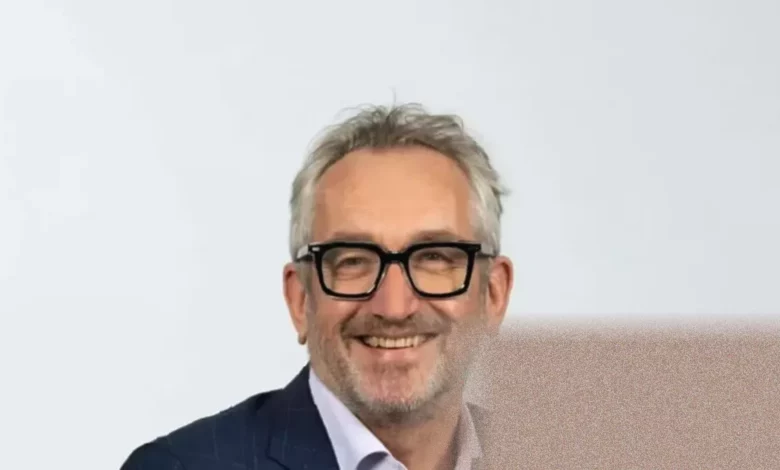
A veteran European journalist and prominent advocate for responsible artificial intelligence in newsrooms has been suspended after admitting he published fabricated quotes generated by AI tools, in a case that lays bare the ethical pitfalls facing the industry.
Peter Vandermeersch, a Fellow for “Journalism and Society” at the publishing group Mediahuis, was temporarily suspended from his role after an investigation by one of the company’s own newspapers found he had published false statements in his personal newsletter. Mediahuis, which publishes titles including the Dutch De Telegraaf, NRC, and the Irish Independent, has also removed a number of his articles from the Irish Independent website.
AI “hallucinations” presented as genuine quotes
The errors came to light following an investigation by NRC, where Vandermeersch served as editor-in-chief in the 2010s. The newspaper alleged he had published “dozens” of false quotes in his Substack newsletter, “Press and Democracy,” which focuses on the connection between a free press and democracy. Seven individuals quoted in his posts confirmed they had never made the statements attributed to them.
In a Substack post titled “I am admitting my mistake,” Vandermeersch stated he had used AI tools—including ChatGPT, Perplexity, and Google’s NotebookLM—to summarise reports and had then failed to verify the accuracy of quotes produced by the systems. “I wrongly put words into people’s mouths, when I should have presented them as paraphrases,” he wrote. “That was not just careless – it was wrong.”
He said he had “fell into the trap of hallucinations,” the industry term for convincing fabrications generated by AI. “It is particularly painful that I made precisely the mistake I have repeatedly warned colleagues about,” he added, noting that the “necessary ‘human oversight’, which I consistently advocate, fell short.”
Mediahuis stresses strict AI rules were breached
In a statement, Mediahuis chief executive Gert Ysebaert said the incident “should never have happened.” He emphasised the company’s position, stating: “At Mediahuis we apply strict rules for the use of AI, where diligence, human oversight and transparency are essential. The fact that these principles were not followed runs counter to the standards we uphold and to our commitment to readers that we stand for reliable journalism.”
The group has developed AI guidelines that stress responsible and ethical use, aiming to support journalists with time-consuming tasks while enhancing quality. Ysebaert has previously stated that AI should “augment journalism, not replace, journalism.” The company is also experimenting with AI agents for initial news reporting, but insists human oversight remains critical.
This is not the first AI-related stumble for the group; its title De Telegraaf recently corrected an article after it emerged to have featured an interview with an AI-generated photograph and potentially fabricated details.
A cautionary tale for the industry
The incident highlights the acute risks newsrooms face as they integrate generative AI. Experts warn of “hallucinations,” embedded biases, and the erosion of public trust, noting that AI can create a “dangerous illusion of reliability” by mimicking journalistic authority without rigour. Professional bodies like the European Federation of Journalists advocate for strict human editorial control, transparency, and clear labelling of AI-generated content.
Vandermeersch conceded he compounded his initial error by failing to correct the false quotes immediately, leaving that task to NRC. Despite the controversy, he remains a believer in the technology’s potential. “I remain convinced that AI can be a powerful tool – one that can help journalism become better, dig deeper, and be more precise,” he wrote, adding he still uses AI for translations and idea generation but with “far less naïve trust.”
His case is especially striking given his seniority and specific remit. Prior to taking up his fellowship exploring issues like misinformation and AI in October 2025, Vandermeersch was the CEO of Mediahuis Ireland from 2022 to 2025, and previously served as publisher and CEO of its Irish operations, formerly Independent News & Media. His long career in European journalism also included leadership roles at Belgian newspaper De Standaard and NRC Handelsblad.
As the media industry grapples with the double-edged sword of AI, the suspension of one of its own fellows for failing to heed the warnings he himself gave marks a sobering moment. It underscores a fundamental tension: the pressure to innovate with new tools against the timeless obligation to verify and tell the truth.