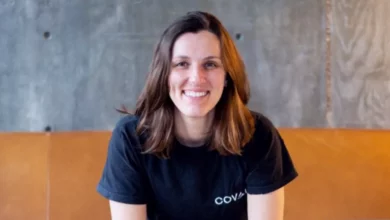
In a hospital room in Jacksonville, Florida, last September, a woman in the midst of labour found herself arguing for her own bodily autonomy before a judge on a tablet screen. Cherise Doyley, a professional birthing doula and mother of three, was in her 12th hour of labour aiming for a vaginal birth despite having had three prior C-sections. When doctors raised concerns about a risk of uterine rupture, Doyley was clear: she understood the risks and would consent to surgery only in a genuine emergency. Instead of respecting her informed position, UF Health Jacksonville contacted the state attorney’s office, initiating an emergency virtual court hearing.
From her hospital bed, without legal representation, Doyley pleaded her case. Judge Michael Kalil ultimately ruled that the hospital could perform a C-section without her consent if an emergency arose. Hours later, after doctors said the baby’s heart rate had dropped, she awoke to find herself being wheeled into surgery. Doyley later stated the experience left her shaken and her rights violated, suggesting race was a factor. Her case is not an isolated one. Approximately 18 months earlier, another Black Florida woman, Brianna Bennett, faced an almost identical ordeal. Having also undergone three prior C-sections, she arrived at hospital prepared to advocate for a vaginal birth. After a prolonged labour, she too declined a C-section, prompting officials to seek a court order. A judge approved the procedure against her objections.
A Contested Legal Landscape
These cases expose a stark legal contradiction. In most circumstances, competent adults in the US have a constitutional right to refuse unwanted medical treatment. However, pregnancy is the only condition where Florida courts have ruled a patient can be forced to undergo it; even state prisoners on hunger strikes retain more decision-making power. This erosion of rights is driven significantly by the “fetal personhood” movement, which posits that a fetus has legal rights equivalent to or greater than those of the pregnant person—a concept gaining powerful traction since the overturning of Roe v. Wade.
Court-ordered interventions on pregnant individuals are not new. For decades, rulings have been inconsistent. In 1993, an Illinois appellate court refused to order a woman to undergo a C-section, while in Florida, a 1999 federal district court decision starkly concluded that a woman’s constitutional rights “clearly did not outweigh the interests of the State of Florida in preserving the life of the unborn child.” The US Supreme Court declined to hear a challenge to the constitutionality of such orders in 1994, leaving a patchwork of state-level precedents. Defending interventions in cases like Bennett’s, State Attorney for Florida’s 2nd Judicial Circuit Jack Campbell argued it was necessary to “save two lives.”
This legal stance puts hospitals and doctors directly at odds with their own professional ethical guidelines. The American College of Obstetricians and Gynecologists (ACOG) states unequivocally that “a decisionally capable pregnant woman’s decision to refuse recommended medical or surgical interventions should be respected,” and that coercion is “ethically impermissible” and “medically inadvisable.” ACOG and the American Academy of Pediatrics have condemned procedures performed without a mother’s consent for the benefit of her fetus. Yet, as these Florida cases show, these guidelines are regularly disregarded.
Systemic Racial Disparities in Care and Coercion
The coercion experienced by Doyley and Bennett did not occur in a vacuum. It is intensified by profound and persistent racial disparities in maternal healthcare. Research shows Black patients are twice as likely to face coercion and unwanted procedures during birth than white patients. They are also 25% more likely to receive unscheduled C-sections. Crucially, studies indicate Black and white patients decline care at similar rates, but practitioners are more likely to accept the refusals of white patients and proceed without consent for Black patients.
The data on C-section rates is particularly telling. One study found that for non-Hispanic Black women, the risk of a C-section was 17% higher in 2021 compared to other racial and ethnic groups, even after adjusting for medical factors—a disparity that has widened over time. The driving force appears to be physician bias, not patient preference. Research by IPR economist Molly Schnell suggests doctors, not mothers, are the reason behind these disparities. Black women were over 20% more likely to undergo a C-section even when they preferred a vaginal birth and had the same medical risk profile as white women treated by the same doctor. Furthermore, unscheduled C-sections for Black women are found to be more discretionary than for white women.
This modern medical bias is rooted in a long history of reproductive oppression faced by Black women, including forced sterilisation, unethical experimentation, and systemic barriers to care. The reproductive justice framework, co-founded by organisations like SisterSong Women of Color Reproductive Justice Collective, was born from this history, advocating for the right to have children, not have children, and raise them in safe environments.
Broader Implications of Fetal Personhood
The forced C-section cases in Florida are a microcosm of a growing national conflict where the rights of pregnant individuals are being systematically subordinated. The fetal personhood ideology, which the Trump administration has advanced through actions defining “female” and “male” as existing “at conception,” seeks to grant legal rights to embryos from the moment of fertilisation. Pregnancy Justice, an advocacy organisation, tracks efforts to enshrine this concept into law, warning it could lead not only to the outlawing of abortion but to sweeping repercussions for fertility treatments like IVF and certain contraceptives.
This creates a contradictory landscape. As bioethics expert Lois Shepherd of the University of Virginia School of Law notes, some states champion medical freedom in areas like vaccine choice while simultaneously restricting the rights of pregnant women. The convergence of this ideology with persistent racial bias creates a perfect storm for obstetric violence—a term used to describe disrespect and abuse during childbirth, including coerced procedures. For reproductive justice advocates, detaching the defence of maternal autonomy from the abortion debate is crucial, framing forced intervention as a fundamental violation of human rights regardless of pregnancy outcome.
The experiences of Cherise Doyley and Brianna Bennett are a stark indicator of how far the state is willing to go in prioritising fetal interests over the autonomous decisions of a pregnant person. When combined with systemic racism in healthcare, the result is a devastating infringement on bodily integrity that falls disproportionately on Black women, continuing a historical pattern of reproductive control under the guise of medical or state necessity.