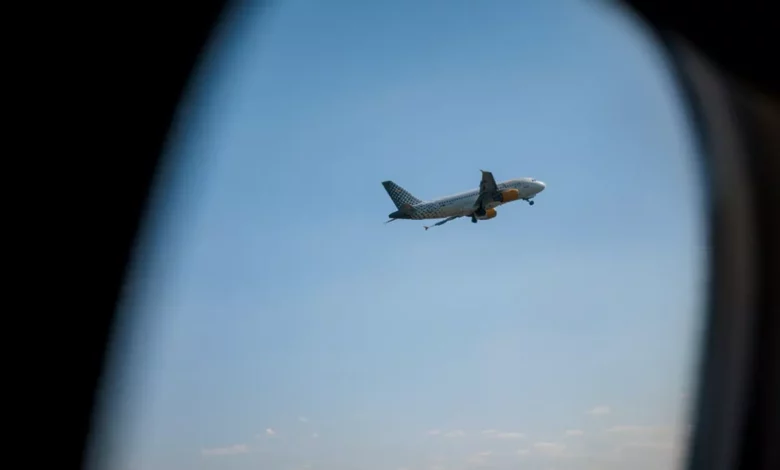
The government has moved to ease restrictive “use it or lose it” airport slot rules in a direct effort to protect British families’ summer holidays, as soaring jet fuel costs triggered by the Iran conflict and the closure of the Strait of Hormuz threaten widespread disruption.
How the slot rule relaxation works
Under normal rules, airlines must use at least 80% of their allocated take-off and landing slots each season or forfeit them for the following year. The policy is designed to prevent airlines from hoarding slots and to ensure efficient use of airport capacity. However, with jet fuel prices roughly doubling since the outbreak of hostilities — Brent crude has surged to $125 a barrel, the highest since March 2022 — many carriers have been forced to cancel flights or risk operating near-empty aircraft, so-called “ghost flights”, simply to retain their slots.
Ministers have now temporarily relaxed that requirement, allowing airlines to hand back some slots without penalty. The move enables carriers to cancel or merge flights on less popular routes — particularly those used by business travellers — and consolidate schedules on routes with multiple daily services, moving passengers to alternative flights earlier. The aim is to reduce demand for aviation fuel and preserve it for peak summer holiday services, preventing last-minute cancellations.
Transport Secretary Heidi Alexander said: “The government has been monitoring jet fuel supplies daily and working with airlines, airports and fuel suppliers to stay ahead of any problems. There are no immediate supply issues, but we’re preparing now to give families long-term certainty and avoid unnecessary disruption at the departure gate this summer.” She added that the government would “do everything we can to insulate our country from the impact of the situation in the Middle East”.
The relaxation applies to eight major UK airports: Heathrow, Gatwick, Stansted, Manchester, Luton, London City, Birmingham and Bristol. The decision follows a call from the aviation industry for greater clarity on contingency planning. Earlier this week, the Prime Minister even suggested people might have to change “where they go on holiday” if the crisis in the Middle East continues and the Strait of Hormuz does not reopen. The waterway, through which about 20% of the world’s seaborne crude oil and LNG exports pass, has been effectively closed by the conflict, leading what the International Energy Agency called the “largest supply disruption in the history of the global oil market“.
Britain is particularly exposed because it relies on Kuwait for roughly a quarter of its jet fuel supply, most of which travels through the Strait. While UK airlines currently report no supply shortages, the government is increasing imports from the United States and West Africa, and has asked British refineries to maximise domestic production to reduce dependency on vulnerable routes.
Industry reaction and passenger protections
The slot relaxation was welcomed by Airlines UK, the trade body representing carriers including British Airways, Easyjet, Jet2, Ryanair, Tui and Virgin Atlantic. Chief executive Tim Alderslade said: “We welcome the government’s contingency planning, including slot alleviation, which is one measure which enables airlines to adjust schedules responsibly, avoid unnecessary flying, and continue operating efficiently while protecting connectivity for passengers. We are planning to take our customers on their well-earned holidays this summer and will always look after them in line with our obligations.”
Julia Lo Bue-Said, chief executive of the Advantage Travel Partnership, a consortium of more than 700 travel agencies, said the move “comes at exactly the right time, as consumers begin planning their summer holidays. It will strengthen confidence and provide valuable reassurance to holidaymakers and the travel industry, as we approach the peak booking season.”
Rob Bishton, chief executive of the UK Civil Aviation Authority, stressed that passengers in the UK have “some of the strongest protection rights in the world”. He said: “Airlines have a duty to look after their passengers when they face disruption, and should offer a choice between a refund or alternative travel arrangements, including with another airline, if a flight is cancelled. Relaxing the rules around slots at airports will allow airlines more flexibility, and so we expect them to give passengers as much notice as possible of cancellations during this period.”
Passenger rights entitle travellers to be rerouted or receive a full refund if their flight is cancelled. For significant delays — two hours or more on short-haul, three on medium-haul, four on long-haul — airlines must also provide care and assistance, including food, drink and accommodation if necessary.
Globally, airlines are already taking drastic action. Air India has announced it is cutting nearly 100 flights across its domestic and international network, with routes to Europe, North America and Australia hit hardest. Chief executive Campbell Wilson warned many international flights had become unprofitable because of the surge in jet fuel prices, combined with airspace restrictions and longer routings. In the United States, low-cost carrier Spirit Airlines has ceased operations immediately after 34 years, citing the “sudden and sustained rise in fuel prices in recent weeks” as the final straw after years of financial hardship. The airline failed to secure a $500 million federal bailout.
Lufthansa is cancelling 20,000 short-haul flights in Europe over the next six months to save jet fuel. Air Canada has suspended several routes and is consolidating flights on lower-demand services. KLM cancelled over 150 European flights. Air New Zealand is cutting 1,100 flights, affecting more than 44,000 passengers through to early May. Ryanair and easyJet, which have hedged a significant portion of their fuel costs through pre-agreed contracts, have not yet cancelled flights, but other European and Asian carriers are considering route reductions.
Fare increases are also spreading. Air France-KLM will raise long-haul ticket prices by €50 per round trip for economy passengers. United Airlines chief executive Scott Kirby indicated a potential 15-20% rise in ticket prices to cover increased fuel expenses. Air India has introduced fuel surcharges on tickets, with further increases planned for international routes. In India, carriers including IndiGo and Akasa Air have imposed surcharges ranging from roughly Rs 199 to Rs 1,300 per domestic sector to offset a 25% price hike in aviation turbine fuel.
The crisis comes at a difficult time for the industry, which is already grappling with the high cost and limited supply of sustainable aviation fuel despite UK mandates for its increased use. Broader economic impacts are also being felt: sustained high oil prices are fuelling global inflation risks and recession concerns, while supply chains for plastics, textiles and aluminium are being disrupted by higher energy costs.
Simon Calder, travel expert, said airlines serving the UK had been told that “if they forecast having to ground flights because of a possible jet fuel shortage, they should ask permission to do so sooner rather than later. The aim: to avoid last-minute cancellations and give passengers more certainty.”