Hegseth warns US will indefinitely close Iranian ports, prepared to resume strikes if talks collapse

Pope Leo XIV has denounced world leaders spending billions on war, declaring the world is being “ravaged by a handful of tyrants”. The first American-born pontiff, in a speech in Cameroon, did not name US President Donald Trump but condemned leaders who invoke religion to justify violence against other nations, in a sharp escalation of his public feud with the White House.
US warns of renewed combat and enforces blockade
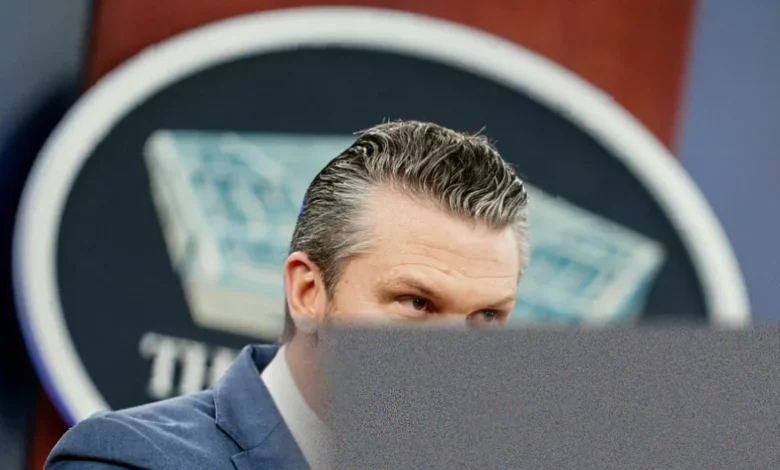
Meanwhile, the United States signalled its readiness to restart full-scale combat against Iran. Secretary of Defense Pete Hegseth stated the US military, engaged in what it calls Operation Epic Fury, is “reloading with more power than before” and gave Iran the choice of “the easy way or the hard way”. He warned that Iran’s energy industry was not destroyed “yet”.
General Dan Caine, Chairman of the Joint Chiefs of Staff, detailed the enforcement of a US naval blockade of Iranian ports, initiated on 13 April after peace talks in Pakistan collapsed. He stated the US would “use force” against any vessel attempting to run the blockade, which applies in Iranian territorial seas and international waters. Thirteen ships have turned around, he said, while over 10,000 American troops are involved in the operation. Secretary Hegseth added that threatening commercial shipping was “not control, it’s piracy”.
On the status of Iran’s new Supreme Leader, Ayatollah Mojtaba Khamenei, Hegseth said he is believed to be alive but “wounded and disfigured” from the airstrike that killed his father, and remains involved in decision-making remotely.
Lebanon’s precarious path to talks
The crisis has drawn in Lebanon, where the government’s decision to enter direct negotiations with Israel for the first time in 34 years has exposed deep internal fractures. The move followed a landmark meeting between the countries’ ambassadors in Washington earlier in the week, with US President Donald Trump announcing the leaders would speak directly on Thursday.
That call, however, did not proceed as planned. A Lebanese official source said President Joseph Aoun rejected a US request for a direct phone call with Israeli Prime Minister Benjamin Netanyahu, informing US Secretary of State Marco Rubio of his refusal.
The decision to engage in talks, framed by Lebanese officials as being strictly to secure a ceasefire, came amid intense military pressure. The Lebanese army stated that Israeli strikes destroyed the Qasmiyeh bridge over the southern Litani River, killing one person and wounding three, including a soldier. Lebanese media reported it was the last remaining bridge linking southern Lebanon to the rest of the country, effectively cutting the area off. This destruction followed Israeli orders for civilians south of the nearby Zahrani river to evacuate north.
Hezbollah, the Iranian-backed political and militant group, vehemently opposes the talks. Its lawmaker, Hussein Hajj Hassan, called the government’s decision a “grave error” and a “grave sin,” urging Beirut to stop making concessions to Israel and the United States.
Pontiff’s condemnation follows White House feud
Pope Leo XIV’s critique, calling for a “decisive change of course” toward peace, follows a week of public dispute with President Trump. Trump had previously criticised the Pope on social media, claimed credit for his selection, and told him to “get his act together”. Moments after the Pope’s speech, Secretary Hegseth again employed biblical language, likening a recent pilot rescue to a “miracle” and comparing the press to the Pharisees due to their “relentless negative coverage” of the war.
Fragile ceasefire takes hold
Amid the rhetoric, a fragile truce was set to begin. The Israeli Defence Forces announced a ceasefire with Lebanon would start at 7pm local time, with high-ranking commanders ordered to prepare forces in southern Lebanon for the truce.
From Iran, parliament speaker Mohammad Bagher Ghalibaf told his Lebanese counterpart, Nabih Berri, in a Telegram statement that a ceasefire in Lebanon was “as important” as in Iran. He said Tehran was seeking to force the establishment of a “permanent ceasefire in all conflict areas,” referencing a shaky two-week US-Iran ceasefire brokered by Pakistan that is set to expire soon.
Israeli Defence Minister Israel Katz issued a concurrent warning to Iran, stating it must choose “between a bridge to the future and an abyss of isolation and destruction”. He said Israel could strike harder if threats persist, and that any future targets would be “even more painful”.