Lord Peter Mandelson was not granted security clearance for his appointment as ambassador to the United States, but the decision was overruled by senior officials within the Foreign Office, it has been revealed. The intervention allowed the Prime Minister’s nomination to proceed, creating an immediate political storm over whether Sir Keir Starmer misled Parliament about the process.
Vetting failure overruled as questions mount for PM
The vetting was conducted by UK Security Vetting (UKSV), a division of the Cabinet Office responsible for scrutinising the backgrounds of prospective civil servants. UKSV did not grant Lord Mandelson clearance, conveying its negative recommendation to the Foreign, Commonwealth and Development Office. The final decision to appoint, however, rests with the relevant government department, and sources indicate the Foreign Office overruled the UKSV assessment to ensure Mandelson could take up the prestigious post.
It remains unclear exactly which senior official or officials within the Foreign Office made that decision, or whether the Prime Minister was personally aware of UKSV’s adverse recommendation before the appointment was confirmed.
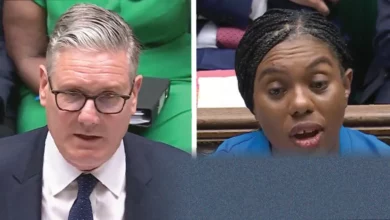
The revelation has prompted the Leader of the Opposition, Kemi Badenoch, to accuse Sir Keir Starmer of misleading the House of Commons. She pointed to statements the Prime Minister made last September, in which he told Parliament on three occasions that “full due process” had been followed in the appointment. The ministerial code states that ministers who knowingly mislead Parliament are expected to offer their resignation.
Last September, Keir Starmer told Parliament three times that “full due process” was followed over the appointment of Lord Mandelson.
We now know the Prime Minister misled the House.
The Prime Minister must take responsibility. https://t.co/L9QVk0aTwG
— Kemi Badenoch (@KemiBadenoch) April 16, 2026
The controversy echoes Sir Keir’s own challenge to Boris Johnson in January 2022, when he said that if a prime minister misled Parliament, “he must resign.” The Prime Minister now faces pressure to clarify what he knew about the vetting process and when.
Badenoch links ‘sex toys’ row to defence spending claim
Separately, Kemi Badenoch has ignited a further row by conflating a story about Labour MPs with allegations about defence funding. On social media, she criticised Labour MPs for “flogging sex toys in Parliament,” before connecting it to an unverified claim about the Chancellor.
Her comment referenced a report in The Spectator, which cited unnamed defence and Westminster sources criticising the government’s approach to defence spending. The article included an anecdote alleging that Chancellor Rachel Reeves had privately questioned why more money should be given to the Ministry of Defence because it was “so far away from gender parity.” This claim has been denied.
It’s bad enough Labour MPs are flogging sex toys in Parliament this week.
But if Reeves isn’t funding our armed forces because 50% of them aren’t female, she is unfit for government.
This is a new low. Labour have no idea how to protect us and know nothing about defence. https://t.co/41Gr4QzAIC
— Kemi Badenoch (@KemiBadenoch) April 16, 2026
When asked about the allegation, the Prime Minister’s spokesperson declined to comment on the specific claim, stating only that the government’s focus was on finalising its delayed defence investment plan. The Spectator report also suggested Ms Reeves was offering £10bn over four years to address a £28bn funding shortfall, with defence chiefs reportedly told to find £3.5bn in cuts this year.
Campaigners press government on biological sex ruling
Meanwhile, on the first anniversary of a landmark Supreme Court ruling on biological sex, the campaign group For Women Scotland has written to the Prime Minister demanding action. The UK government has yet to approve draft guidance from the Equality and Human Rights Commission (EHRC) on the practical implementation of the ruling, which concerns whether transgender men and women can use single-sex services corresponding to their lived gender.
The EHRC has recently amended its original draft guidance, a move reported to lessen the impact on businesses and better balance protections. However, this has prompted criticism from some advocates of the ruling, who accuse the watchdog of “horse-trading” with ministers.
Bridget Phillipson, the Equalities Minister, has said she cannot lay the draft before Parliament for approval due to the ongoing devolved election periods. For Women Scotland has questioned this reasoning, urging the UK government to follow the lead of Scottish Labour, whose leader Anas Sarwar has committed to enforcing the Supreme Court ruling and bypassing the EHRC guidance if necessary.
If the SNP wins the election, this policy will be dragged through the courts for years.https://t.co/vDVR6SuVsN
— Paul Hutcheon (@paulhutcheon) April 16, 2026
SNP’s price cap plan branded ‘risky’ 1970s gimmick
In Scottish politics, the SNP’s manifesto pledge to impose statutory price ceilings on 20 to 50 essential food items has been met with severe economic and political scepticism. The Institute for Fiscal Studies has warned the policy is “risky” and could lead to shortages if ceilings are set below market prices, potentially causing demand to outstrip supply or prompting retailers to restrict availability in Scotland.
David Phillips of the IFS also noted the SNP’s wider spending pledges, estimated at £1.4bn a year by 2031-32, lack a credible funding plan and rely heavily on assumed efficiencies. The Scottish Retail Consortium dismissed the idea as a “1970s-style gimmick,” arguing high prices stem from supply chain costs and government-imposed statutory burdens.
Political commentators and legal experts suggest the policy may be deliberately designed to provoke a constitutional fight. Many believe the UK government would block the move using the UK Internal Market Act or under reserved powers in the Scotland Act, a scenario the SNP’s manifesto itself anticipates. Observers like Paul Hutcheon of the Daily Record predict that if the SNP wins the election, the policy will be “dragged through the courts for years,” a protracted battle some believe would suit the party’s political strategy.