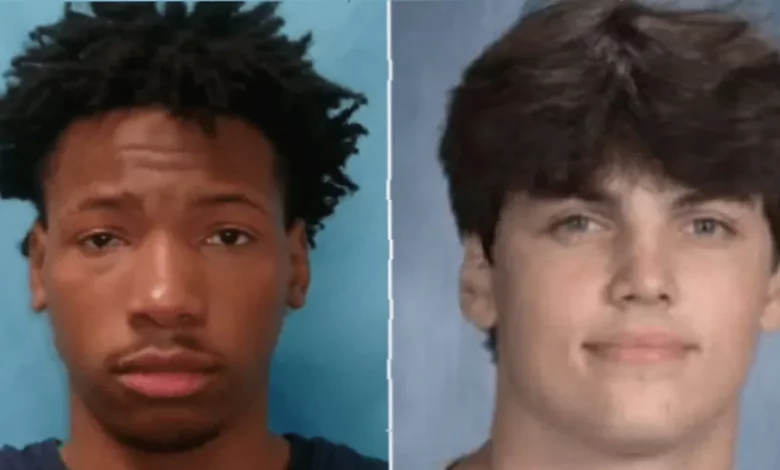
A teenager has been convicted of murder and sentenced to 35 years in prison for fatally stabbing a fellow pupil at a high school athletics meet in Texas, bringing to a close one of the most closely watched criminal cases in modern American history.
Karmelo Anthony, now 19, was found guilty by a Collin County jury of murdering 17-year-old Austin Metcalf after a confrontation at a school track and field competition in Frisco, Texas, in April last year. The jury rejected defence arguments that Anthony had acted in self-defence, and also dismissed a separate legal claim of “sudden passion” that could have reduced the sentence. During the sentencing phase, Austin Metcalf’s parents and his twin brother, Hunter, gave emotional testimony about the loss of a teenager whose life ended during what should have been an ordinary school sports event. Anthony’s family also addressed the court, asking jurors for leniency, but the panel decided on a custodial term that will see Anthony spend decades behind bars.
How the fatal confrontation unfolded
The stabbing occurred on April 2, 2025, during a track and field competition involving several schools from the Dallas-Fort Worth area. Rain interrupted the event, and students sought shelter wherever they could find it. Anthony, then 17 and a pupil at Centennial High School, took cover beneath Memorial High School’s team tent in the stadium bleachers. Witnesses later testified that members of the Memorial team told him the tent was reserved for their athletes. Exactly what was said during the exchange was disputed, but witnesses generally agreed that an argument developed between Anthony and Austin Metcalf as tensions rose beneath the crowded shelter.
Witnesses gave differing accounts of the exchange, with several describing the argument becoming increasingly heated before the physical confrontation. Some witnesses described Metcalf pushing Anthony; others characterised the contact differently, but both sides accepted that there was some form of physical interaction before the stabbing. Anthony pulled a knife and stabbed Metcalf once in the chest. The knife hit Metcalf’s heart. Coaches, trainers and emergency responders rushed to help him before he was taken to hospital, where he died from his injuries.
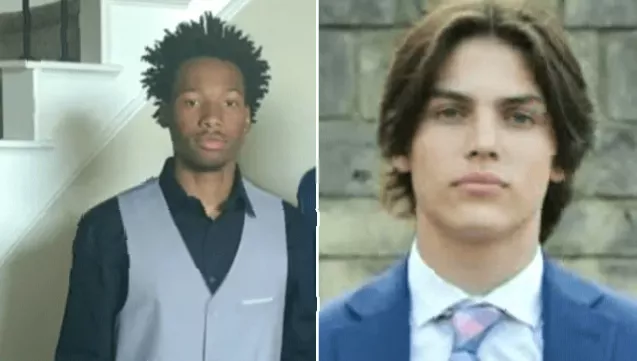
In the moments immediately after the stabbing, witnesses described confusion and panic. A coach later testified that Anthony told him: “He put his hands on me. I stabbed him.” Anthony remained at the scene and was later taken into police custody. According to police records, Anthony told officers that he had acted to protect himself. He also reportedly asked whether what had happened could be considered self-defence. Hunter Metcalf, Austin’s twin brother, was nearby when the stabbing happened and later spoke publicly about trying to help his brother in the moments after he was wounded.
The self-defence arguments at the heart of the trial
The question that faced jurors was never whether Anthony inflicted the fatal wound — he admitted it and was seen by many witnesses. Instead, much of the legal battle centred on whether his actions met the legal standard for self-defence under Texas law. Anthony’s defence team argued that he feared he was in danger and acted in self-defence. Prosecutors countered that the evidence did not support such a claim and that the use of deadly force was in no way justified. Anthony did not testify during the trial; his defence presented its case through witness testimony, cross-examination and legal arguments surrounding self-defence.
Under Texas law, the use of deadly force in self-defence is permitted only when a person reasonably believes it is immediately necessary to protect themselves from another’s use or attempted use of unlawful deadly force. The prosecution argued that the physical interaction — a push, according to some accounts — did not meet that threshold. The defence maintained that Anthony, confronted in a confined space by a larger individual, felt his life was at risk. After hearing evidence from students, coaches, investigators and other witnesses who had been present at the track meet, the jury rejected the self-defence claim and found Anthony guilty of murder. Jurors were also allowed to consider lesser offences, including manslaughter, but decided that a murder conviction was appropriate.
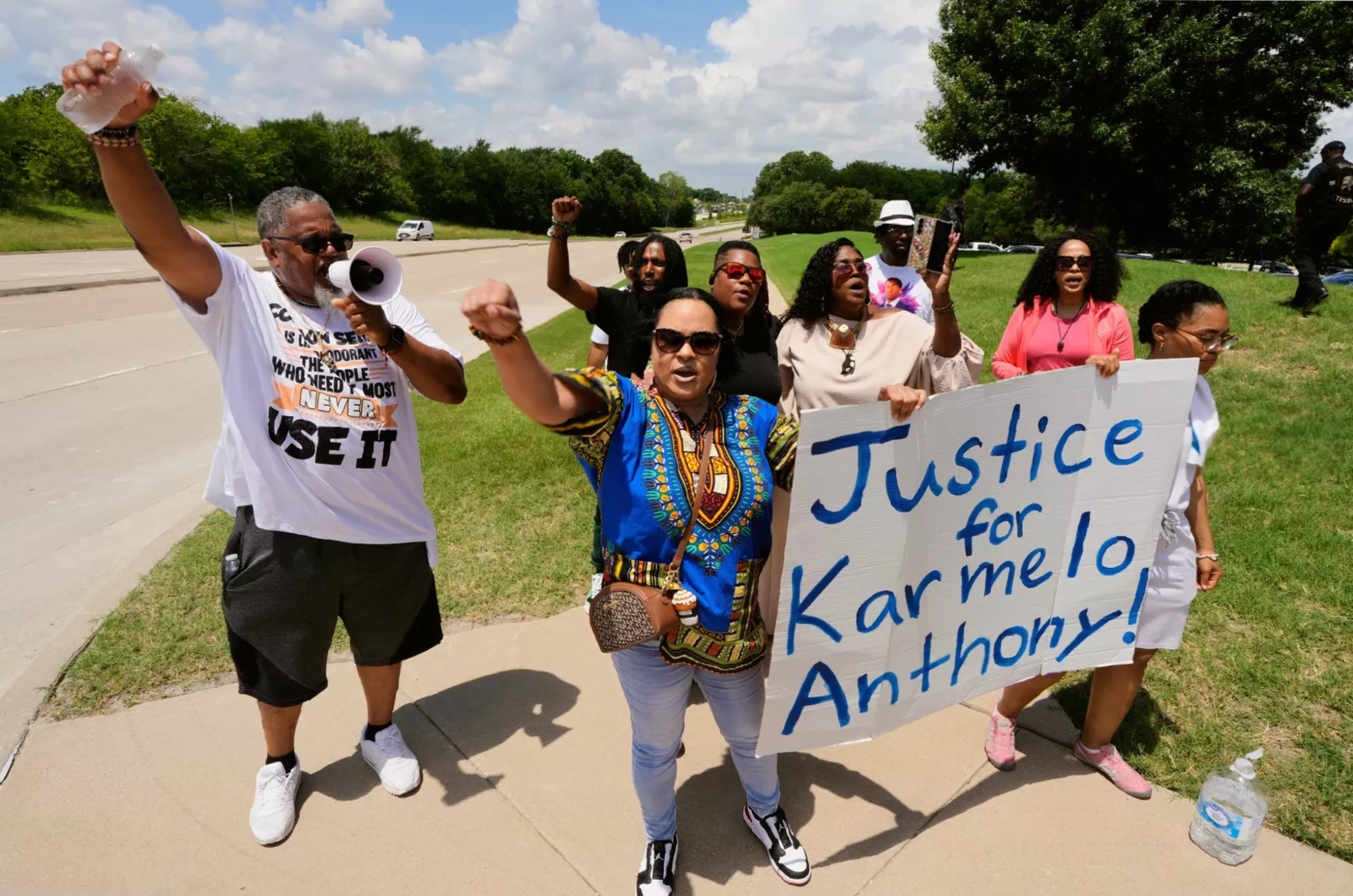
During the sentencing phase, the defence raised the issue of “sudden passion”, a legal concept in Texas that can affect sentencing in some homicide cases when a defendant acted in response to an immediate provocation. The jury also rejected that argument. The result was a sentence of 35 years — meaning Anthony will spend decades in prison for a confrontation that lasted only moments.
Before the trial, Anthony was released on bond after initially being held on a $1 million bond that was later reduced to $250,000. His release was subject to strict conditions, including house arrest and electronic monitoring. The proceedings took place at the Collin County Courthouse in McKinney, Texas. Because of the intense publicity surrounding the case, a number of restrictions were placed on what participants could publicly discuss while legal proceedings were ongoing. A Collin County grand jury had earlier indicted Anthony on a murder charge, clearing the way for the case to proceed to trial.
How a school athletics tragedy became a national flashpoint
The killing was already shocking because it happened at a school athletics event attended by students, teachers and families. News of the stabbing quickly spread far beyond Frisco and Texas. As the case attracted more attention, discussions online often moved beyond simply the evidence presented by investigators. Social media users across the political spectrum began arguing about the case in legal, ethical and social terms. Because Anthony is black and Metcalf was white, race became a frequent topic in public discussions surrounding the case. Lawyers involved in the proceedings, however, repeatedly maintained that the trial itself was about the facts of the confrontation and nothing else. The issue of race was downplayed in court, and investigators have never mentioned it as relevant to the case.
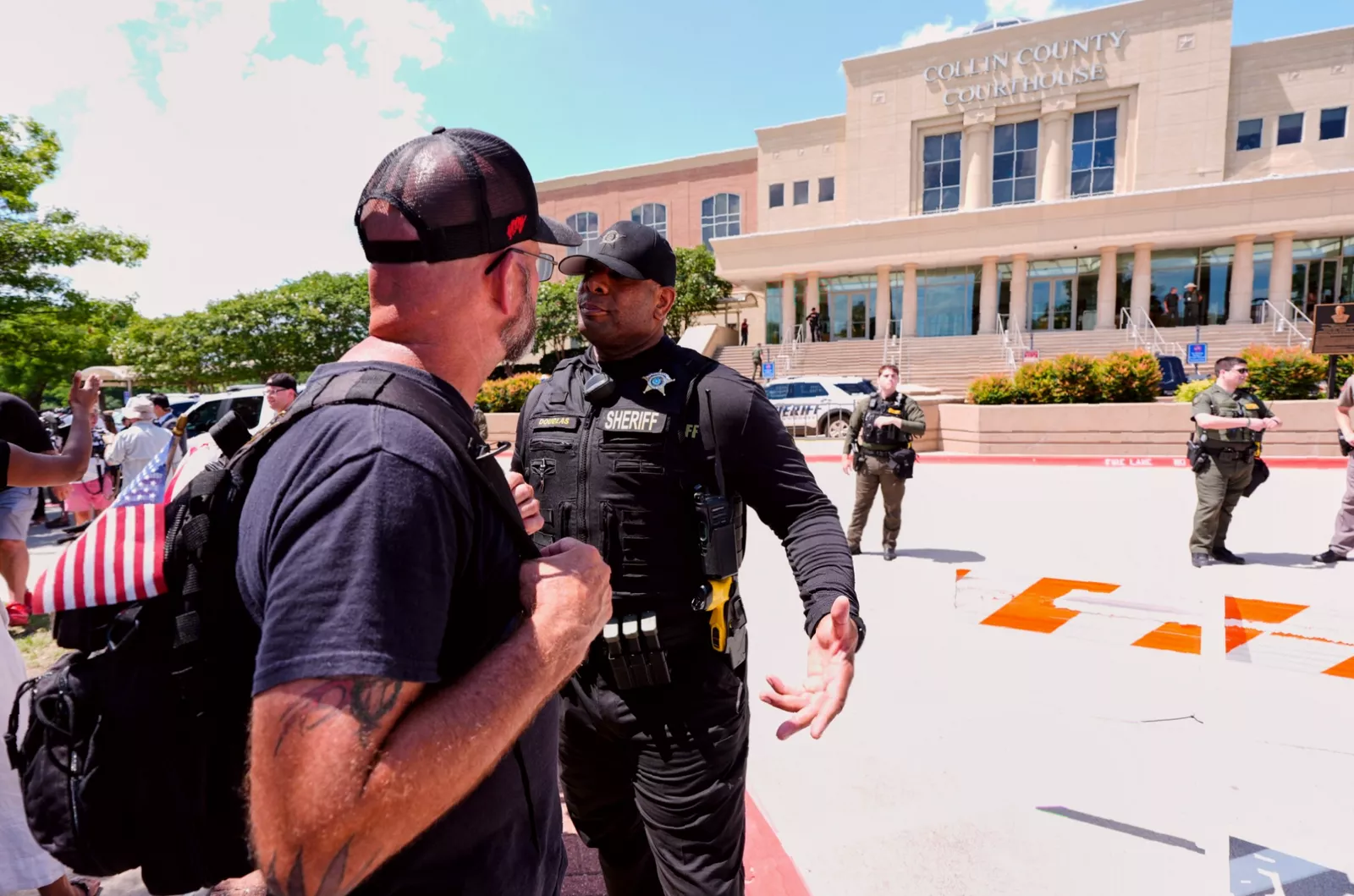
The case also generated intense interest because both teenagers were young, the incident happened in such a public setting and there were numerous witnesses. Those factors combined to create a level of scrutiny that many criminal cases never receive. As attention grew, online debate often moved faster than the facts emerging from the investigation and later the trial. Both families found themselves thrust into a national spotlight they had never sought nor wanted. Fundraising efforts connected to the case also became a source of public debate, helping to keep the story in the headlines long after the initial incident.
More than a year after two teenagers crossed paths beneath a school tent during a rain delay at a track meet, one family is mourning a son while another faces a future shaped by a murder conviction.