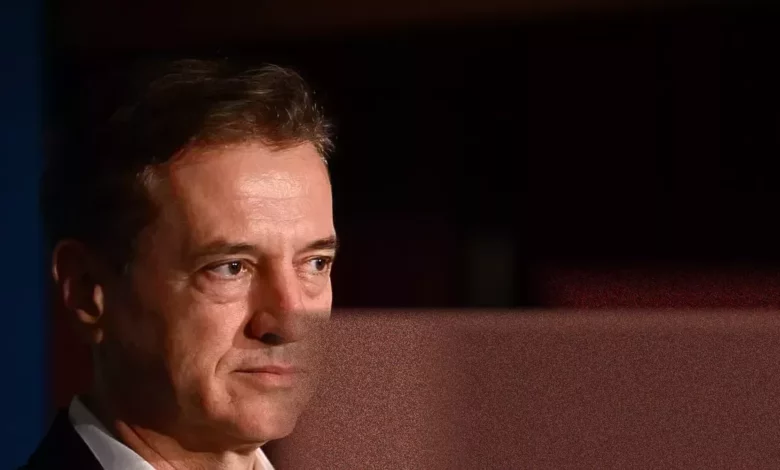
Hungary’s foreign minister stands accused of leaking confidential European Union discussions to Russia, in a revelation that has sent shockwaves through Brussels and heightened tensions with Budapest on the eve of a critical national election.
The allegations, reported by the Washington Post, claim Péter Szijjártó passed details of internal EU deliberations to his Russian counterpart, Sergei Lavrov. The European Commission stated the reports were “greatly concerning” and underscored that trust between member states and institutions is fundamental. A spokesperson said the Commission expected the Hungarian government to provide clarification. Mr Szijjártó dismissed the story as “fake news,” claiming it was part of a campaign of lies designed to boost the opposition.
The claims add a stark dimension to Hungary’s political climate as its nationalist prime minister, Viktor Orbán, faces his toughest electoral challenge in 16 years next month. His Fidesz party, a national-conservative group in power since 2010, is trailing the more centrist Tisza Party led by Péter Magyar.
Polish President’s Controversial Visit
Amid the furore, Poland’s President Karol Nawrocki made a brief visit to Budapest, meeting with Mr Orbán ahead of the April vote. His aides described the trip as part of an annual day of Polish-Hungarian friendship, but critics warned it could be seen as an endorsement during a sensitive pre-election period.
President Nawrocki, who had cancelled a previous trip when Mr Orbán visited Vladimir Putin in Moscow, drew a clear line on Russia. “For Poland, Vladimir Putin and Russia are an existential threat,” he said, adding that “Poles love Hungarians, but they hate Putin.” His visit drew sharp criticism from Poland’s prime minister, Donald Tusk, who said he was “not surprised” by the alleged leaks, citing long-held suspicions. Mr Tusk called the presidential visit a “fatal error” that strengthened Putin. Poland’s foreign minister, Radosław Sikorski, suggested it constituted interference in Hungary’s election campaign.
Trump Endorses Orbán at Far-Right Gathering
Mr Orbán also received a high-profile international endorsement from Donald Trump. In a video message to the Cpac Hungary conference in Budapest, the former US president called Mr Orbán a “fantastic guy” and a “strong leader.” “I hope he wins, and I hope he wins big,” Mr Trump said.
Budapest is currently hosting a major gathering of Europe’s far-right. The Cpac event on Saturday featured figures including Spain’s Santiago Abascal (Vox), Portugal’s André Ventura (Chega), and Poland’s former prime minister Mateusz Morawiecki. The gathering continues with a “Patriots’ Grand Assembly” expected to include France’s Marine Le Pen, Italy’s Matteo Salvini, and the Netherlands’ Geert Wilders. The conference director, Miklós Szánthó, stated that “the biggest stars of the sovereignist right are coming to Budapest,” under a slogan opposing migration, gender ideology, and war.
A Weekend of Elections Across Europe
While the political drama unfolded in Hungary, voters across Europe went to the polls. In Slovenia, incumbent liberal Prime Minister Robert Golob claimed a narrow victory over the populist conservatives led by Trump-ally Janez Janša. With 99.85% of votes counted, Golob’s Freedom Movement party stood at 28.62%, just ahead of Janša’s Slovenian Democratic Party at 27.95%, putting the incumbent in pole position to lead coalition talks.
In France, the Socialist Emmanuel Grégoire was elected Mayor of Paris, succeeding Anne Hidalgo. However, the far-right National Rally secured a significant victory in Nice, even as it failed to take other key cities it had targeted. The nation also mourned the death of former Socialist prime minister Lionel Jospin, who introduced the 35-hour work week and civil partnerships, at the age of 88.
Germany’s Chancellor Friedrich Merz saw his Christian Democrats (CDU) win a state election in Rhineland-Palatinate, taking control from the Social Democrats (SPD). The two parties are now expected to form a state coalition mirroring their national “grand coalition” in Berlin.
In Italy, the second day of a national referendum on complex judiciary reforms is underway, with polling stations open until 3pm local time. The vote has morphed into a de facto confidence test for Prime Minister Giorgia Meloni’s government ahead of the 2027 general election. After the first day, turnout exceeded 46%, with early suggestions this could benefit the ‘yes’ campaign. Ms Meloni, defence minister Guido Crosetto, and foreign minister Antonio Tajani all urged voters to participate.
Attention now turns to Denmark, where a general election is scheduled for Tuesday, 24 March. All 179 seats in the Folketing are up for grabs in what is projected to be a close race between left and right blocs, with the governing coalition unlikely to secure enough seats to continue.