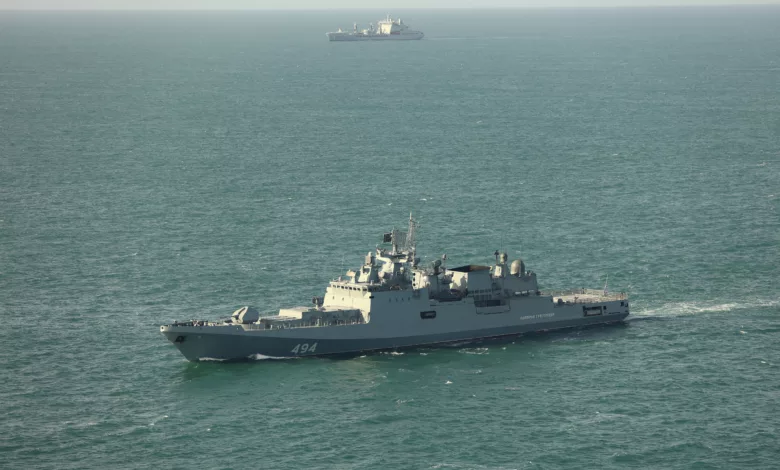
The Royal Navy shadowed a Russian warship continuously for an entire month, with a fleet of patrol vessels, a tanker and helicopters maintaining round-the-clock surveillance over the frigate Admiral Grigorovich throughout April. The operation involved approximately 250 sailors at sea, supported by aircrew and specialists at the Royal Navy’s operational headquarters in Northwood, Middlesex, who kept a constant watch on the vessel’s movements.
Patrol ships HMS Tyne, HMS Mersey and HMS Severn, along with the tanker RFA Tideforce and Wildcat helicopters from 815 Naval Air Squadron, all played a role in tracking the Russian frigate as it sailed to the west of the UK and through the North Sea. HMS Tyne spent more time shadowing the Admiral Grigorovich than any other British vessel involved, and the Wildcat helicopters were airborne daily throughout April, including multiple sorties over the Easter weekend, collecting intelligence and demonstrating persistent presence. A Royal Navy spokesman said: “There was not one day last month when the Russian warship, her supporting vessels or the ships she was tasked with escorting was not closely watched by Royal Navy air or sea power.”
Al Carns, the Minister for the Armed Forces, described the month-long operation as a clear message that UK waters are protected and the nation’s vital infrastructure will always be defended. Fleet Commander Vice Admiral Steve Moorhouse praised the crews for demonstrating “professionalism, resilience and operational readiness”, adding that the sustained effort reflected the Royal Navy’s ability to generate “combat-credible forces at readiness”. Commander Douglas Keenan, commanding officer of 815 Naval Air Squadron, noted that the operation showcased the Royal Navy’s resolve. The monitoring came just weeks after a separate ten-day operation in late March and early April, during which HMS Somerset, HMS St Albans, HMS Mersey and RFA Tideforce tracked a Russian destroyer, frigate, landing ship and a Kilo-class submarine as part of coordinated NATO efforts.
Escort mission reveals Russian vulnerability
The Admiral Grigorovich spent the month providing an escort to Russian-flagged vessels travelling to and from the Atlantic, Mediterranean and Baltic seas, according to the Royal Navy. During that time, the frigate accompanied one submarine and around six merchant and support vessels. The warship, a Project 11356R guided missile frigate belonging to Russia’s Black Sea Fleet, is armed with Kalibr-NK cruise missiles, a Shtil-1 air defence system and anti-submarine torpedoes, and carries a Ka-27 helicopter. Russia has built only three ships of this class for its Black Sea Fleet.
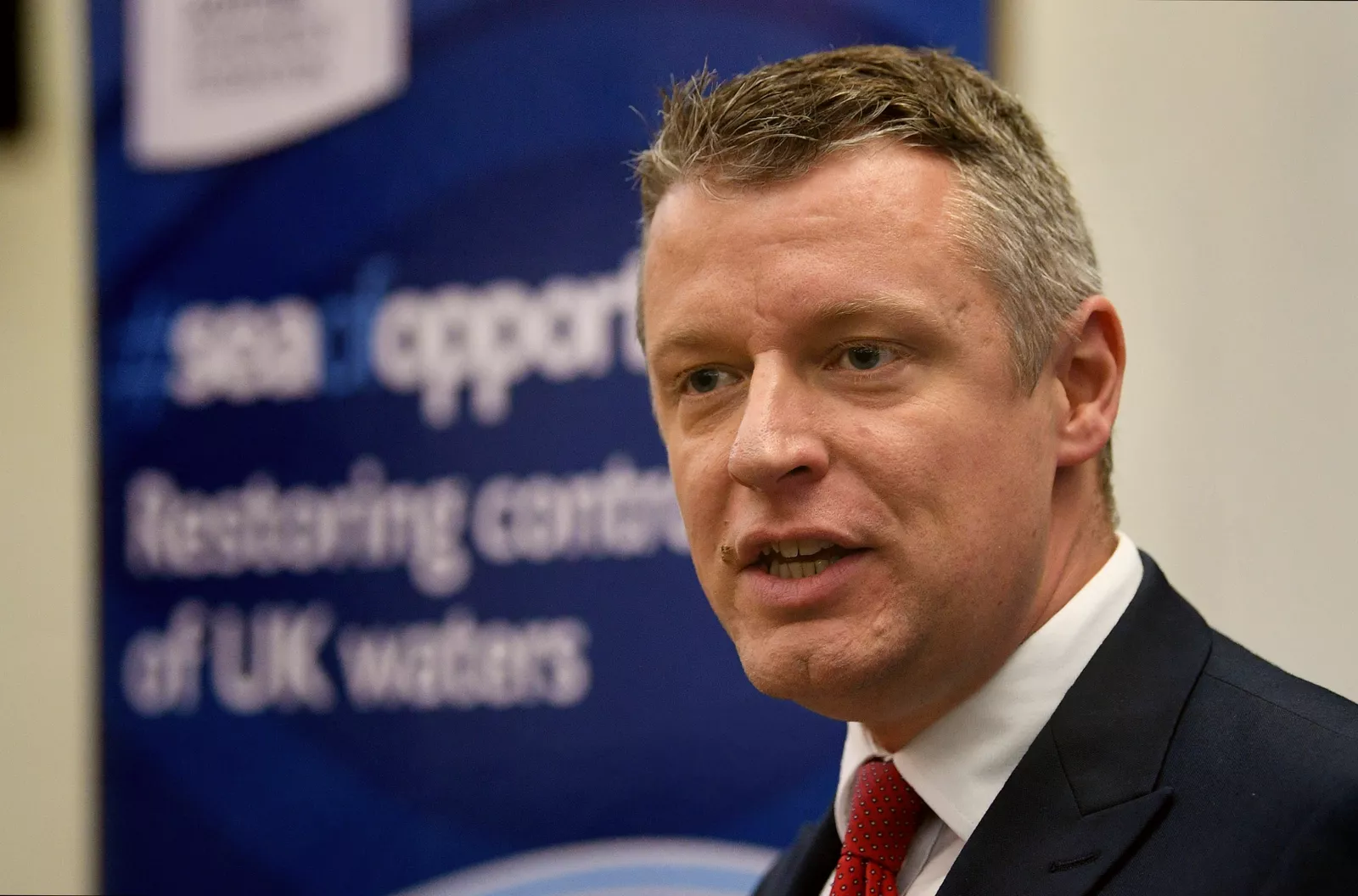
The escort role is understood to be a response to increasing British pressure on Russia’s so-called “shadow fleet” of tankers and cargo vessels that Moscow uses to evade Western sanctions and finance its war in Ukraine. In March 2026, Prime Minister Keir Starmer authorised British military personnel to interdict and board such vessels in UK waters. Speaking earlier this year, the Minister for Defence Readiness and Industry, Luke Pollard, argued that the need for a frigate to accompany commercial shipping demonstrated Moscow’s weakness. “Having to have a Russian frigate escort one of their vessels shows how vulnerable they now are,” he said. “We now know they’re taking the long way round the United Kingdom because of the actions that we are taking.”
The frigate also paused to take on fuel and supplies near key national infrastructure, including the Galloper wind farm off the Suffolk coast – a move that drew particular scrutiny from Royal Navy observers. The UK has sanctioned 544 Russian shadow fleet vessels, and Mr Pollard said the government reserves the right “at a time of our choosing, to interdict a Russian vessel ourselves”. However, an analysis conducted in late April 2026 indicated that the policy had not yet had a clear impact on the number of Russian vessels transiting UK waters, with no announcements of boardings or detentions having been made.
The Admiral Grigorovich is not the only Russian vessel to have attracted attention in British waters this year. In January, Defence Secretary John Healey revealed that the Royal Navy had been monitoring the Russian ship Yantar, which is equipped with surveillance gear and capable of launching drones to the seabed, while it operated in UK waters. Healey stated that rules of engagement had been changed to allow closer proximity to such vessels, and that the UK “will not shy away from robust action to protect the country and its critical undersea infrastructure”.
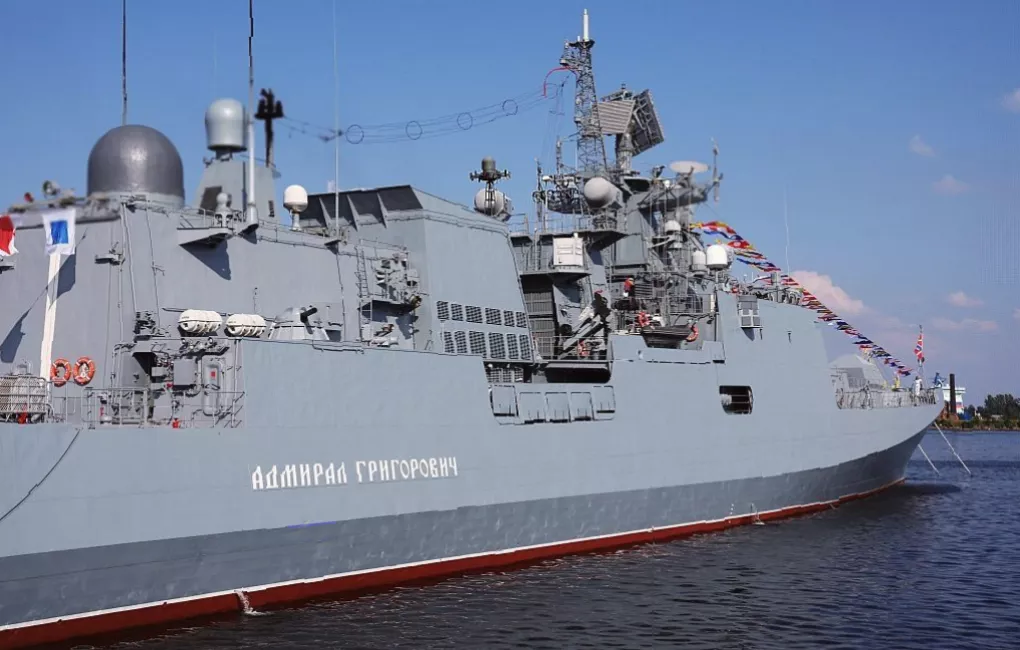
In a separate incident in April, an Admiral Grigorovich-class ship was reportedly attacked by Ukrainian drones in the port of Novorossiysk. The vessel was initially identified as the Admiral Grigorovich but later confirmed to be the Admiral Makarov, a sister ship of the same class.
Mr Pollard also disclosed that around 500 British armed forces personnel had been deployed in the past month to track covert Russian submarine activity, with the aim of delaying and disrupting Moscow’s movements. He described the combination of persistent naval surveillance, new interdiction powers and broader sanctions as an aggregate pressure designed to “slow and choke off the flow of money going into Putin’s illegal war in Ukraine”.