An Israeli airstrike that destroyed a medical centre in southern Lebanon on Friday night, killing 12 healthcare workers, has starkly illuminated what human rights organisations describe as a systematic pattern of attacks on medical personnel in the conflict. The bombardment in the town of Burj Qalaouiyah brings the number of Lebanese healthcare staff killed by Israel over the past 12 days to 31, according to the Lebanese Ministry of Health.
A Facility Destroyed, A Pattern Intensifies
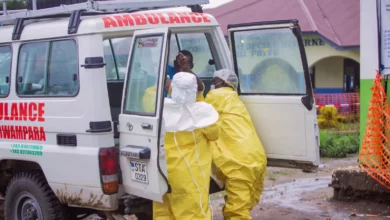
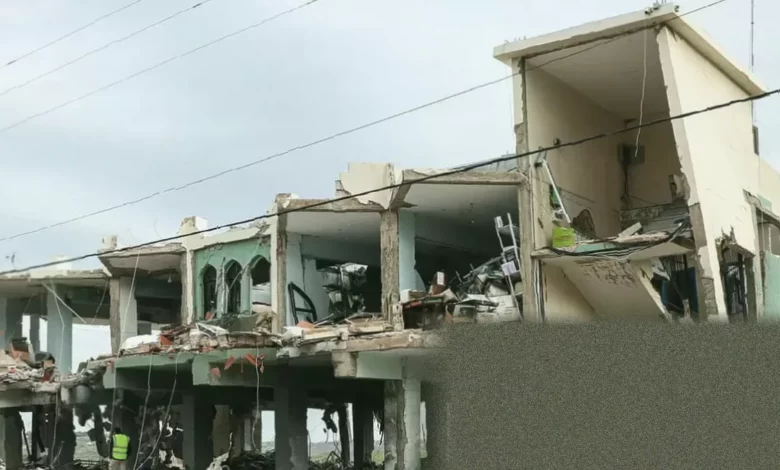
The strike late on 13 March 2026 hit a primary healthcare facility, setting it ablaze and causing the structure to collapse on the staff inside. The Lebanese Ministry of Health confirmed the dead included doctors, paramedics, and nurses on duty. One health worker was injured, and search operations for potential missing persons were ongoing. The ministry condemned the attack, stating it “violated all international humanitarian laws”. This incident was reportedly the second attack on medical personnel within hours, following an earlier strike targeting rescuers in the town of al-Sawana.
The toll on Lebanon’s healthcare system is catastrophic and long-standing. Since the current intense phase of hostilities began on 2 March 2026—triggered by Hezbollah rocket fire and an immediate Israeli bombing campaign—Lebanese authorities state Israel has carried out at least 37 attacks against healthcare workers and facilities, including the state civil defence and Lebanese Red Cross. The Ministry of Health reports that in this period, 26 paramedics have been killed and 51 injured.
Broader statistics paint an even grimmer picture. According to the Ministry, between October 2023 and November 2024, Israel attacked 67 hospitals, 56 primary health care centres, and 238 emergency medical teams in Lebanon, killing at least 222 medical and emergency relief workers. Amnesty International corroborates this death toll for that period. The World Health Organization (WHO) verified 23 attacks on healthcare in Lebanon between September 2024 and March 2026, resulting in 72 deaths and 43 injuries.
International Law and Unverified Claims
Under international humanitarian law, medical workers are considered civilians with protected status, regardless of political affiliation. Human rights groups state that any attacks on them constitute a war crime.
On Saturday morning, Israeli military spokesperson Avichay Adraee accused Hezbollah of using ambulances and medical facilities for military purposes. He stated Israeli forces would “act in accordance with international law” if Hezbollah did not stop, reiterating the claims on social media. The spokesperson provided no credible evidence for the allegations.
The Lebanese Ministry of Health denied the claims outright, calling them “nothing more than a justification for the crimes it is committing against humanity” and a violation of the Geneva Conventions. These accusations mirror those made during the 2024 Israel-Hezbollah war, when Israel also claimed, without providing credible evidence, that Hezbollah used ambulances for military purposes. During that conflict, 408 healthcare workers were killed.
Humanitarian groups warn such accusations can serve as a pretext for further attacks. Amnesty International has stated its investigations into several strikes in late 2024 found no evidence that the damaged or destroyed healthcare facilities or vehicles were being used for military purposes at the time.
A Dangerous Precedent from Gaza
The pattern of targeting healthcare and the accompanying justification bear a stark resemblance to Israel’s conduct in Gaza. A UN commission of inquiry accused Israel of war crimes for its attacks on Gaza’s healthcare facilities during its war on the strip. That same UN inquiry found Israel pursued a “concerted policy to destroy Gaza’s healthcare system,” committing war crimes and the crime against humanity of extermination.
Furthermore, a top prosecutor at the International Criminal Court (ICC) said in 2024 that Israeli claims about the presence of Hamas fighters in Gaza hospitals were “grossly exaggerated”. The ICC has been interviewing staff from Gaza’s hospitals regarding possible war crimes.
The lethality of attacks in Lebanon is particularly high. The WHO reported that between October 2023 and November 2024, 47% of attacks on healthcare in Lebanon proved fatal to at least one health worker or patient—a higher fatality rate than in any other active conflict globally.
Escalating Conflict and Threat of Invasion
The backdrop to this crisis is a rapidly escalating cross-border war. Lebanese authorities report that Israeli attacks have killed at least 826 people in Lebanon since 2 March and displaced approximately 1 million. Other tallies report 773 killed and 1,933 injured by 14 March, while a broader count from December 2024 states 4,047 people have been killed and 16,638 injured since 8 October 2023. Hezbollah has continued its rocket and drone attacks on Israeli positions throughout, with its leader Naim Qassem asserting readiness for a long confrontation.
Israeli operations have included the use of white phosphorus, which is illegal under international law, in a strike on Yohmor on 3 March. Most alarmingly, Israeli officials have indicated plans for a “massive” ground invasion of southern Lebanon, aiming to seize territory south of the Litani River and dismantle Hezbollah’s infrastructure, with one official stating, “We are going to do what we did in Gaza.” This threat hangs over a region already reeling from the systematic erosion of its capacity to care for the wounded and sick.