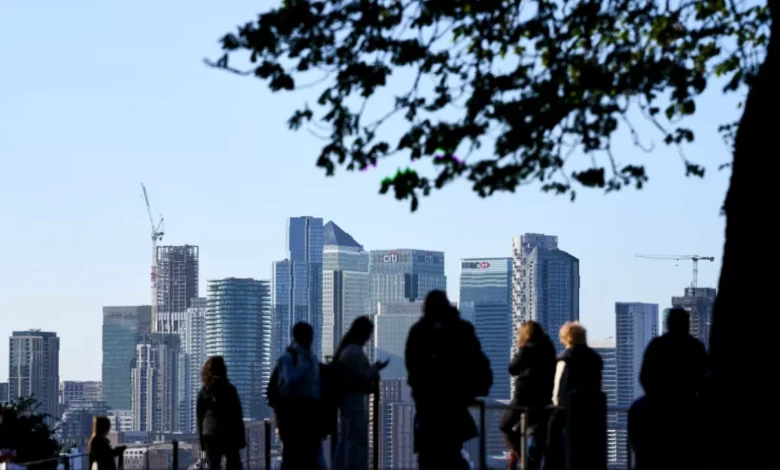
The FTSE 100 surged 1.6% on Monday, driven not by soaring oil prices but by fragile investor optimism that diplomatic channels between Washington and Tehran could open a path to peace in the Middle East.
The blue-chip index closed up 160.61 points at 10,127.96, while the FTSE 250 dipped slightly by 0.1%. The gains were mirrored in Europe and on Wall Street, where major indices also rose.
Markets Bet on Diplomacy Over Escalation
The rally was sparked by a flurry of diplomatic signals, however contradictory. US President Donald Trump stated on his Truth Social network that the US was engaged in “serious discussions” with what he termed “a more reasonable regime” in Tehran. Echoing this, US Secretary of State Marco Rubio told ABC News that the US had privately received positive messages and saw “fractures” within Iran’s leadership, expressing hope that figures with “power to deliver” might take charge.
This tentative optimism provided a counterweight to stark military warnings. President Trump threatened that if a deal was not reached, the US would “blow up and obliterate” Iran’s electric plants, oil wells, and the key export hub of Kharg Island. Meanwhile, Iran’s parliament speaker Mohammad Bagher Ghalibaf accused the US of “secretly planning a ground attack”.
The situation on the ground suggests such planning is not merely speculative. The US has deployed ground-capable forces, including Marines and sailors from the USS Tripoli and elements of the 82nd Airborne Division, to the region—a significant escalation designed for expeditionary and rapid-response combat missions.
Houthi Strikes and the Strait of Hormuz: A Dual Threat
Even as diplomats spoke, the conflict’s ripple effects continued to endanger global trade. The Yemen-based Houthi movement confirmed it had fired ballistic missiles at Israeli military sites in support of Iran and its ally Hezbollah. This action extends the theatre of a wider regional clash beyond the initial Israel-Hamas war, which has already seen a 12-day aerial war between Israel and Iran and left 50 hostages remaining in Gaza.
Analysts warn this introduces a critical second front for maritime security. JPMorgan analyst Natasha Kaneva noted the Houthi activity creates a “second maritime pressure point in the Red Sea, alongside the Strait of Hormuz”. With two major corridors of global energy trade exposed simultaneously, rerouting options narrow and system-wide supply-chain risk increases. Kaneva estimates this puts roughly five million barrels per day of Saudi Arabia’s bypass capacity at risk, a vulnerability that could add $20 to the price of a barrel of oil.
This direct threat to supply lines prompted Prime Minister Sir Keir Starmer to convene a meeting in Downing Street with bosses from energy, shipping, and banking firms to discuss Iran’s ongoing blockade of the Strait of Hormuz. A Cobra meeting is scheduled for Tuesday to assess the ongoing economic impact.
Oil Prices and Market Winners & Losers
Against this tense backdrop, Brent crude oil traded higher at $112.46 a barrel, continuing a volatile trend that has seen prices poised for a record monthly surge. The elevated price boosted shares in oil majors, with BP rising 3.1% and Shell up 2.0%. FTSE 250 oil and gas explorers Ithaca Energy and Harbour Energy also firmed.
The rising cost of fuel, however, weighed on airlines, with British Airways owner International Consolidated Airlines Group falling 1.9%. Asia-focused insurer Prudential dipped 0.5%.
Other notable movers included Marks & Spencer, up 1.9% on stronger clothing sales and a new US deal with Nordstrom, and Rio Tinto, which gained 3.5% after resuming iron ore port operations in Western Australia following a cyclone. Land Securities rose 3.8% after an upgrade from Goldman Sachs.
The market’s underlying nerves were summarised by AJ Bell’s Danni Hewson, who pointed to Trump’s threats, troop build-ups, and Houthi involvement as creating “the impression of a conflict that is escalating rather than drawing to a close”. This was reflected in a flight to safety, with the yield on the US 10-year Treasury narrowing to 4.34% and gold rising to $4,541.34 an ounce. The pound fell against both the dollar and the euro.
The economic calendar for Tuesday includes UK GDP figures and a Cobra meeting to discuss the war’s economic impacts, while corporate results are due from AG Barr and Raspberry Pi.