The International Monetary Fund has singled out the United Kingdom as a bright spot in the global fiscal landscape, explicitly praising its progress in reducing the budget deficit last year. This commendation comes just a day after the Fund cut the UK’s growth forecasts, highlighting a disciplined approach to public borrowing even in a tough economic climate.
The IMF’s latest Fiscal Monitor shows the UK’s deficit fell from 6.1% of GDP in 2024 to 5.4% in 2025, a reduction it describes as a “notable improvement.” According to the report, this was driven by a clear policy mix: tax increases, the freezing of income tax thresholds, and the deliberate expiration of temporary government energy support schemes. Looking ahead, the Fund forecasts the annual deficit will drop further to 3.9% of GDP this year and continue falling to just 1.6% by 2031, which would make it the second-lowest in the G7 after Canada.
Reeves warned to hold firm on fiscal rules
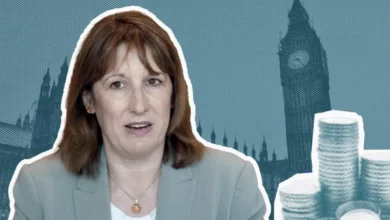
Despite the positive trajectory, the IMF issued a pointed warning to Chancellor Rachel Reeves not to deviate from her stated fiscal rules. “In the United Kingdom, adhering to established spending envelopes while strengthening the efficiency of value-added and property taxes is key to rebuilding buffers,” the Fund advised. This caution aligns with a broader IMF assessment from July 2025, which noted the UK’s “bold reforms” but warned that achieving its growth agenda would be challenging due to limited fiscal space, high interest burdens, and rising demands on public resources like defence and aging-related spending.
The UK’s progress stands in stark contrast to the deteriorating global picture on public debt. The Fiscal Monitor report indicates that global debt dynamics showed no material improvement in 2025, even before the Middle East conflict erupted. Global gross government debt hit nearly 94% of GDP last year and is on a path to reach 100% by 2029—a level not seen since the aftermath of the Second World War.
This alarming trend is largely fuelled by the world’s two largest economies. The IMF states the United States is running a deficit of 7 to 8% of GDP with no consolidation plan in sight, projecting its gross debt will reach 142% of GDP by 2031. Meanwhile, China’s fiscal expansion has widened its overall deficit to nearly 8% of GDP, with persistent deficits expected to push its debt toward 127% of GDP by the same date.
Middle East war casts a long shadow
The IMF was unequivocal that the war in the Middle East has “abruptly darkened” the global outlook, adding a severe new source of fiscal pressure. Managing Director Kristalina Georgieva stated the conflict has a “material global reach,” disrupting energy supplies, tightening financial conditions, and forcing governments into difficult choices between shielding populations and preserving fiscal health.
Georgieva predicted at least a dozen countries, including some in Sub-Saharan Africa, will seek new IMF lending programmes due to surging energy prices and broken supply chains, with demand estimated at $20bn to $40bn. She warned against blunt policy responses, saying untargeted actions like broad energy subsidies would only “prolong the pain of high prices.” Instead, the IMF encourages energy economisation measures—such as free public transport, promoting remote work, and switching to less energy-intensive activities—to reduce demand.
The economic fallout is already being quantified. The IMF has downgraded its global growth forecast for 2026 to 3.1% from 3.3%, and marked up its expectation for global inflation this year to 4.4%. Georgieva noted specific shortages of oil, gas, and other products in Asia and raised concerns about higher food price inflation unless fertiliser deliveries resume.
In a joint statement, a group of 11 finance ministers—including the UK’s Rachel Reeves—called for a swift and lasting resolution to the conflict. They warned that the war will continue to weigh on global growth, inflation, and financial markets even after it ends, and called for a return to free and safe transit through the Strait of Hormuz. The group also reaffirmed “unwavering support for Ukraine” and pledged to maintain economic pressure on Russia.
On other matters, Georgieva said the IMF is not currently discussing an augmentation of Egypt’s $8bn loan programme, despite the war’s severe impact, but could do so if conditions worsen. She noted Egypt is expected to receive approval for a $2.3bn disbursement by the end of February 2026. Regarding financial stability, Georgieva said it is holding “for now,” and advised that central banks with high credibility should signal a priority for price stability without immediate action, while those without credibility may need to move faster.