The UK government has named the first seven startups to benefit from its £500 million Sovereign AI Fund, a cornerstone of its strategy to build domestic AI capability and stem the flow of British tech talent abroad.
Announced by Chancellor Rachel Reeves as part of a wider £2.5 billion AI and quantum program, the fund is designed to operate with the agility of a venture capital firm but with state backing. Its first allocation, revealed by the Department for Science, Innovation and Technology (DSIT), provides a mix of equity investment and, more commonly, a vital commodity: access to powerful supercomputers.
Strategic support for a diverse AI cohort
The seven companies were chosen through an open competition assessed for strategic relevance, technical quality, and scaling potential. They operate across fields the government deems critical: from biological foundation models and physical AI to sovereign inference infrastructure and AI for national security.
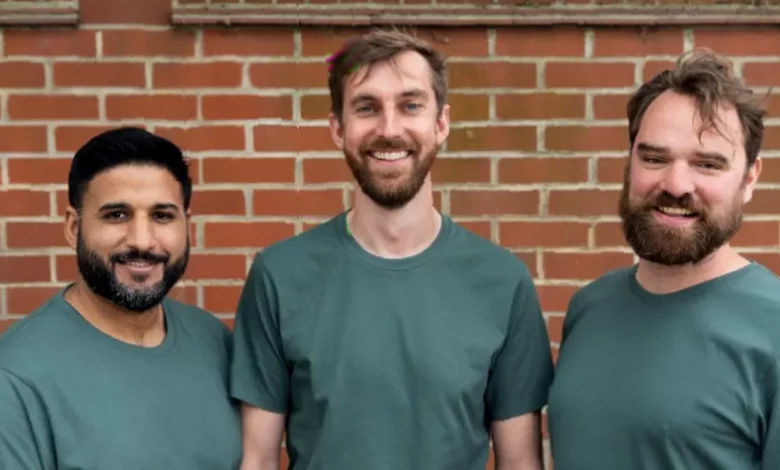
Only one, the London-based AI infrastructure firm Callosum, has received a direct equity investment from the fund, with the amount undisclosed. Founded by Cambridge neuroscientists Danyal Akarca and Jascha Achterberg, Callosum is building software to allow different AI models to work together across diverse hardware, aiming to break what it sees as an inefficient “AI monoculture”. Prior to the state’s investment, it had raised $10.3 million from investors including Plural Platform and the UK’s Advanced Research and Invention Agency (ARIA).
The other six companies will gain access to the government’s AI Research Resource (AIRR) supercomputer network. DSIT stated the fund also holds a right of first refusal on future investments in some of these firms and is in talks with around 30 others about AIRR access.
The cohort includes Doubleword, a London startup founded by Meryem Arik, Jamie Dborin and Fergus Finn, which has raised $26.9 million to make AI inference—the process of running live models—cheaper and more efficient. Another, Prima Mente, is applying AI to neuroscience. Co-founded by Hannah Madan, Ravi Solanki and Jonathan Wan, it has developed an epigenetic foundation model called “Pleiades” to detect early signs of neurological diseases like Alzheimer’s and Parkinson’s.
Other London-based selections are Cosine, which builds AI agents for software development and national security; the stealth-mode foundation model developer Cursive; and biotech firm Twig Bio, which uses AI and robotics to create sustainable chemicals. Notably, the list also includes Odyssey, an AI research company founded by Britons but headquartered in Menlo Park, California. It has raised $27 million to develop “world models” for sectors from gaming to defence and has hired staff from elite firms including DeepMind and OpenAI.
Compute access: the key bottleneck for scaling AI
For most of these startups, the grant of supercomputer time is more significant than cash. The staggering computational power required to train and run advanced AI models, known simply as “compute”, represents a formidable barrier to entry and scaling, often forcing European startups to seek resources or relocate to the United States.
Martell Hardenberg, a partner at venture firm Antler, an investor in Prima Mente, described the AIRR access as a “game-changer” for AI startups. “This directly accelerates their research roadmap,” he said. The government’s provision of this infrastructure is a direct intervention to keep promising companies on British soil, allowing them to undertake intensive research without immediate reliance on expensive, often foreign, cloud computing giants.
This focus addresses a well-documented weakness in the European tech ecosystem: a shortage of growth-stage capital. The Sovereign AI Fund, by combining investment with essential physical resources, aims to provide a more complete support system for startups poised to move from research to commercial deployment.
Questions over geographic and founder diversity
The announcement, however, has immediately prompted scrutiny over the fund’s reach. Of the seven companies, six are headquartered in London and only two—Prima Mente and Doubleword—have female co-founders, according to data from PitchBook.
The heavy skew towards the capital raises questions about who can practically access the new support system. Jamie Hardesty, who heads tech ecosystem development at Sunderland Software City, said from his vantage point in North East England he could name “close to 100 AI-native companies” in the region.
“We’ve a shared responsibility to recognise that sovereign capability doesn’t come from the capital’s concentration alone,” he added. His comments underscore a broader challenge for the fund: to ensure the UK’s sovereign AI ambitions are not built solely on a London-centric model, but leverage talent and innovation across the entire country.
The government’s strategy is clear in its geopolitical context. With nations increasingly viewing AI as a core component of national security and economic competitiveness, the £500 million fund is a direct investment in ensuring the UK retains independent capacity in foundation models, data centres, and related critical technologies.