Spring Statement 2026: Growth forecast for 2026 cut by Budget watchdog as Reeves upholds Government’s plan

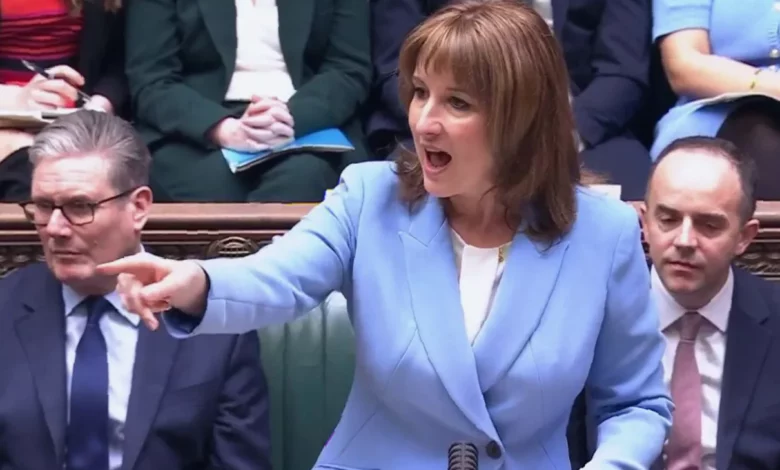
Chancellor Rachel Reeves has framed her Spring Statement as a necessary bulwark against a world of rising geopolitical danger, insisting her government’s economic plan will secure the UK through global turbulence while making families “better off”.
Delivering her update to the House of Commons against the backdrop of conflict in the Middle East, Ms Reeves warned the crisis posed “key” risks to the global economy, particularly energy markets, and vowed to shield Britain from the shocks. “In a world that in the last few days has become yet more uncertain, it is incumbent on me and on this Government to chart a course through that uncertainty,” she said.
Growth Forecasts Adjusted Amid Global Risks
The official economic outlook presented a mixed picture. The Office for Budget Responsibility (OBR) downgraded its forecast for UK GDP growth in 2026 to 1.1%, from the 1.4% it predicted last November. However, it upgraded its forecasts for the following two years, expecting growth of 1.6% in both 2027 and 2028, up from 1.5%.
The OBR stated it had “adjusted the profile of GDP” so it grows slightly slower next year but faster later, with growth forecast at 1.5% in both 2029 and 2030. The Chancellor emphasised that average growth across the forecast period was “largely unchanged” and that GDP per capita was set to grow by 5.6% over the Parliament.
This official view sits within a range of external forecasts. The IMF is more optimistic, predicting 1.3% growth for the UK in 2026, while the OECD recently revised its forecast up to 1.2%. Conversely, analysis from KPMG UK and the EY ITEM Club points to a slightly slower expansion of around 1.0% and 0.9% respectively. Ms Reeves pointed to recent resilience, noting the UK had the fastest growth of any European G7 country in 2025.
Inflation Falling and Borrowing Reduced
On inflation, the Chancellor cited more positive news. The OBR now forecasts inflation will return to the Bank of England’s 2% target in the second half of 2026, earlier than previously expected. Official data showed inflation fell to 3.0% in the year to January 2026, its lowest rate since March 2025, driven by falling prices for food, transport, and non-alcoholic beverages.
Government policies are contributing to the disinflationary trend. The removal of green levies from energy bills, saving households an average of £150 annually from April, alongside a freeze on rail fares and other cost-of-living measures, is estimated to bring inflation down by 0.4 percentage points in 2026-27.
On the public finances, the OBR forecasts a significant improvement. Public sector net borrowing is set to fall from 4.3% of GDP this year to 3.6% next year, reaching 1.8% by 2029-30. The Chancellor stated this meant borrowing would be reduced by “nearly £18 billion compared to the autumn” and, for this year, the UK was set to borrow less than the G7 average—”something the Tories never achieved in fourteen years”. Headroom against the government’s fiscal stability rules has increased to almost £24 billion.
Central government debt interest payable fell by £5.0 billion in January compared to the same month last year. Ms Reeves argued that if UK debt interest rates return to the G7 average, an additional £15 billion a year could be available for public spending priorities by the end of the forecast period.
Labour Market Challenges and Youth Guarantee
The labour market presents a continuing challenge. The OBR forecasts unemployment will peak later in 2026 before falling each year, ending the forecast period at 4.1%—lower than at the start of the Parliament. However, other forecasters are more pessimistic; Barclays expects a peak of 5.4%, while KPMG UK forecasts 5.2%, citing slower hiring and automation.
Official data for the three months to December 2025 showed unemployment at 5.2%, the highest rate since late 2020, with youth unemployment for 16–24 year olds reaching 16%. The Chancellor criticised the legacy of the previous government, noting a 40% fall in apprenticeship starts by young people over the last decade and a record high in economic inactivity.
In response, she highlighted an £820 million youth guarantee to provide employment support and a guaranteed job, alongside additional investment to reform apprenticeships. “We will not leave an entire generation of young people behind,” she told MPs.
Defence and Tax in a Dangerous World
Emphasising the unstable global context, the Chancellor reaffirmed commitments to defence, describing it as “the biggest uplift in defence spending since the Cold War”. She cited £650 million committed in January to upgrade Typhoon fighter jets, a new Royal Navy frigate launched last week, and a £1 billion helicopter deal with Leonardo signed just yesterday.
On taxation, the research briefing notes forthcoming inheritance tax reforms. From April 2026, agricultural and business property relief will be curbed, and from April 2027, pensions will be included in estate calculations for the tax. The OBR forecasts these changes will account for around 14% of total inheritance tax receipts by 2030/31.
Other confirmed policies include the removal of the two-child benefit cap from April 2026 and an increase in welfare benefits in line with inflation. The National Minimum Wage for 18–20 year olds will rise by 8.5% in April.
The Chancellor concluded by framing the coming years as a choice, stating that the “progress” offered by her plan was opposed by the Conservative, Reform UK, Liberal Democrat, and Green parties. She pledged to rebuild the UK’s economic credibility, asserting that by the next election, after accounting for inflation, people are forecast to be over £1,000 a year better off. “I am determined that the answer will be yes,” she said, responding to the question she expects voters to ask: “Are me and my family better off?”