A stark generational rift lies at the heart of the public’s changing view of the NHS, with younger people significantly less satisfied than their elders despite the first uptick in overall approval since the Covid-19 pandemic.
Analysis of the latest British Social Attitudes Survey, conducted by the National Centre for Social Research (NatCen) between August and October 2025, reveals that just 20% of people under 35 said they were satisfied with the NHS. This stands in sharp contrast to the 35% satisfaction reported by those aged 65 and over. A similar divide was evident in 2024, when 68% of the over-65s were satisfied with the quality of NHS care compared to 47% of those under 65.
A fragile green shoot
This generational split persists against a backdrop of tentative, fragile improvement. After hitting a record low of 21% in 2024—a staggering 39 percentage point fall since 2019—overall public satisfaction with the health service has risen by five points to 26%. Dissatisfaction has seen its largest fall in over a quarter of a century, dropping from 59% to 51%, the biggest such drop since 1998.
Yet experts are quick to temper any optimism. With only just over one in four people satisfied, the 2025 score remains the third lowest in the survey’s 42-year history. Mark Dayan of the Nuffield Trust noted the proportion satisfied was “only about a quarter of the population,” indicating the public remains “very unhappy.” He added that the current figures “would have been thought catastrophic in the 2010s” and are worse than even the widely dissatisfied period of the 1990s.
The rise in general sentiment has not translated into improved views on specific services. The survey found no significant year-on-year change in satisfaction with A&E, GP, or dental services. These core fronts continue to struggle profoundly. Satisfaction with NHS dentistry has collapsed, falling from 60% in 2019 to a record low of 20% in 2024. A&E was the service with the lowest satisfaction levels in 2024, at just 19%, down from 31% the previous year.
Political lines and founding principles
The survey also highlighted sharp political divisions. Supporters of Reform UK were the least satisfied, at 20%, compared to 33% of Labour voters and 35% of Liberal Democrat supporters. This political fault line extends to views on the NHS’s fundamental principles.
While overall support for the founding pillars—that the NHS should be free at the point of use and funded through taxation—remains robust, with 74% agreeing it should be available to everyone, this belief fractures along party lines. In 2024, 68% of Labour voters said the service should “definitely” be available to everyone, compared to 45% of Conservative voters and just 30% of Reform UK supporters. Bea Taylor, a fellow at the Nuffield Trust, said the results proved “there just isn’t public appetite” for changing the funding model, but noted an association between believing immigration harms the economy and doubting the NHS should be universal.
Geographically, satisfaction in Wales was lower than the UK average, at 18%.
The road to recovery and the mountain ahead
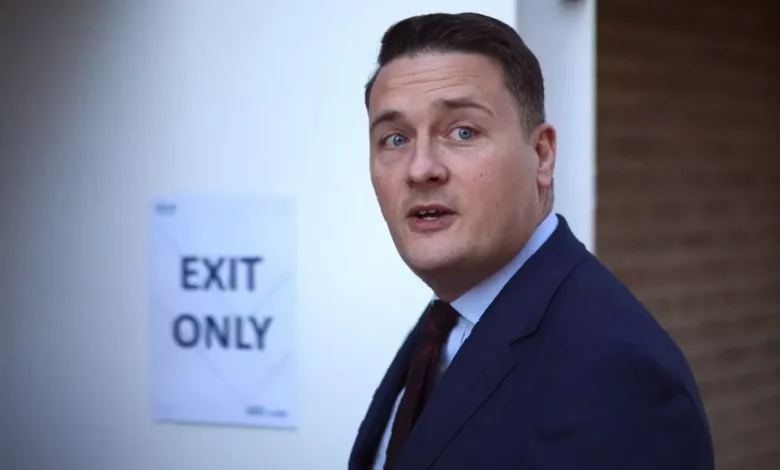
The government and NHS leadership have pointed to recent performance data as evidence of a turning tide. Health Secretary Wes Streeting said the drop in dissatisfaction “doesn’t happen by accident,” citing government investment and modernisation. He highlighted that waiting lists are the lowest in three years, more A&E patients are seen within four hours than for four years, and ambulance response times are the fastest for five years.
Official data provides context: the waiting list for hospital treatment, which peaked at 7.7 million in September 2023, had fallen to around 7.3 million by November 2025. By January 2026, it stood at 7.25 million, having dropped by more than 312,000 since July 2024. NHS England reported a record 1.5 million planned treatments carried out in May 2025.
On urgent care, the median waiting time in A&E reached a high of 3 hours 31 minutes in December 2022 but remained below 3 hours from January 2025. Ambulance performance has shown improvement; in January 2026, the average response time for the most life-threatening (Category 1) calls was 8 minutes 8 seconds, meeting the target. Sir Jim Mackey, Chief Executive of NHS England, called the survey findings “really encouraging and testimony” to staff efforts to drive down waits.
However, the scale of the challenge remains immense. Long waiting times are still the public’s foremost concern, with 69% dissatisfied with A&E waits and 62% dissatisfied with GP appointment times in 2024. Staffing anxieties are rampant, with 72% disagreeing there were enough staff in the NHS. Public optimism is scarce: only 16% believed the standard of NHS care would improve in the next five years.
Satisfaction with social care also remains in a dire state, with just 14% satisfied in 2025. Sir Jim Mackey and experts like Dan Wellings of The King’s Fund acknowledge a “huge amount of work ahead.” The government plans an “NHS Intensive Recovery programme” from April to support the worst-performing trusts in England.
For ministers and health leaders, the enduring message from the data is the need to address the deep-seated concerns of younger generations. As Bea Taylor urged, they must “pay particular attention to figuring out what could improve younger people’s perceptions of the service,” a trend that now appears firmly entrenched.