Council grants permission for 150 homes at Somerset gigafactory site despite local objections

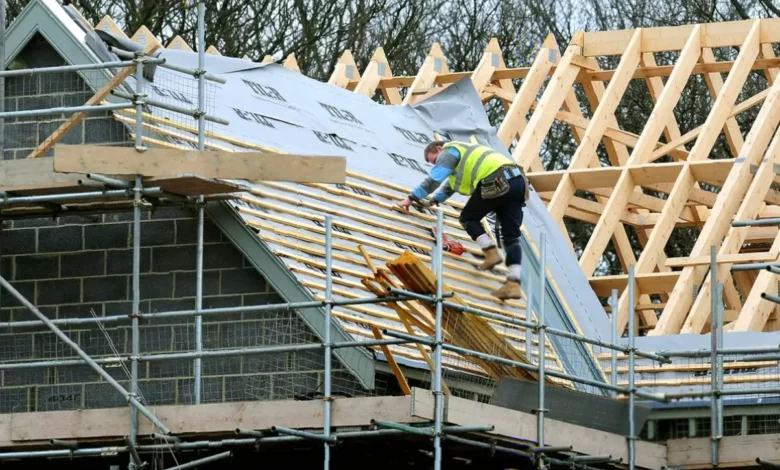
Outline plans for up to 150 new homes on the eastern edge of Woolavington have been approved, positioning a new community within two miles of Somerset’s transformative £4bn gigafactory currently under construction.
Somerset Council’s planning committee north granted the permission to Bloor Homes South West on 10 March by a narrow margin of five votes to three, with one abstention, following a debate that centred overwhelmingly on fears of gridlocked roads and overstretched local services.
‘A rush to get houses built’
The decision came despite forceful opposition from residents and parish councillors, who argued the development was misplaced and would exacerbate existing pressures. Local resident Joe Stradling told the committee the scheme had no local support. “Because of the Agratas battery plant, there is a rush to get houses built in this area,” he said. He contended that local need was for about 70 homes, not 150, and warned of perhaps 300 additional cars, stating Woolavington’s school was over-subscribed and its doctors’ surgery “struggling to cope”.
Alan Sharp, chairman of Woolavington Parish Council, pinpointed the junction of the A39 and B3141 as a critical concern, describing it as “currently over capacity”. He challenged the premise that new cycling routes would significantly reduce car use, calling the idea of no additional vehicle movements from 150 homes “extremely naive” for a rural community dependent on cars.
These worries were echoed by local councillors. Councillor Matt Martin, while acknowledging the commercial and housing supply realities, said he believed the site was “in the wrong place,” labelling the problematic A39 junction a frequent “sticking point”. He warned that construction traffic for the development would compound issues.
Gigafactory momentum drives demand
The housing scheme is inextricably linked to the colossal Agratas battery manufacturing facility rising at the Gravity enterprise zone between Puriton and Woolavington. With construction advancing rapidly, the first phase of production is slated for late 2027, culminating in a fully operational site in the early 2030s supporting up to 4,000 jobs.
The scale of activity is already significant. By November 2025, 450 people were on site, and the build of the first manufacturing building alone is expected to support over 2,200 direct jobs. Recruitment for approximately 1,600 operational roles is due to begin mid-2026. This £4bn investment, aiming to produce 40GWh of battery cells annually, is a powerful driver for new housing, with other developers also advancing plans nearby to accommodate expected demand.
Council highways assurance and developer pledges
Facing the traffic concerns, some councillors deferred to the expertise of the council’s highways team. Councillor Alistair Hendry argued that not all households would generate multiple peak-time car journeys and stated that the technical assessment which found the plans “safe and acceptable” was sufficient for him. Councillor Alan Bradford noted traffic was a perennial issue with development, asking rhetorically if the alternative was to “go back to horse and cart”.
The approved outline plans include specific measures aimed at mitigation. Of the 150 properties, 45 will be affordable housing, meeting the local policy requirement. Bloor Homes will contribute over £350,000 towards public transport and cycling infrastructure, adding to connections being developed separately by Agratas. A further £100,000 is allocated to the Polden Medical Centre, which serves both Woolavington and Edington, to expand either its Woolavington branch or its Edington surgery, the latter having already secured government funding for extra space.
The development will be accessed from Cossington Lane, with new pavements linking to the Lock’s Way active travel route to Bawdrip, part of National Cycle Network Route 3. A separate pedestrian and cycle access will connect to Woolavington Hill for easier reach of local shops. Substantial public open space with play facilities on the eastern boundary is intended to buffer the countryside and keep Woolavington distinct from the neighbouring village of Cossington.
Lapsed promises and future applications
Residents’ frustrations are compounded by the recent history of lapsed planning permissions that promised infrastructure solutions. Wainhomes Severn Valley had secured permission for 175 homes west of Woolavington Hill, a scheme that included replacing the problematic A39/B3141 junction with a roundabout. That permission, initially granted in September 2020, expired in March 2025. Notably, Wain Homes had previously persuaded the council to reduce the number of affordable homes in that development in late 2024.
The site itself has a history of refusal; the Planning Inspectorate rejected an application by Gladman Developments for 125 homes there in June 2021. Gladman has now lodged a separate proposal for 85 homes south of Woolavington Road.
The council is poised to make further significant decisions, with separate proposals for 170 homes south of Vicarage Road, submitted by South West Strategic Developments and directly neighbouring the Bloor site, awaiting determination. MP Sir Ashley Fox has objected to the cumulative impact of these applications on services and roads, calling for a parliamentary debate on how such impacts are assessed.
For the approved Bloor Homes scheme, a reserved matters application detailing the design and layout of the dwellings is expected before the end of the year.