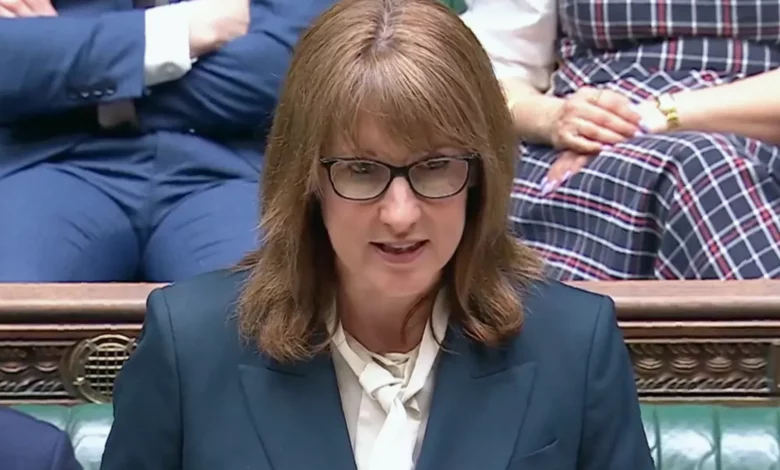
Chancellor Rachel Reeves has told the House of Commons the government will not deviate from its existing economic plan, despite acknowledging that the war in Iran poses “significant” challenges, in a statement that offered no new financial support or emergency measures.
Facing a backdrop of rising inflation, stalling growth, and increasing fuel costs driven by the conflict, Ms Reeves used her address to reiterate a series of previously announced policies, ruling out any relaxation of her self-imposed “iron clad fiscal rules” to fund new spending. The statement followed an emergency COBRA meeting on Monday attended by Prime Minister Keir Starmer, Bank of England Governor Andrew Bailey, and senior cabinet ministers to assess the economic fallout.
The economic storm and the absent response
The Chancellor acknowledged the UK’s acute vulnerability, citing its reliance on imported natural gas, persistent inflation, and strained public finances. The Office for Budget Responsibility estimates that conflict-driven energy price spikes could add 1% to UK inflation in 2026, with the Bank of England already anticipating rates of between 3% and 3.5% for the next few quarters. Some economists fear the figure could reach 5% later this year.
For motorists, the pain is immediate. According to the RAC Foundation, UK drivers had paid £307 million more for fuel by 24 March compared to pre-conflict levels. The average price of unleaded petrol has risen 12.0p since March 2 to 144.2p per litre, the highest since July 2024, while diesel has soared 24.7p to 166.9p. These higher prices are projected to generate around £1.1 billion more in annual VAT revenue for the Treasury.
Yet against this gathering storm, Ms Reeves presented no new plans to offset fuel costs, no universal support for looming energy bill increases, no extra defence spending, and no change to the fiscal strategy. Her statement lasted approximately fifteen minutes, met with what one report described as “deafening” silence in the chamber.
The existing policy toolbox
Instead, the Chancellor detailed the government’s established toolkit. On fuel, she said she would “update on fuel pricing within the next month” and is considering the planned 5p per litre fuel duty rise scheduled to be phased out from September 2026. The existing 5p cut has been extended until the end of August. She pointed motorists towards the government’s Fuel Finder app to compare prices.
To address concerns over profiteering, she announced plans for an “anti-profiteering framework” to help the Competition and Markets Authority root out “price gouging”. Prime Minister Keir Starmer has previously indicated a desire to give the CMA “further teeth” with time-limited, targeted powers.
On energy, Ms Reeves ruled out universal bill support, criticising the previous government’s approach as “unaffordable and irresponsible”. Contingency planning is focused on “targeted help for households” who need it most. She stressed energy security, highlighting plans to boost nuclear power by implementing the Fingleton Review to speed up planning, and said the government was exploring indemnities for critical energy projects to prevent legal delays. Investment in North Sea oil and gas tiebacks is also being encouraged.
Her commitment to fiscal discipline was absolute. The government’s rules, updated in October 2024, include a requirement for day-to-day spending to be in surplus by 2029-30. The Institute for Fiscal Studies has noted that her commitment to having public debt falling relative to GDP may necessitate future tax rises or spending cuts, while the Institute for Government observed she has left herself little headroom against these rules.
On defence, the UK remains committed to spending 2.5% of GDP by 2027, rising to an ambition of 3% in the next parliament, conditions permitting. A NATO agreement commits to 3.5% by 2035. The UK spent £66 billion (2.3% of national income) on defence in 2024-25.
Political fallout and a looming electoral test
The political reaction was swift and pointed. The Conservative Party is forcing a vote to block the planned fuel duty increase, with Tory leader Kemi Badenoch criticising the government’s preparedness and suggesting scrapping taxes on energy bills would be preferable to targeted support.
More troubling for the Chancellor may be discontent on her own benches. Labour backbenchers and some cabinet ministers have been applying pressure to loosen borrowing rules to address the crisis, pleas met with a blunt refusal. With major local and devolved elections across Scotland, Wales, and England on 7 May—a significant test for Keir Starmer—the political appetite for austerity is low. Recent opinion polls show Labour trailing behind Reform UK, with one putting Labour on 19% to Reform’s 23% and another showing a 29% to 21% lead for Reform.
The statement, billed as a response to an economic emergency, ultimately served to confirm the government’s existing course. With no new measures announced, the question now is whether that course can withstand the shocks emanating from the Middle East, or if the Chancellor will be forced to return to the Commons with a very different message in the weeks to come.