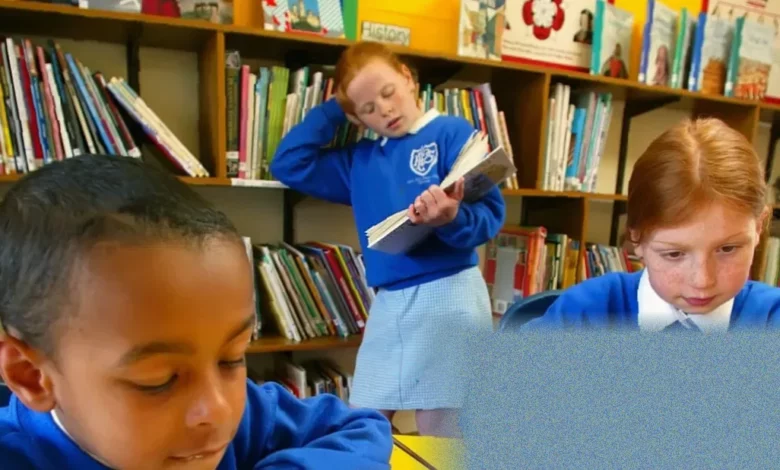
The proportion of young people in the UK who enjoy reading has plummeted to its lowest level in two decades, a stark crisis that has propelled the tradition of World Book Day itself into the parliamentary spotlight. Against a backdrop where only 32.7% of 8- to 18-year-olds reported reading for pleasure in 2025—a 36% decline since 2005—MPs have been examining how every element of promoting books must be scrutinised, including the long-standing custom of children dressing up as literary characters.
The shifting tradition of World Book Day
Experts told the Commons’ education select committee that a significant and sensitive shift is underway in schools across England. Jonathan Douglas, chief executive of the National Literacy Trust, stated that many schools are consciously “taking away the narrative around dressing-up on World Book Day” due to acute awareness of the financial strain preparing costumes places on disadvantaged families. Helen Hayes, the committee’s chair, concurred, noting that the dressing-up element has historically favoured “families who have greater resources than others, in their ability to source a costume”.
This year’s World Book Day in the UK and Ireland falls on Thursday, with the charity behind it emphasising inclusivity. “We want to make sure that all children, regardless of household income, can take part,” the World Book Day charity said, suggesting “no-cost and fun” ways for everyone to celebrate. The day itself, first launched in the UK and Ireland by then-Prime Minister Tony Blair in 1998, is deliberately held on the first Thursday in March to avoid clashes with Easter holidays and St George’s Day. Its core initiative—the distribution of £1 or €1.50 book tokens to schoolchildren—underscores its mission: in 2020, 1.03 million £1 books were gifted, and for many children on free school meals, that book was their first owned.
Reading for pleasure as an anti-poverty strategy
The debate over costumes is not merely about equity in a single day’s activities. As Jonathan Douglas forcefully argued to MPs, reading for pleasure is a critical driver of social mobility and “actually an anti-poverty strategy”. He cited research showing that a child’s reading for pleasure by age 15 is a stronger determinant of their ultimate attainment than their socio-economic background. “Therefore anything that takes away from it… is undermining the power of reading for pleasure,” he stated.
Organisations are advocating for practical solutions to keep the focus on books. Annie Crombie, co-chief executive of the children’s reading charity BookTrust, told the committee that many schools are introducing “costume swaps or making items to dress up with in art lessons” to circumvent the cost barrier. She warned that without such measures, the pressure risks “exacerbating the factors we know, around stresses on home life, getting in the way of reading being embedded in the first place.”
A deeper crisis in reading habits
The MPs’ session was convened in direct response to the alarming data on reading for pleasure. Beyond the overall decline, daily reading among 8- to 18-year-olds has fallen to just 18.7%. The trends reveal complex layers: while children from lower socio-economic backgrounds have traditionally read less for enjoyment, a 2025 National Literacy Trust survey found the gap in reading enjoyment between those receiving free school meals and those who do not was minimal, with the decline actually steeper for those not on FSMs. A pronounced gender gap persists, with 39.1% of girls aged 8-18 enjoying reading compared to 25.7% of boys.
Teacher and children’s author Onyinye Iwu provided frontline testimony to the committee, explaining that many students struggle to see the point of reading for pleasure. “A lot of them were like: ‘But Miss, we’ve got TikTok, what’s the point?’” she said, highlighting the intense competition from digital media. Iwu also pointed to cultural attitudes, particularly within some migrant communities, where the focus is on textbooks for exam success rather than recreational reading. “It’s something that needs to change intrinsically, in families and in schools,” she told MPs.
Coordinating a national response
In response to this multi-faceted challenge, literacy charities are intensifying efforts. BookTrust and the National Literacy Trust promote strategies such as encouraging shared reading, providing resources for parents and teachers, and developing targeted programmes for vulnerable groups like children in care. The National Literacy Trust is advocating for a formal “reading taskforce” and action plan to address the decline.
The historical and ongoing work of World Book Day, founded by Baroness Gail Rebuck, remains a cornerstone, but the discussion in parliament signals a recognition that broader, systemic change is needed. With future World Book Days already set for Thursday, 6 March 2025 and Thursday, 5 March 2026, the campaign to reignite a love of reading—free from barriers—continues to evolve.