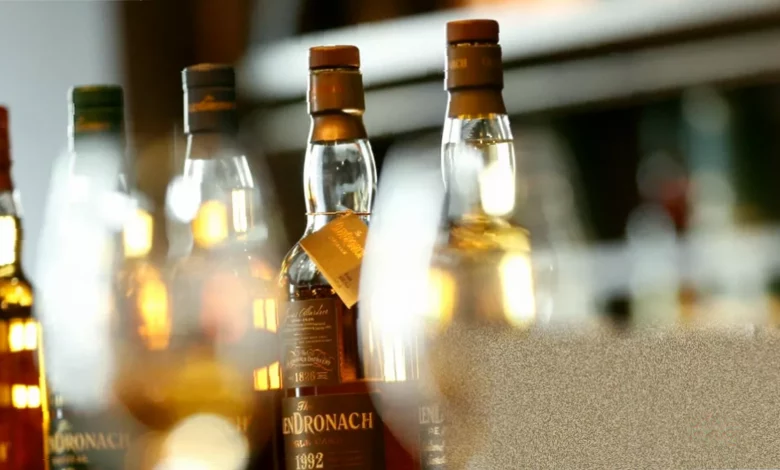
Donald Trump’s decision to lift punishing US tariffs on Scotch whisky came hours after a White House visit by King Charles and Queen Camilla, a move the president himself credited to the monarch’s intervention. “The King and Queen got me to do something nobody else was able to do, without hardly even asking!” Trump wrote on his Truth Social network on Thursday, announcing the end of the 10 per cent levy.
The announcement was welcomed by the whisky industry, but swiftly overshadowed by a bitter political row in Scotland over who deserves the credit. The tariffs, imposed by the Trump administration last year as part of a broader trade framework, had cost Scotch producers an estimated £150 million in lost sales and led to hundreds of job losses, according to the Scotch Whisky Association (SWA). Diageo, the multinational behind Johnnie Walker, saw its shares rise by roughly 4 per cent on the news.
Political dispute erupts over credit
The row centres on the competing claims of Scotland’s first minister, John Swinney, and the UK government. Swinney insisted that his meeting with Trump at the White House in September 2025 played a significant part in the decision, and said the president had messaged him directly on Thursday evening to acknowledge his “influential role”. According to Swinney, Trump thanked him for pointing out during their talks that the tariffs on Scotch whisky had also hurt jobs in Kentucky, because lower Scotch sales meant fewer bourbon barrel purchases from the state. “The president indicates to me in his note the significant influence on his thinking of the Kentucky-Scotland deal, as he puts it, and he references that in his post on social media last night,” Swinney said during a distillery visit hastily arranged after Trump’s announcement.
Swinney added that he had spoken to Trump by phone on Friday afternoon, a nine-minute call that also touched on international affairs including the conflict in Iran. “The president was clear that our discussions on the mutual benefit of this deal, and Scotland’s ability to work with the state of Kentucky, formed a very big part of his thinking. He said that he was pleased to be able to do this for Scotland, together with his majesty the king,” Swinney reported.
But Scottish Labour and UK government ministers dismissed the first minister’s claims. Douglas Alexander, the UK Labour government’s cabinet minister for Scotland, said trade agreements were a Westminster responsibility, not a devolved matter. “The first minister can hold as many photoshoots and take as many day trips to Washington as he likes – this was delivered after relentless engagement and negotiation with our friends, partners and allies in the United States,” Alexander said. Scottish Labour’s deputy leader, Jackie Baillie, accused Swinney of being “shameless”, arguing that the king’s visit had clearly been instrumental. “John Swinney and the SNP’s record is so dismal that they are now trying to claim credit for work they are not responsible for,” she said.
The dispute comes in the final week of a lacklustre Scottish parliament election campaign, in which Labour is fighting to prevent the SNP from winning a fifth successive term. Baillie also highlighted the apparent inconsistency within the SNP over the monarchy. Jack Middleton, the SNP candidate for Aberdeen Central, told a BBC Debate Night election special that “the royal family have frankly brought nothing but embarrassment to Scotland and the United Kingdom”. That remark contrasts with the stance of SNP leaders such as Alex Salmond and Nicola Sturgeon, who had indicated a willingness to retain the monarchy in an independent Scotland, and with Humza Yousaf, a former SNP leadership contender who had expressed a desire to move away from the monarchy within five years of independence.
Separately, Stephen Flynn, the SNP’s Westminster leader, had previously called for Trump’s state visit to be cancelled after the president “humiliated” Ukraine’s Volodymyr Zelenskyy, and joked he would be “washing his hair” rather than meeting Trump. Yet it has emerged that Flynn accepted a £14,000 trip to the US paid for by the Trump administration, fuelling accusations of hypocrisy.
Industry sources said UK officials and ministers had been pressing for whisky tariffs to be lifted since a state banquet for Trump at Windsor last September, to which Swinney was invited by the UK government. At the time, the two administrations were in an uneasy alliance to persuade Trump to act.
Industry relief tempered by long road to recovery
The lifting of tariffs provides a significant boost to an industry that had been hit hard. The US is Scotch whisky’s largest export market, worth approximately £1 billion ($1.2 billion) annually, and Scotland’s biggest single export destination overall. Before the tariffs were reintroduced in 2025, Scotch had entered the US tariff-free for about 25 years. The 10 per cent levy, imposed as part of a 2025 trade framework, swiftly damaged trade: between May and December 2025, export volumes to the US fell by 15 per cent, and full-year exports in 2025 declined by 4 per cent in value to £933 million, with volumes down 9.2 per cent to 120 million bottles.
The tariffs also had knock-on effects in Kentucky, where Scotland is a major buyer of used bourbon barrels – essential for maturing Scotch whisky, with purchases worth around £220 million annually. Exports of used barrels from Kentucky plummeted by 29 per cent in the first 10 months of 2025 compared with the same period in 2024. The SWA and the Distilled Spirits Council of the United States (DISCUS) both welcomed the tariff removal, with DISCUS saying it would restore a “zero-for-zero model of fair, reciprocal trade” and bring “much-needed certainty”.
Diageo, which had previously announced it would reduce production at some distilleries because of the tariff-driven drop in demand, saw its shares rise on the news. Graeme Littlejohn, the SWA’s director of strategy and communications, called the breakthrough a “demonstration of the soft power of the monarch and what he can bring to the United Kingdom”, adding that “months and months of work” had gone into reaching this point.
Nevertheless, industry sources cautioned that the damage was not easily undone. One source noted that the tariffs had “led to the gradual erosion of market share versus other whiskies, in a very competitive market”, and said it could take months or even years to recover the lost business. The wider industry also faces other pressures, including rising domestic costs, softer consumer demand in key markets, an oversupply of Scotch reminiscent of the “whisky loch” crisis of the 1980s, and lingering uncertainty over whether US tariffs might have risen further to 15 per cent.