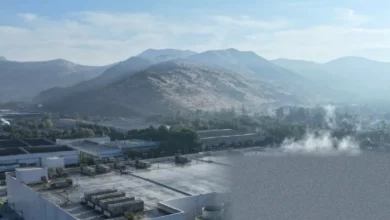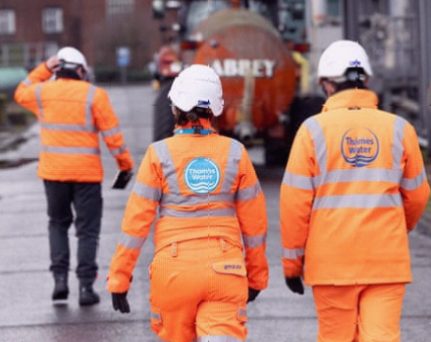
On a damp, grey day at the Maple Lodge sewage treatment works in Rickmansworth, the vast plant is, for now, just coping. Wastewater flows in at 3,000 litres a second, passing through screens that catch a grim catalogue of modern life: a rotating bundle of wet wipes, sanitary pads, and cotton buds known as a “sheep,” alongside items like credit cards and false teeth. This facility, Thames Water’s fifth largest, stands as a potent symbol of a national scandal and a corporate crisis teetering between financial collapse and temporary nationalisation.
A System Under Strain
The tour of Maple Lodge reveals the meticulous processes—grit removal, settlement tanks, aeration—that, when functioning, send treated effluent into the Grand Union Canal. Yet this ageing site, built in the 1950s and 1960s on a cramped 10-hectare plot, is a victim of chronic underinvestment. It is struggling with a growing local population and the sponge-like effect of the chalky landscape, which leads to groundwater infiltrating the sewers. Upstream, the Buckinghamshire village of Chalfont St Peter has suffered repeated sewer flooding, prompting Thames Water to invest £2.5 million in mitigation measures like lining sewers and sealing manholes.
The plant does not always cope. In 2024, it discharged untreated wastewater into the River Colne on 124 occasions, totalling 1,916 hours. During a wet spell in February, one storm overflow lasted 66 hours, with Thames Water’s own real-time portal warning of potential sewage in the watercourse. This is part of a wider pattern: company data reveals it discharged raw sewage for almost 300,000 hours in 2024, a 50% increase from the previous year.
Regulatory Reckoning and Mounting Penalties
These failures have triggered a relentless regulatory response. Last May, Ofwat imposed its largest ever fine—£104.5 million—on Thames Water for not building, maintaining, or operating adequate infrastructure, as part of a total penalty of £122.7 million. The regulator labelled 157 of the company’s wastewater works “sites of concern,” noting that 66% could not meet their permit conditions due to capacity or operational issues. This concluded investigation into flow capacities is separate from an ongoing Environment Agency probe, dubbed Operation Standard, into potential breaches of environmental permits at sewage treatment works.
The company’s history of pollution is stark. In July 2023, Thames Water was fined £3.33 million for misleading an Environment Agency investigation into a 2017 equipment failure that spilled millions of litres of raw sewage into rivers, killing thousands of fish. Tessa Fayers, Thames Water’s wastewater and bioresources director, acknowledges the ongoing scrutiny, stating the Environment Agency is “entitled to give us a breach” if the company operates outside its permit, leading to further sanctions.
The Financial Abyss and Stalled Investment
The core of the crisis is financial. Burdened by over £15 billion of debt, Thames Water reported a £1.6 billion pre-tax loss in July 2025 and warned of a “material uncertainty” over its future without a recapitalisation deal. Its shareholders declared the company “uninvestible” in March 2024 and withheld a planned £500 million injection, citing regulatory demands that made their business plan unviable. This toxic legacy stems from an era of dividend extraction, debt accumulation, and financial engineering between 2006 and 2017, followed by cost-cutting and poor management under absentee owners.
At Maple Lodge, a critical project to boost capacity and install equipment to meet higher standards for phosphorus removal—which should have been finished a year ago—is now scheduled for 2030. Fayers cites prices “materially in excess” of expectations and “delivery constraints,” with the projected cost ballooning to between £300 million and £400 million. In February 2026, Thames Water awarded a contract worth up to £280 million to Kier Infrastructure to finally deliver the upgrade from April 2026 to March 2030, aiming to reduce phosphorus levels entering the river to below 0.25mg/l and increase storm tank capacity. This is a fragment of a broader £1.25 billion capital investment plan for 2020-2025, with a commitment to halve total storm overflow duration by 2030.
Restructuring Standoff and Political Risk
Almost two years after shareholders accepted their investment was worthless, the endgame approaches. Talks between senior bondholders—who are owed £16 billion—and Ofwat have been running since last June, when a preferred bidder, the US private equity firm KKR, withdrew. Insiders suggest a “market-led” recapitalisation is still the most likely outcome, avoiding special administration, a form of temporary nationalisation the Treasury fears could become permanent.
The deal’s precise terms are everything. Senior bondholders, operating under the banner London & Valley Water, are likely to take a haircut of around 30% on their debt, receiving a 10% ownership stake in return. They would be joined by funds injecting over £3 billion in fresh equity, potentially including US hedge funds like Elliott Management and Silver Point, which are reputed to have bought debt at distressed prices as low as 60p in the pound. Junior bondholders would be wiped out. The creditors have pledged to “reprioritise” the £20 billion of spending Thames is allowed to raise from bills between 2025 and 2030, but have given scant detail on which projects might be cut.
Crucially, the consortium has appealed for regulatory “easements”—a euphemism for reduced penalties during a proposed 10-year turnaround—arguing that a “doom loop” of fines further delays vital investment. Reports suggest they have even demanded immunity from prosecution for environmental crimes as a condition. This creates significant political risk. Against a backdrop where Thames Water is seeking to raise household bills by 59% over five years—higher than Ofwat’s approved 35%—an overly lenient deal could allow late-arriving hedge funds to reap windfall profits without a guaranteed uplift in performance. The government is reportedly preparing for possible insolvency, with advisory firm FTI Consulting on standby.
Environmental Cost and an Uncertain Future
The human and ecological toll is clear. Discharges affect sensitive habitats like the chalk stream River Misbourne, which is vulnerable to phosphates and pathogens from sewage. While Thames Water has launched a public portal for real-time overflow data, the monitoring system has limitations, measuring duration but not volume of spills. The government has a Storm Overflows Discharge Reduction Plan aiming to curb spills by 2050.
Back at Maple Lodge, Tessa Fayers deflects on the preferred corporate outcome, emphasising that staff “yearn for is stability” to get on with the job. She points to a “material” expected drop in pollution incidents and declares, “This is the time to be alive in the wastewater sector,” citing record investment opportunities. Yet the journey is long, and the immediate future hinges on negotiations between Ofwat, bondholders, and ministers. Some 37 years after privatisation, the fate of England’s biggest water company will be decided within weeks, a stark testament to a system where operational neglect, financial engineering, and regulatory failure have converged.