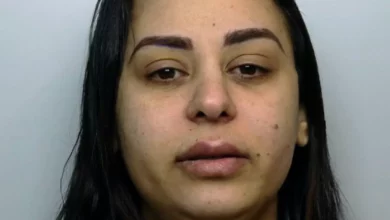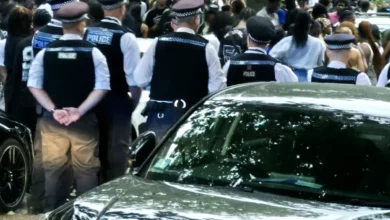
A mother who has spent two decades trapped under a scrapped prison sentence has been torn from her toddler son and returned to jail over an allegation she denies and which has never been tested in court. Rachel* was in bed with her son Joshua* when police arrived at her home. Officers told her she was being recalled to prison indefinitely under an Imprisonment for Public Protection (IPP) sentence handed down for a street robbery 20 years ago. Her son, from whom she had never spent a night apart, was to be taken into care. They could not explain why, citing only “poor behaviour”. She later learned the recall was triggered by a single call to police from a teenage neighbour alleging an alcohol-fuelled altercation with a family member days earlier. Rachel disputes the incident ever happened and has never been charged.
‘The worst day of my life’
In a panic, Rachel packed a bag for Joshua, desperate to keep his baby things safe. Social services had been preparing to reduce its oversight of the family, who were thriving. The social worker arrived in tears to collect the toddler from his handcuffed mother. Rachel was initially not even allowed to change her son’s overnight nappy, but was eventually permitted to dress him before handing him over. Later, from the police station, she used her five-minute phone call to ring the social worker, who had just collected Joshua from nursery. “That broke my heart, I could hear him in the background shouting, ‘Mama, mama’,” she recalled. “That day was the worst day of my life.”
Three months later, Rachel is still fighting to get her son back from foster care. She was released after eight weeks when officials ruled the decision to haul her back to prison should be reversed. But the separation has already caused “significant emotional harm” to the toddler, according to court documents. Even upon release, Rachel was sent back to an empty home, and her time with Joshua was limited to four intrusive supervised visits a week, later relaxed to three hour-long supported visits with regular checks from social workers. She has made the difficult decision to support Joshua remaining in foster care until she can prove herself to the family court, which ordered a parenting assessment. Her attitude was praised by the family court judge.
The IPP sentence: a ‘psychological torture’
Rachel is among thousands still trapped under IPP sentences, which were introduced in England and Wales in 2005 under the Criminal Justice Act 2003 by then Home Secretary David Blunkett. Designed for offenders considered “dangerous” but whose crimes did not warrant a life sentence, IPPs imposed a minimum term (tariff) after which release depended on proving to the Parole Board that the prisoner no longer posed a risk. In practice, the open-ended punishment has led to indefinite detention. The sentences were abolished for new cases in 2012 by the Legal Aid, Sentencing and Punishment of Offenders Act 2012, but the abolition was not retrospective.
Ministry of Justice figures show that a total of 8,711 IPP sentences were imposed between 2005 and 2012. As of March 2025, 1,012 “unreleased” IPP prisoners remained in custody. Including those recalled, the total in custody in March 2024 stood at 2,796. As of December 2025, approximately 2,400 people were still serving IPP sentences, 924 of whom had never been released. Among them are 30 women, with 7 never released and 23 recalled. The average length of time served each time an IPP prisoner is recalled is 25 months, regardless of whether licence breaches or other allegations are proven. In 2022, 461 out of 625 recalls of IPP offenders did not involve a charge of a further offence.
Rachel’s initial tariff for robbery was just 17 months, but she has spent two decades shuttling in and out of custody. This was her seventh recall, but her first since becoming a mother to Joshua. She was handed the IPP after a string of previous convictions stemming from being groomed into sex work as a child and struggling with drug misuse after losing a baby delivered prematurely at 22 weeks. Her pregnancy with Joshua gave her a “chance” at a new life. Yet the recall system requires no criminal standard of proof; it is based on the offender manager’s professional judgment that reported behaviour has taken place “on the balance of probabilities”. As Rachel’s lawyer noted in court, “as soon as there’s anything flagged, somebody can call up and make an allegation about mum and she gets recalled, but the issue of fault is not an issue for the police”.
The United Nations Special Rapporteur on Torture, Dr Alice Jill Edwards, has described the IPP regime as “cruel, inhumane and degrading” and amounting to “psychological torture”. The UN is currently investigating whether the government’s inaction amounts to human rights abuses, after two major complaints were lodged in the past year. Almost 100 IPP prisoners have taken their own lives in prison after losing hope of release, with a further 37 suicides in the community where those released live under the constant fear of recall. Secret Ministry of Justice projections suggest hundreds of IPP prisoners will still be incarcerated in 2030.
In 2024, the government introduced the Risk-Assessed Recall Review (RARR), a new power allowing the Justice Secretary to re-release recalled IPP prisoners without Parole Board approval. Rachel was eligible for a RARR, but had to wait two months in prison. The Victims and Prisoners Act 2024 also reduced the qualifying period for licence termination review from 10 years to three years after first release, and from November 2024 offenders can apply to have their IPP licence terminated after two years in the community without recall. Campaigners and legal experts argue these reforms do not go far enough. David Blunkett, who has called the IPP his “biggest regret”, said there are still “far too many cases where unproven allegations of a breach of licence is still leading to massive disruption which then, perversely, leads to a knock-on impact on family life”.
Ongoing fight for custody
The family court must now assess whether Rachel can care for Joshua. Among the issues being investigated is whether the strict IPP licence itself – which can see her recalled without warning for any further alleged offending, even if unproven – is “incompatible” with providing consistent care for a child because it creates instability. The IPP licence is cited in court papers as a reason for Joshua’s removal, noting: “IPP recalls are sudden and unpredictable, creating ongoing instability for Joshua, who is a very young child.” A lawyer for the local authority questioned why probation had assessed Rachel as a high risk of harm to children. The court heard this was partly due to concerns over her drinking. Rachel, who wore an alcohol tag, was limited to three alcohol events each week with no more than a moderate intake. She accepted she had been drinking two or three cans of lager a few times each week. Readings during the alleged assault that triggered her recall indicated she had four to seven units in her system, the equivalent of two to three pints of lager. Upon re-release, she has agreed to total abstinence, monitored by a tag.
In her submissions to the court, Rachel acknowledged that before falling pregnant she was stuck in a cycle of release and recall, with little support in the community. But she insists she turned her life around when she discovered she was unexpectedly pregnant. “I will conclude by saying that I love Joshua very much. He is absolutely everything to me, and I will do anything to get him back,” she wrote in her appeal. She has agreed to regular hair strand testing for drug use and will submit to a psychological assessment if the court decides it is needed. Even if Joshua is returned to her care, she must spend the next two years without any recalls before she can apply for her IPP licence to be terminated.
Rachel has called for a change in the recall process: “Instead of being recalled straight back to jail, people should be spoken to or interviewed to see what’s going on. Obviously, if they have committed a crime, then yeah, people need to be recalled. But something that has been alleged? Come and ask questions.” A spokesperson for campaign group United Group for the Reform of IPP (Ungripp) said: “This unfair recall is a harrowing example of how the IPP sentence inflicts lifelong scars on innocent children long after a term has been served. It is a haunting injustice that even when a recall is acknowledged as wrong by the state, the separation continues.” A Ministry of Justice spokesperson said: “It is right that IPP sentences were abolished, and we have already taken action to support these offenders to move on with their lives by reducing the period these offenders can be recalled to support rehabilitation. We also understand that family court proceedings and decisions to move a child as a last resort can be deeply distressing. These decisions are made independently and only where the threshold for significant harm is met, with the child’s welfare always the paramount consideration.”
Rachel is exploring whether she has grounds to appeal her IPP sentence, which she says has profoundly damaged her “self-worth, esteem and confidence”. Her main hope now is that Joshua, who turns to her with his lip out and starts getting upset when he leaves visits, is too young to remember the trauma. “I just hope it hasn’t got a lasting effect on him, because it’s not me who’s done it,” she said.