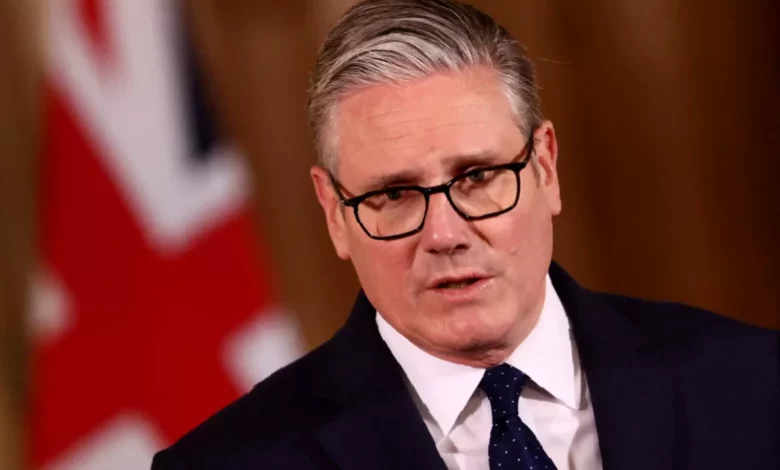
Sir Keir Starmer has signalled he intends to deepen the United Kingdom’s defence relationship with the European Union, framing closer cooperation as a matter of “military capability, industrial resilience, and shared security threats” rather than a step towards rejoining EU institutions. The Prime Minister has explicitly ruled out returning to the single market or customs union, but his government is pursuing a series of security-focused arrangements with Brussels, even as previous attempts to join a major EU rearmament fund collapsed over cost and sovereignty concerns.
Closer ties, not reintegration
Starmer’s push for a more structured defence partnership builds on the UK-EU Security and Defence Partnership signed on 19 May 2025. That agreement, which the Prime Minister has described as being in Britain’s long-term national interest, covers support for Ukraine, joint action against Russia’s shadow fleet, sanctions enforcement, maritime and space security, hybrid threat response, critical infrastructure resilience, and potential joint investment in the defence industrial base. Maroš Šefčovič, the European Commissioner for Brexit, has indicated that the EU views security and defence as high priorities that require working “in step with closest partners, including the UK.”
The ambition marks a shift from the post-Brexit settlement in which the UK is treated as a third country without decision-making authority in EU defence structures. Before leaving the bloc, Britain accounted for roughly 20% of the EU’s overall military capabilities. Labour’s idea of a formal security pact has been part of wider discussions over a UK-EU reset, though some officials have privately expressed concern that deeper involvement could blur post-Brexit red lines, particularly if it entails financial contributions or regulatory oversight from Brussels.
Breakdown of the rearmament fund
The most concrete test of Starmer’s approach so far ended in failure. Talks aimed at allowing the UK to join the EU’s Security Action for Europe (SAFE) rearmament fund broke down at the end of last year because the “price for entry was considered too high,” according to officials familiar with the negotiations.
SAFE was established on 29 May 2025 as a centrepiece of the EU’s broader “ReArm Europe Plan/Readiness 2030,” an initiative intended to leverage more than €800 billion in defence spending across the bloc. The fund itself is designed to provide up to €150 billion (£130 billion) in competitively priced, long-maturity loans to EU member states, backed by the union’s strong credit rating. The loans are to be disbursed by the end of 2030 and repaid over 45 years. They are meant to finance urgent and large-scale procurement, promote common purchasing, and reduce fragmentation in Europe’s defence market. Projects under SAFE must involve at least one EU member state, though Ukraine and EEA-EFTA countries may also participate.
While SAFE is primarily open to member states, the EU has said that other countries that have signed Security and Defence Partnerships with the bloc – including the UK – may be eligible if they negotiate bilateral or multilateral agreements. However, the terms on offer proved unacceptable to London. The sticking points were twofold. First, the financial contribution demanded by Brussels was judged too steep: the UK’s share would have covered a portion of the annual interest and servicing costs on the loans, though exact figures were never made public. Second, and more fundamental, were the restrictions placed on British industry. Under current EU rules, companies from non-member states can only bid for defence contracts that EU manufacturers cannot fulfil. British ministers were negotiating for broader, equal access to the procurement opportunities SAFE would generate, but the talks stalled when it became clear that the EU was not prepared to grant that access without a corresponding level of financial and regulatory integration that Whitehall deemed incompatible with the UK’s post-Brexit autonomy.
The European Council President, António Costa, hailed SAFE as “an important step toward a stronger Europe,” while Poland’s Minister for EU Affairs, Adam Szłapka, described it as “an unprecedented instrument that will boost our defence capabilities and support our defence industry.” From London’s perspective, however, the price of entry – both in cash and in constraints on sovereignty – was too high, and negotiations were abandoned at the end of last year.
The failure is not the end of the story. The UK is now reported to be entering a fresh round of talks to join a separate, more targeted EU loan programme for Ukraine. That scheme, valued at €90 billion (approximately $97 billion), is designed to help Kyiv acquire up to €60 billion worth of weaponry over the next year, with the remainder going towards economic stability and critical infrastructure. The UK’s potential contribution has been estimated at around £390 million (€455 million), representing approximately 15% of the annual cost of servicing the loan – a sum described as manageable by Treasury officials. British ministers are again pressing for broader access for UK defence companies, who remain constrained by the same EU procurement rules that dogged the SAFE negotiations. The first tranche of the €90 billion loan has reportedly been postponed, with discussions ongoing over its disbursement.