Academic calls for patriotic St George’s Day events in schools to counter elite disdain

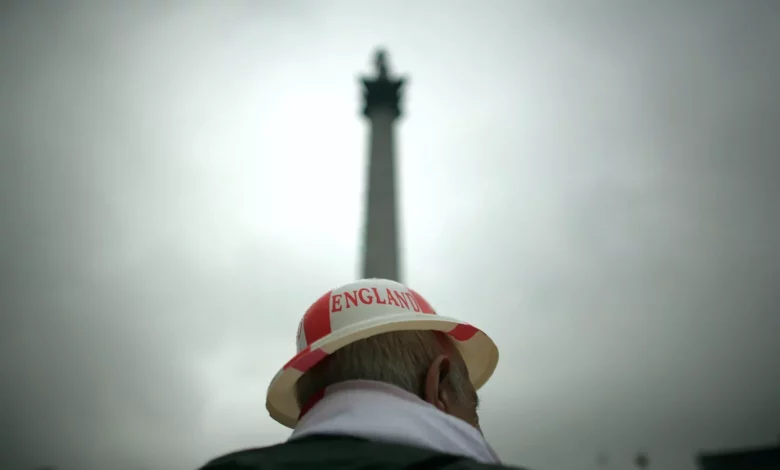
An academic and campaigner has urged schools to directly confront what she terms the nation’s “anti-patriotic elites” by using St George’s Day to revive a sense of national pride and counter a dominant negative narrative about England’s history.
Alka Sehgal Cuthbert, director of the campaign group Don’t Divide Us, argued that the occasion should be a focal point for national education, moving beyond symbolic flag-raising to a meaningful engagement with the past. Her call comes amid broader debates about patriotism, identity, and how England’s story is taught.
The Case Against a ‘Damning Narrative’
At the heart of Ms Sehgal Cuthbert’s argument is a critique of a powerful cultural perspective she believes holds sway in institutions. “For too long, the dominant cultural and intellectual narrative has been that England, and by extension Britain, was once regarded as the source of all progress and moral worth but has now been revealed as the opposite: the source of all that is wrong and unjust,” she told GB News.
She contends this view, which she says is “influential among those with cultural power,” is false but has gone largely unchallenged. In this context, she sees the growing display of the St George’s Cross as a “first, spontaneous response” to this perceived damning narrative. However, she warns against empty symbolism.
“Identities are made from more than symbols alone, and symbols need to have some connection to reality,” she said. “It would be a pity if challenging the anti-patriotism of our elites remained at the level of flag-raising alone.”
Instead, she proposes concrete actions: “Why not make St George’s Day a day to celebrate England’s history with some actual history? Why not have public meetings – school visits – to reintroduce people to part of their past, which is so richly inspiring?”

Ms Sehgal Cuthbert, whose group challenges the concept of systemic racism and opposes what it sees as divisive ideologies in institutions, believes this approach would help make “English cultural traditions meaningful for many” and serve the public good. She has previously criticised teachings like “white privilege” in schools, arguing they promote division.
Polling Reveals a Complex Picture of Youth Patriotism
The debate takes place against a backdrop of shifting attitudes towards national identity, particularly among the young. A recent poll of 2,000 people aged 16 to 29, commissioned by the John Smith Centre at Glasgow University, found only 38% said they would fight for Britain “under some circumstances,” while half stated they would not under any circumstances.
The same survey recorded a sharp decline in optimism, with the proportion of young people expecting their lives to be better than their parents’ halving in a year, from 63% to 36%.
Other research paints a more nuanced picture. A poll for The Sunday Times by More in Common suggested 49% of British 16-17 year olds are proud of their national identity, indicating a patriotism less tied to traditional institutions. However, a separate YouGov study in February 2025 found only 41% of Gen Z Britons (aged 18-27) feel proud to be British, a significant drop from 80% in 2004.
Further YouGov data indicates generational divides, with young British people less likely to express strong patriotism than older generations, and half of Gen Z believing Britain is a “racist country.”
Campaigners Call for a Revival of Tradition and Unity
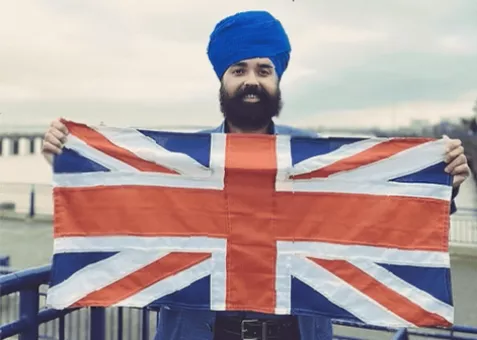
Echoing the call for a national pride revival, Aman Bhogal, a campaigner for Global Britain and founder of the Global Britain Centre, described St George’s Day as the “perfect way to honour and respect our history, heritage and traditions”. He told GB News these were central to “the thousand-year success story that is Britain”.
Mr Bhogal, whose organisation promotes a conservative vision focusing on heritage and global engagement, argued that “national unity is our biggest strength and that flows from a strong national identity which takes root in our history and traditions.” He suggested England should follow the example of nations like America and India in flying national flags “unapologetically to instil national unity and a proud sense of belonging.”
He linked the celebration to his own family’s experience, stating: “When my grandfather made England his home all the way back in 1959, this great nation didn’t ask him where he came from, only where he was going.” He believes celebrating St George’s Day can foster pride and gratitude among millions of British Indians and others.
Mr Bhogal criticised what he called “the last three decades of the Blairite orthodoxy,” arguing that national identity had been eroded by “the caustic tap of multiculturalism and the toxic identity politics.” His advocacy for flag-flying aligns with campaigns like Operation Raise the Colours, a movement to display national flags in public places. However, this movement has faced controversy; the group Raise the Colours, co-founded by Ryan Bridge and Elliott Stanley, has been described as far-right, criticised for anti-immigrant rhetoric and intimidation, and has faced legal action for illegally erecting flags.
The call for a St George’s Day revival seeks to reconnect with the day’s historical significance. Once a major national holiday with parades and pageants after the 15th century, its prominence waned following the union with Scotland. The legend of St George, a Roman soldier of Greek origin martyred for his faith and later famed for slaying a dragon, remains a potent, if mythic, symbol of good overcoming evil that proponents hope can foster a renewed shared identity.