British exam board authorises gender-neutral French for GCSE despite terms not used in France


A British exam board has authorised GCSE French students to use gender-neutral language in their written and oral assessments, despite such terms having no official standing in France and being rejected by the country’s linguistic and educational authorities.
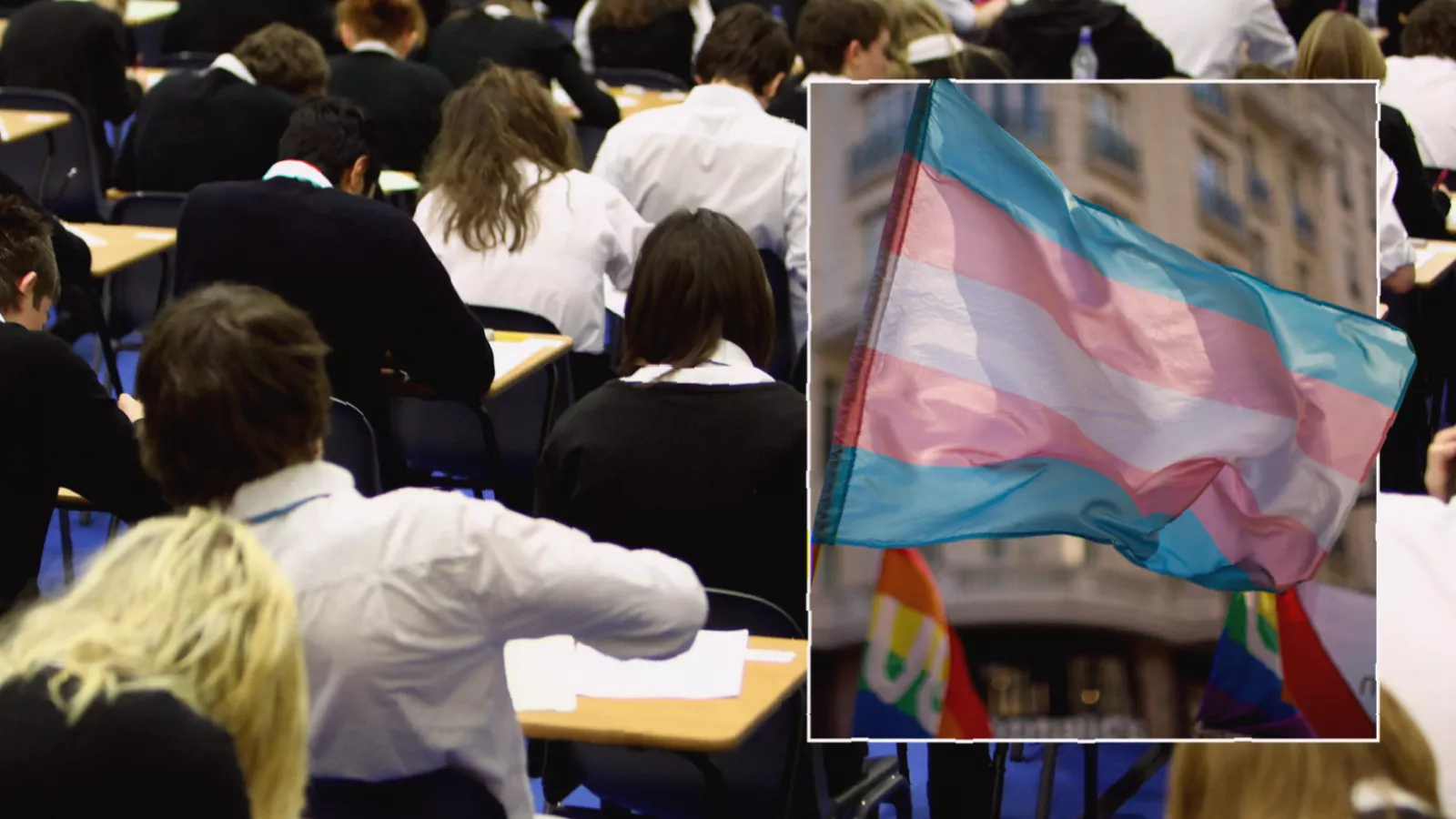
Pearson Edexcel’s updated specifications for exams from 2026 allow pupils to deploy “inclusive” pronouns, nouns and adjectives when writing or speaking French. The changes also apply to GCSE Spanish and German. The board said its decision was driven by the recognition that traditional gendered language can “present specific challenges for trans and non-binary students”.
Under the new rules, the vocabulary list for each language – which contains more than 1,750 terms – now includes words for “trans” and “non-binary”. Examiners are instructed to “recognise students’ use of non-binary or gender-neutral pronouns when describing themselves or others” and to accept novel adjectival endings “according to their preferred way of identifying”. Trans students may also use alternative spellings, full stops, “x’s”, asterisks and underscores to express their identity. The curriculum section on “gendered language” was developed with backing from the LGBT charity Stonewall.
French grammar and the limits of a gendered language
The move places Pearson Edexcel at odds with the fundamental structure of the French language. French is a highly gendered system: every noun is classified as masculine or feminine, and adjectives must carry specific masculine or feminine endings to agree with the noun they modify. The traditional rule, “le masculin l’emporte sur le féminin” (the masculine prevails over the feminine), governs agreement in mixed-gender groups – a rule that feminist linguistic movements have long sought to challenge.
In France, the push for so-called “écriture inclusive” (inclusive writing) has used techniques such as the “middot” (e.g. étudiant·e·s) and the creation of the gender-neutral pronoun “iel” – a blend of “il” (he) and “elle” (she). Some universities and socialist councils have adopted such terms. But the French state and its official language bodies have resisted. The Académie Française has labelled inclusive writing an “aberration” and a “mortal danger” to the language. Former education minister Jean-Michel Blanquer banned inclusive writing in schools and has now turned his attention to Pearson Edexcel.
Blanquer described the exam board’s decision as “absurd”. “French grammar has not changed in this regard,” he said. “The use of ‘iel’ does not correspond to any widespread usage among the French population.” The French government has also issued directives against inclusive writing in official texts, and the debate is often framed domestically as a defence of national identity against “le wokisme”.
The challenges for trans and non-binary students
Pearson Edexcel argued that a language system which forces every speaker to choose between masculine and feminine forms can be acutely difficult for students who do not identify within that binary. For trans and non-binary pupils, repeatedly having to describe themselves or be described using gendered pronouns and adjectives that do not match their identity can cause distress and disengagement. The board said its guidance was designed to recognise these students’ lived experience “when describing themselves or others”.
In practice, a non-binary student might use “iel” instead of “il” or “elle”, or adopt adjectival endings that fall outside the traditional masculine-feminine split. The board also permits written markers such as asterisks and underscores – for example, “content·e” or “content*e” – to indicate a neutral or non-binary form. These moves mirror changes Pearson has already made in English assessments, where use of the singular “they” is accepted.
However, the exam board has been careful to stress that gender-neutral pronouns are not a required part of the syllabus. A Pearson spokesman said: “Gender-neutral pronouns are not required as part of Pearson Edexcel GCSE French, German, or Spanish. The specifications require students to learn and be assessed only on the standard masculine and feminine forms used in these languages. The vocabulary list has over 1,750 terms and reflects the language students will encounter in everyday life, including references to men and women, him and her, boys and girls, mothers and fathers. The specifications also include guidance for teachers on how student responses are considered in assessment. This does not add to the required content.” The spokesman added that Pearson’s membership of Stonewall ended over two years ago.

Controversy and official responses
Critics have accused the exam board of promoting a “pro-trans agenda” in British schools. Helen Joyce, Director of Advocacy at the campaign group Sex Matters, said: “It may seem baffling how quickly schools have been captured by gender ideology in recent years.” She argued that external providers linked to Stonewall had driven the change and called for revised safeguarding guidance on single-sex spaces in schools such as toilets and changing rooms. “The next challenge for the Department for Education will be to tackle the pernicious creep of gender ideology throughout the curriculum, and the role of external providers in driving this,” she added.
The Department for Education has responded with a cautionary stance. A spokesman said: “Our expectations are clear: gender identity is an area of significant debate. Schools should not endorse any particular view or teach it as fact – including the idea that all people have a gender identity.” The DfE has been developing guidance for schools on supporting gender-questioning children, emphasising parental involvement and the legal definition of sex as biological sex.
The controversy underscores a broader transatlantic and cross-Channel divide. In France, the debate is seen as a defence of linguistic heritage; in the UK, it intersects with ongoing political and cultural battles over gender identity in education. Pearson Edexcel’s decision may allow students a more inclusive exam experience, but it also leaves them learning a version of French that the Académie Française and the French government have explicitly rejected.