Home EV charging for millions without driveways as gully systems get green light
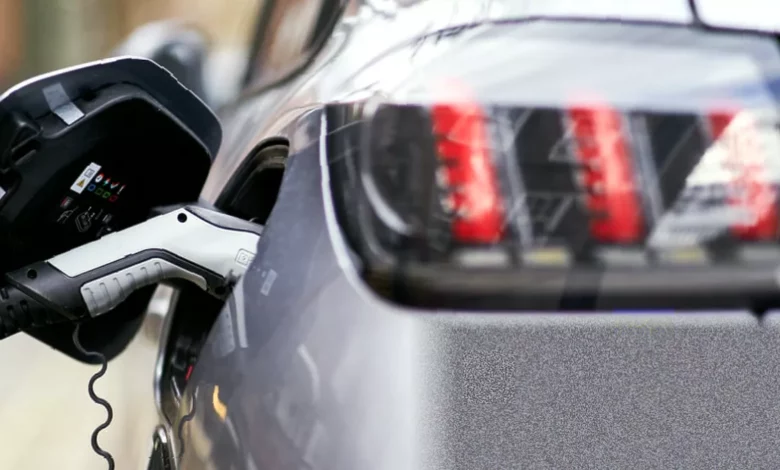
Households without off-street parking will soon be able to charge their electric vehicles from home under government plans to cut the need for expensive fossil fuels. Legislation to be passed this summer will allow motorists to run a power cable through a charging “gully” built into the pavement outside their home without requiring planning permission, meaning installations could begin before the end of the year.
Currently, stringing a charging cable across a pavement is not permitted. While almost half of councils in the UK allow cross-pavement charging if the cable is embedded in a gully, each installation still requires individual council permission. The new law will remove that barrier by introducing permitted development rights specifically for on-street EV charging.
How the pavement gully system will work
Two main types of cross-pavement solutions are being used. The most common is a cable channel, or gully, embedded within the pavement to temporarily house the charging cable, which is removed after use. The alternative is a permanent under-pavement cable connected to the domestic chargepoint via removable bollards or other connectors. The cost of installing a pavement gully is estimated at around £1,000, though some local councils may offer funding. There is currently a lack of consistency among councils, with installation costs varying dramatically — from free services offered by some authorities to more than £1,000 charged by others.
Industry body Kerbo Charge welcomed the government’s commitment, calling it the “kind of decisive action needed” to open up affordable EV ownership to millions. Vicky Edmonds, chief executive of EVA England, described the move as a “major breakthrough for the millions without driveways who currently face a two-tier system of higher costs and fewer options”. She noted that around half of drivers without off-street parking report paying more to run an EV than their previous petrol or diesel vehicle.
The government will also imminently launch a consultation on changes to building regulations, including a new “Ability to Charge” standard. This aims to increase EV charging provision in new buildings and those undergoing major renovations, and to strengthen the rights of renters and leaseholders to request and install charge points.
Energy crisis context and wider clean energy push
The charging legislation is part of a broader strategy to protect households from soaring energy costs following disruptions to crude, gas and fuel supplies caused by the Middle East war. Ed Miliband, the Energy Secretary, told the Good Growth Foundation’s National Growth Debate on Tuesday that “the overwhelming lesson of this crisis is we need to go faster” on reducing the UK’s reliance on volatile fossil fuel markets. He added: “Because every solar panel we put up, every wind turbine we build, every heat pump we install, every EV on the road makes our country more secure.”
In a separate speech on 21 April, Miliband declared that “the era of fossil fuel security is over, and the era of clean energy security must come of age”. He also challenged critics pushing for a rethink of net zero targets and more North Sea drilling, warning that ignoring two fossil fuel crises in five years “would be completely irresponsible”.
The government has also promised to make it easier to install solar panels and heat pumps. This summer it will consult on changes to permitted development rights to make installing air source heat pumps easier, particularly in flats, and on plans for low-income households to benefit from plug-in solar through the Warm Homes Plan. The £15 billion Warm Homes Plan aims to upgrade five million homes by 2030 and lift one million out of fuel poverty. Up to £25 million in funding is earmarked for a pilot scheme providing plug-in solar panels to low-income households, delivered through a “street-by-street” approach in partnership with local authorities and mayors. Eligibility will likely mirror existing Warm Homes criteria, such as households earning under £36,000, those in deprived postcodes, or those receiving means-tested benefits.
Reforms introduced in May 2025 have already removed planning permission requirements for most standalone chargers and associated substations in England.
VAT disparity and the cost of charging
Home charging is significantly cheaper than using public charge points, partly because home energy attracts a VAT rate of 5 per cent while public charging incurs 20 per cent. ChargeUK, the trade body for the charging industry, said equalising VAT would help ensure that motorists who cannot charge at home even after the planning changes are not unfairly penalised. Past efforts to reduce VAT on public chargers include a petition in 2022 and an open letter in March 2023. Drivers without driveways who rely on public chargers are also unable to access cheaper night-time electricity tariffs, effectively penalising them twice.
Surge in demand for clean technology
Demand for solar panels, electric vehicles and heat pumps has leapt since the war began, as households brace for a sharp increase in monthly energy bills when the next energy price cap takes effect. Octopus Energy, the country’s biggest energy supplier, reported its “biggest-ever” month for clean technology enquiries and sales between 1 and 22 March. Heat pump orders more than doubled in March compared with February, while sales of solar power systems were up by almost 80 per cent. EV charger sales rose by 20 per cent over the same period.
New leases of electric vehicles rose by more than 85 per cent in March compared with February, according to Octopus Energy, while its leasing arm Octopus EV reported an 89 per cent surge in orders. In a boost to EV sales, the price of battery electric cars has fallen below petrol cars in the UK for the first time, according to the car sales website Autotrader. As of April, the average new electric car is priced at £42,620, compared with £43,405 for a new petrol model. EV registrations reached a record high of 86,120 battery EVs in March, representing a 24.2 per cent market share.